



Trading volume exceeded 150 million shares, more than triple the daily average, according to market data. Intel's plunge came as Amazon and other technology companies reported quarterly results that deepened investor anxiety over the cost of the artificial intelligence buildout [2].
The decline marked Intel's most severe one-day percentage drop in roughly five decades. NDTV Profit reported the shares were down 29.89% at $64.49 as of 1:26 p.m.
Market Reaction and Sector Impact
The drop contributed to a broader decline in semiconductor stocks. Intel's decline was steeper than peers, with the Philadelphia Semiconductor Index falling 5% the same day, according to exchange data. The selloff extended across the technology sector as investors reassessed growth expectations for chipmakers following a round of quarterly earnings.
Analysts attributed the selloff to disappointing earnings and concerns over AI spending. "The market is reassessing growth expectations for chipmakers," said an analyst. The report stated that the reaction reflected worries that the massive capital expenditures directed at artificial intelligence infrastructure may not translate into near-term demand for Intel's products.
The broader market also felt the impact.
Earnings Report and AI Spending Concerns
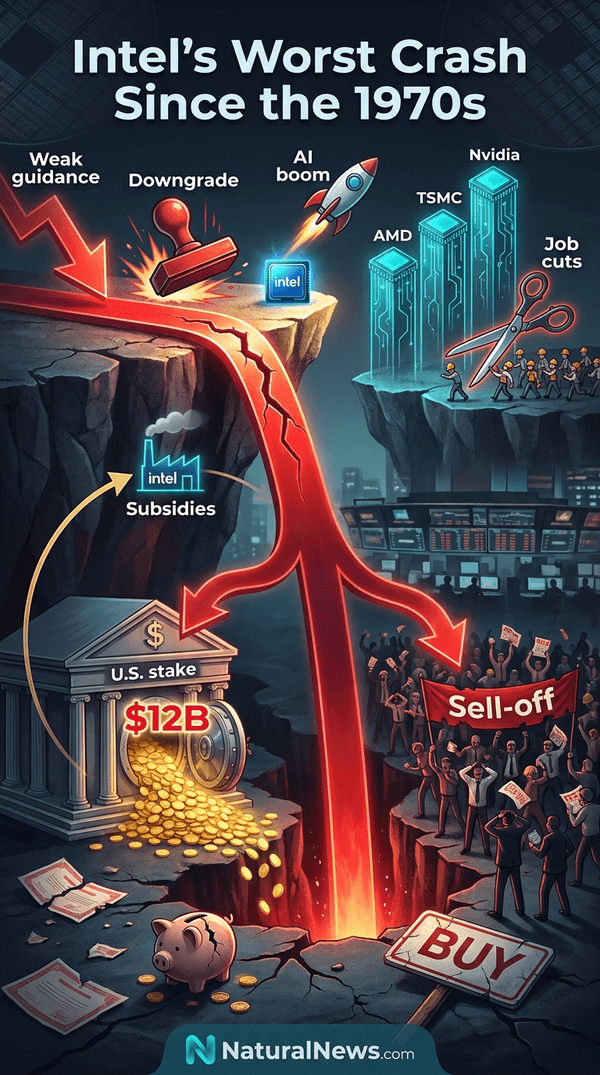
Intel reported quarterly revenue of $13.2 billion, below consensus estimates of $14.5 billion, according to the earnings release. The company lowered its guidance for the next quarter, citing uncertain demand and competitive pressures.
The guidance also reflected competitive pressures in the semiconductor industry, where rivals have gained ground in AI-related chips.
Amazon and other big tech firms signaled increased capital expenditures on AI infrastructure, raising questions about chip demand, according to CNBC. "We are navigating a dynamic environment and remain focused on our long-term strategy," said Intel's chief financial officer. The combination of soft PC demand and uncertain AI spending plans among major customers contributed to the downward revision in guidance.
Government Stake in Intel
The stake was valued at approximately $30 billion before the drop, officials said. The investment was intended to support domestic semiconductor production and reduce reliance on foreign chip manufacturing.
The $12 billion loss represents a 40% decline in the stake's value, according to calculations based on government filings.
Officials said the government remains a long-term investor and the stake is intended to support domestic semiconductor production. The loss comes as the administration has prioritized rebuilding American chip manufacturing capacity. Intel has been a central recipient of federal support aimed at expanding U.S.-based fabrication.
Outlook and Analyst Perspectives
Analysts remain divided on Intel's near-term prospects, according to research notes. Some cited the company's foundry strategy as a potential long-term positive, while others pointed to competitive pressures from AMD and Nvidia. The divergence in views reflects uncertainty about whether Intel can regain market share in a sector increasingly dominated by AI-focused chipmakers.
"The volatility is likely to continue until there is more clarity on AI spending and demand," said Mark Johnson, an analyst. The report stated that Intel's stock is down 60% year-to-date, according to market data.
Intel's historical role in the semiconductor industry has made its performance a bellwether for the sector. Friday's decline underscored how far the company's fortunes have shifted as the market's focus has moved toward AI accelerators.
References
- Nasdaq futures tumble as amazon, intel results. https://www.instagram.com/reel/DfH9mL8Am3_/
- Intel stock has worst day since 1970s, wiping about $12 billion off government’s stake. https://www.cnbc.com/2026/10/30/amazon-intel-earnings-big-tech-ai-spending-concerns.html
Explainer Infographic











Please contact us for more information.


