The authors emphasized that the findings do not prove that insomnia causes these conditions, only that it may serve as a signal of increased health risks [1].
The research adds to a body of evidence connecting chronic sleep disruption to long-term health problems. Lack of sleep has previously been linked to obesity, high blood pressure, and heart disease, and the U.S. Centers for Disease Control and Prevention has called insufficient sleep a public health problem [2].
Review Methods and Scope
The team also conducted new systematic reviews on stroke, workplace injuries, and hospital admissions because existing reviews lacked meta-analyses on those outcomes [3].
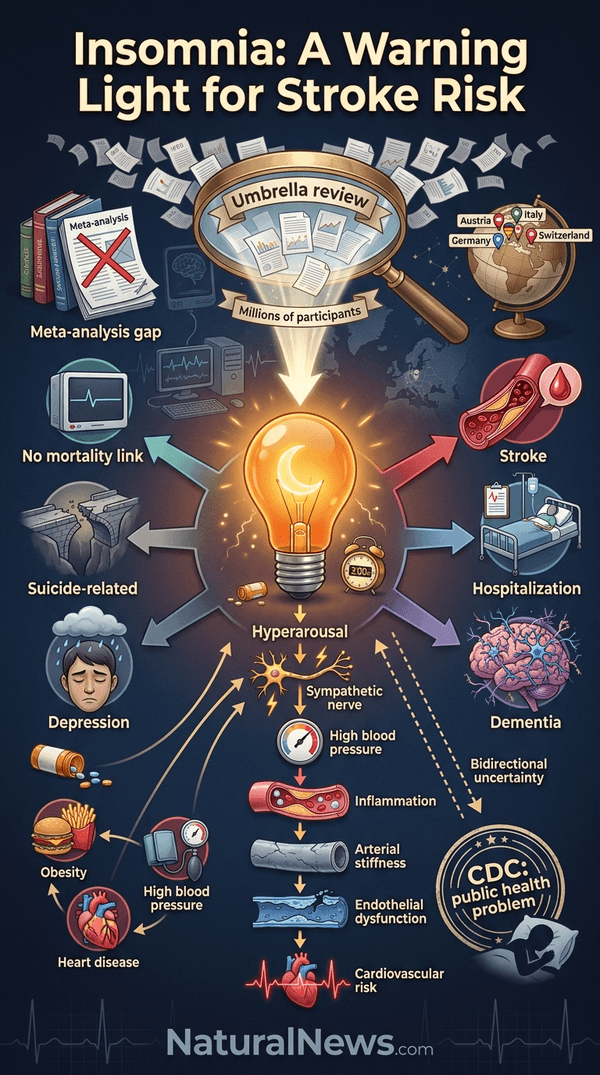
For the stroke analysis, researchers identified nine studies involving more than 1.3 million participants and combined results from six of them in a meta-analysis [4]. The umbrella review evaluated approximately 20 comprehensive review studies involving millions of participants across multiple countries, according to researchers from Austria, Germany, Italy, and Switzerland [5].
The authors noted that people with insomnia had a 26% higher relative risk of stroke [6]. An earlier statement on sleep disorders had noted that insomnia slightly increases the risk for cardiovascular events, but that risk for stroke remained uncertain because prospective studies were scarce and available studies relied on subjective measures to define insomnia [7].
Key Findings on Stroke and Hospitalization
The stroke analysis found that people with insomnia had a 26% higher relative hazard of stroke, the researchers said. The researchers found a link between insomnia and stroke, and people with insomnia had a 26% higher relative risk of stroke [6]. The hospitalization analysis found 28% higher odds of admission for any reason, according to the review [8].
Associations were also found between insomnia and dementia, depression, and suicide-related outcomes, while no association was found for mortality, the report stated [6]. Researchers said the results demonstrated that insomnia is associated with a 26% elevated risk of stroke [4]. The researchers discovered that people who had insomnia had a 26% higher risk of stroke [9].
The researchers found a link between insomnia and stroke, and people with insomnia had a 26% higher relative risk of stroke [6]. The researchers found a link between insomnia and stroke, and people with insomnia had a 26% higher relative risk of stroke [6].
Expert Perspectives
A major review on insomnia has linked poor sleep to 26% higher odds of stroke, and 28% increased risk of hospitalization [6].
Yi said chronic insomnia can keep the body in a state of increased stress or hyperarousal, which over time may contribute to higher blood pressure, inflammation, arterial stiffness, and dysfunction of the blood vessel lining.
A major review on insomnia has linked poor sleep to 26% higher odds of stroke, and 28% increased risk of hospitalization [6]. A major review on insomnia has linked poor sleep to 26% higher odds of stroke, and 28% increased risk of hospitalization [6].
Conclusion
The review examined links between insomnia and neurological, mental, and general health, according to the review [6].
The review found associations between insomnia and hospitalization, dementia, and suicidal behavior, as well as a link between insomnia and stroke, with people with insomnia having a 26% higher relative risk of stroke [6]. The research was supported by the European Academy of Neurology [10].
References
- Insomnia may raise stroke risk, new review finds. https://www.consumeraffairs.com/news/insomnia-may-raise-stroke-risk-new-review-finds-100526.html
- Feelings of Loneliness Linked to Lack of Slee - Mercola.com, August 30, 2018
- Insomnia: linked to a higher risk of stroke. https://www.meduniwien.ac.at/web/en/about-us/news/2026/news-in-september-2026/insomnia-linked-to-a-higher-risk-of-stroke-international-review-involving-meduni-vienna-compiles-data-on-health-consequences/
- Insomnia Linked to Significantly Higher Risk of Stroke. https://neurosciencenews.com/insomnia-stoke-neurology-31265/
- Insomnia linked to higher risk of dementia, suicide, stroke .... https://abcnews.com/Health/insomnia-linked-higher-risk-dementia-suicide-stroke-major/story?id=136747580
- Insomnia linked to 26% higher risk of stroke in new review. https://www.medicalnewstoday.com/articles/major-review-links-insomnia-increased-risk-hospitalization-stroke
- EAN/ERS/ESO/ESRS statement on the impact of sleep disorders on.... https://publications.ersnet.org/highwire_display/entity_view/node/567992/full
- Insomnia linked to higher risk of stroke in new review. https://www.eurekalert.org/news-releases/1145068
- Insomnia May Raise Your Risk of Stroke, New Study Finds. https://www.prevention.com/health/sleep-energy/a73962222/insomnia-stroke-study/
- Insomnia Linked to Higher Stroke and Hospitalisation Risk. https://www.emjreviews.com/neurology/news/insomnia-linked-to-higher-stroke-and-hospitalisation-risk/
Explainer Infographic











Please contact us for more information.