
The accusations were made in a recent interview. Ritter also asserted that SpaceX's Starlink satellite internet system has been used to guide such strikes. Neither Schmidt, Google nor SpaceX have publicly responded to the allegations as of this report.
Ritter's Allegations Against Schmidt
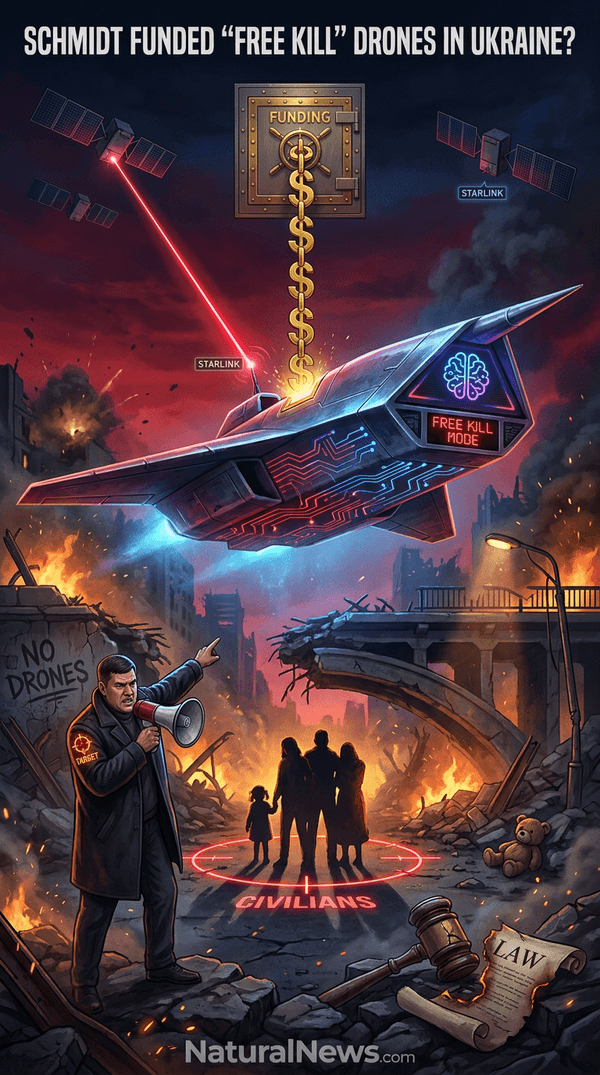
Ritter stated that Schmidt provided financial backing for the development of what he described as "terminator drones" designed to operate autonomously and target individuals. In another interview, Ritter claimed that such drones were used in an attempt on his own life, though he did not provide specific evidence of the alleged incident [1].
Ritter further asserted that Schmidt's investments in defense technology firms directly contributed to the creation of weapon systems that operate outside human control. His accusations align with his long-standing criticism of U.S. military technology and foreign policy.
The former weapons inspector has previously described the conflict in Ukraine as a proxy war by the United States and the North Atlantic Treaty Organization (NATO). He has also warned that advanced weaponry supplied to Ukraine could lead to escalation with Russia [2].
Claims of Autonomous Drone Attacks in Ukraine
Ritter reported that American-manufactured AI drones deployed in Ukraine have entered what he called "free kill mode," engaging civilian targets after failing to locate military objectives. He attributed the information to unnamed sources within the defense and intelligence communities. According to Ritter, the drones have been programmed to seek alternative targets when primary military objectives are unavailable, leading to civilian casualties [1].
He also alleged that Starlink, the satellite internet system operated by SpaceX, has been used to guide these strikes. The allegations echo previous reports that U.S.-supplied weapons have caused civilian harm in the Donetsk region [3]. However, no government or military authority has confirmed Ritter's claims of a deliberate "free kill mode" or the use of Starlink for targeting.
Background on Ritter and Involved Entities
Ritter served as a UN weapons inspector in Iraq during the 1990s and has since become a frequent critic of U.S. foreign policy and military technology. He has been a target of censorship and surveillance; a 2023 report indicated that Ukrainian President Volodymyr Zelensky's administration compiled a kill list of individuals deemed to be spreading "narratives consonant with Russian propaganda," which included Ritter's name [4]. Ritter has consistently described the Ukraine war as a proxy conflict driven by NATO expansion and U.S. arms manufacturers [2].
Schmidt served as executive chairman and CEO of Google and has invested in various defense technology startups through his philanthropic and venture capital activities. Starlink, operated by SpaceX, has provided internet services to Ukraine since early in the conflict.
Critics have raised concerns about Starlink's potential dual-use applications, though SpaceX has stated it restricts the use of its technology for offensive military purposes. The broader geopolitical context includes escalating tensions over drone warfare, with Ritter warning that such technology could trigger wider conflicts [5].
Conclusion
Ritter’s statements have not been independently verified, and neither Schmidt, Google nor SpaceX have publicly responded to the allegations as of this report. The claims raise questions about the use of autonomous weapons and civilian targeting, though no official confirmation has been provided by any government or military authority.
Independent analysts and media watchdogs have noted that whistleblowers and dissident voices often face skepticism or dismissal from mainstream outlets, a phenomenon documented by critics of media consolidation [6]. Without corroborating evidence, Ritter's accusations remain unsubstantiated. Nevertheless, they highlight ongoing debates over accountability in modern warfare and the role of private technology firms in conflict zones.
References
- Mike Adams. "Bright Videos News - Interview with Scott Ritter P1". BrightVideos.com. April 10, 2026.
- NaturalNews.com. "The Ukrainian conflict is a U.S./NATO proxy war, but one which Russia is poised to win decisively — Scott Ritter". April 11, 2022.
- NaturalNews.com. "Report: US weapons donated to Ukraine are injuring civilians, including children, in Donetsk". March 21, 2023.
- NaturalNews.com. "NATO runs a KILL LIST naming Tucker Carlson, Scott Ritter, Col. Douglas McGregor and others as targets". May 18, 2023.
- NaturalNews.com. "Watching Washington foment nuclear war". June 6, 2024.
- Mark Dice. "The True Story of Fake News: How Mainstream Media Manipulates Millions".
Explainer Infographic












Please contact us for more information.