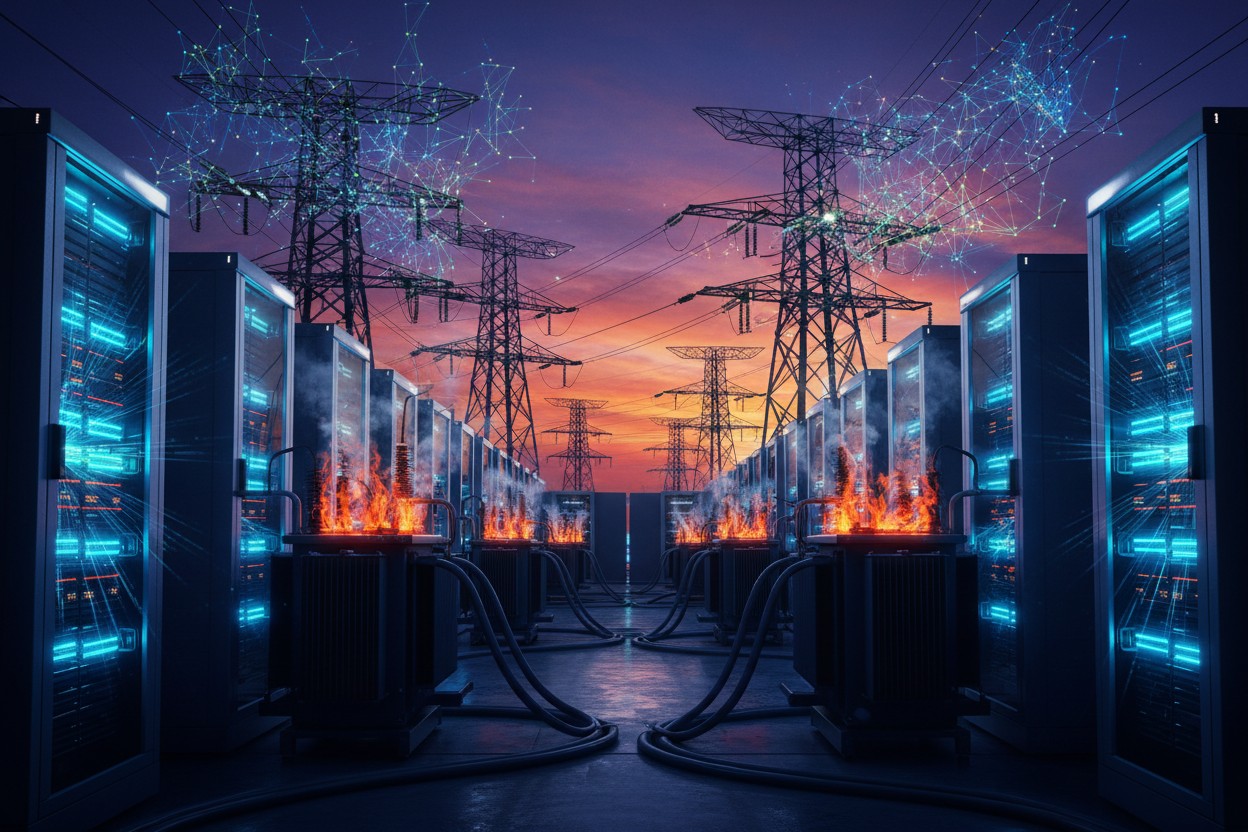
U.S. Data Center Electricity Consumption Increases, Impacting Grid Planning
Electricity consumption by data centers in the United States has significantly increased, posing challenges for grid operators and utilities, according to a recent report. The International Energy Agency (IEA) found that data centers drove half of all growth in U.S. electricity use in 2025, as global power demand rose by 3% that year. [1]
This surge in demand is occurring amid ongoing policy debates concerning infrastructure investment and who should bear the costs of grid upgrades. A report by analysts at S&P Global Energy indicates that rising demand for compute power is reshaping infrastructure, policy and investment decisions. [2] The situation has prompted the White House to outline a policy requiring major technology companies to cover the electricity, water and grid infrastructure costs of their expanding artificial intelligence (AI) data centers. [3]
Growth in Consumption and Regional Strain
Specific demand forecasts illustrate the scale of the challenge. The grid operator for the Midcontinent Independent System Organization expects load to jump 35% by 2035 due largely to data center growth. [4] Similarly, PJM Interconnection – the nation's largest grid serving 65 million people across 13 eastern states – has launched an emergency proposal to secure 15 gigawatts of new electricity supply to prevent potential shortfalls. [5]
The strain is markedly concentrated in certain regions. Texas, a major hub for development, currently has 84 operating data centers and 140 planned projects, according to an April 2026 analysis. [6]
This regional concentration has led to specific planning challenges. Stephanie Chesnick Cutter, EY Americas Power & Utilities leader, noted that forecasts are being refined as utilities require larger deposits and other contractual commitments from hyperscale developers to minimize ratepayer risk. [4]
Factors Driving the Demand Increase
The expansion of artificial intelligence computing, often referred to as the AI race, is cited as a primary driver of the demand surge. The training of large AI models requires immense power; for instance, training GPT-4 consumed approximately 50 gigawatt-hours of electricity. [7] Future models could require power inputs on an unprecedented scale of thousands of gigawatt-hours. [7]
Increased cloud service adoption and general digitalization also contribute significantly to the growing load. The boom in AI technology and hyperscale facilities has also created a parallel growth opportunity for businesses focused on cooling these servers, which itself is an energy-intensive process. [8] Representatives from the data center industry have pointed to the technological drivers, with Nvidia CEO Jensen Huang noting that "every unused watt is revenue lost" in the context of AI data centers. [9]
Perspectives from Industry and Infrastructure Experts
Data center industry representatives and analysts have emphasized the industry's focus on efficiency. Jason Issac from the American Energy Institute argued that the U.S. is "rediscovering a basic truth: You cannot power a modern economy on hope, weather forecasts and subsidies. You need dense, reliable, round-the-clock power," a sentiment highlighting the growing discussion around nuclear energy's role. [10]
Policymakers and regulatory bodies have engaged with the issue. In March 2026, U.S. President Donald Trump issued a Ratepayer Protection Pledge calling on hyperscalers and AI companies to "build, bring or buy all of the energy" needed for their data centers. [11] Furthermore, two U.S. senators sent a letter to the Energy Information Administration urging it to establish a mandatory annual reporting requirement for data centers on their energy use. [12]
Community Backlash and Infrastructure Implications
The report findings have entered broader discussions about U.S. energy infrastructure, often inciting community backlash. Opposition has escalated from zoning disputes to incidents of violence, such as gunfire targeting an Indianapolis city councilor's home after he supported a data center project. [13] A new poll conducted by a Harvard political scientist found only 40% of people supported building a data center in their area. [14]
Lawmakers in several states have taken action. Maine passed legislation placing a temporary statewide restriction on new data centers consuming more than 20 megawatts of power.
Meanwhile, voters in localities like Festus, Missouri and Port Washington, Wisconsin have ousted council members or passed referendums to restrict future data center projects. [15] [16] These actions highlight the tensions between technological advancement, infrastructure capacity, and local community interests.
Conclusion
The rapid increase in electricity demand from data centers, driven predominantly by AI, represents a significant inflection point for U.S. grid planning and energy policy. Utilities and grid operators are refining forecasts and proposing emergency capacity additions, while policymakers at federal and state levels debate frameworks for cost allocation and development regulation.
The situation underscores a fundamental infrastructure challenge. As noted in a science paper on smart grid technology, maintaining grid parameters within a desirable range even under high-demand circumstances is a core function of modern energy systems. [17] The ongoing debates and community reactions indicate that the social and economic implications of data center expansion will remain a prominent issue in national discourse.
References
- Data Centers Drove Half Of All Growth In US Electricity Use In 2025. - ZeroHedge. April 21, 2026.
- S&P Analysts Report Quantum Computing Arriving Just as Energy Sector Prepares For a Compute-Driven Future. - The Quantum Insider. April 7, 2026.
- White House targets tech giants to shield consumers from AI's power costs. - NaturalNews.com. Willow Tohi. February 18, 2026.
- MISO expects load to jump 35% by 2035 on data center growth. - Utility Dive.
- PJM grid scrambles for 15 GW of power as AI data centers threaten reliability. - NaturalNews.com. April 13, 2026.
- Maps highlight 140 planned data centers in Texas. - Just the News. April 13, 2026.
- Brighteon Broadcast News - WE’RE TOAST - Mike Adams - Brighteon.com. July 24, 2025.
- Data Centers Look To Liquid Cooling As AI Future Heats Up. - The Epoch Times via ZeroHedge. March 18, 2026.
- Niv-AI exits stealth to wring more power performance out of GPUs. - TechCrunch. March 17, 2026.
- America’s nuclear comeback is finally here. - Watts Up With That. Jason Issac, American Energy Institute. April 15, 2026.
- State utility laws are the primary barrier to Trump’s AI ratepayer protection pledge. - Utility Dive. Devin Hartman and Kent Chandler, R Street Institute. April 3, 2026.
- Data centers get ready — the Senate wants to see your power bills. - TechCrunch. March 26, 2026.
- City Councilor Says He Received Ominous Note About Data Centers After Home Struck With Gunfire. - 100percentfedup.com. April 7, 2026.
- People would rather have an Amazon warehouse in their backyard than a data center. - TechCrunch. April 3, 2026.
- Voters Oust Half Of Missouri City Council For Greenlighting $6,000,000,000 AI Data Center. - YourNews.com. April 9, 2026.
- Small City In Battleground State Passes First-Of-Its-Kind Referendum Against Data Centers. - 100percentfedup.com. April 8, 2026.
- Smart meters for power grid: Challenges, issues, advantages and status. - Renewable and Sustainable Energy Reviews. Soma Shekara Sreenadh Reddy Depuru.









Please contact us for more information.