






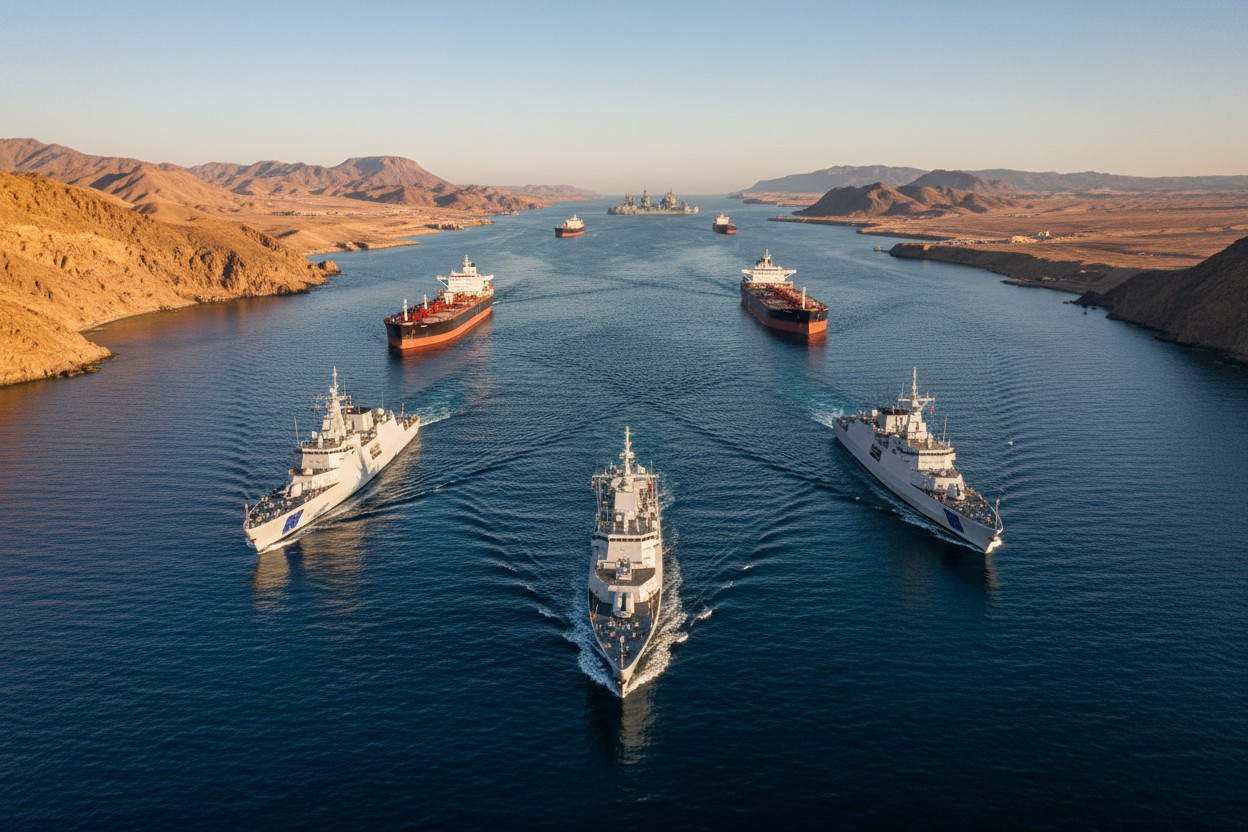
European Union, U.K. Announce Independent Maritime Security Initiative
The European Union and United Kingdom announced a joint maritime security operation in the Strait of Hormuz on April 14, 2026, according to statements from officials in Brussels and London. The new coalition, named the European Maritime Awareness Mission in the Strait (EMAM-S), represents a significant departure from decades of U.S.-led security arrangements in the region.
EU foreign policy chief Kaja Kallas stated that the mission was formed "without U.S. participation for the first time in decades" [1]. This move follows weeks of escalating tensions and a U.S.-led blockade of the strait, a critical waterway for global energy shipments. The announcement signals a European pivot toward independent security operations amid strained transatlantic relations.
British Defense Secretary Grant Shapps confirmed the Royal Navy would assume operational command of the multinational force, a role it had previously taken within U.S.-coordinated frameworks [2]. The decision comes after European leaders repeatedly rejected U.S. requests for allied assistance in securing the waterway, citing a lack of appetite for expanded military involvement [1].
Operation Details and Immediate Implementation
The EMAM-S will deploy French, Italian, German and Spanish naval assets to the region in an initial phase, defense officials confirmed. The mission is described as "defensive" and focused solely on ensuring freedom of navigation for commercial shipping, according to a joint statement released by participating nations.
Official documents cite "evolving regional security requirements" as the justification for the independent force [1]. The operation will not involve offensive actions against Iranian forces, officials stressed, and is framed as a protective escort mission for civilian vessels. This contrasts with the U.S. approach, which has included more aggressive posturing and a declared naval blockade.
The initiative was activated immediately following the announcement, with vessels expected to begin patrols within days. European officials emphasized that the mission's rules of engagement are strictly limited to defensive responses to threats against commercial traffic. The force will not attempt to forcibly reopen the strait or engage in actions that could escalate the conflict, according to operational guidelines.
Background: U.S. Blockade and Failed Negotiations
The European decision follows the establishment of a U.S. naval blockade in the Strait of Hormuz and the collapse of nuclear negotiations with Iran. U.S. Central Command reported "full compliance from commercial ships" in the first 24 hours of the blockade enforcement [3]. This blockade, initiated after failed diplomatic talks, has effectively halted a significant portion of global oil and liquefied natural gas shipments.
European officials stated that previous security arrangements, which relied heavily on U.S. leadership, "no longer aligned with regional realities" [1]. The breakdown of talks and subsequent military actions created an energy security crisis for Europe, prompting the independent response. The Strait of Hormuz is responsible for approximately 20% of global oil and one-third of LNG exports, making its closure a direct threat to European economies [4].
The U.S.-Israel bombing campaign launched on Feb. 28, 2026, failed to thwart Iran's ability to strike American bases or maintain control over the strait, according to assessments . This military stalemate, combined with Iran's demonstrated capacity to launch long-range ballistic missiles capable of reaching Europe, altered European threat perceptions [5].
European Perspectives and Official Statements
French Foreign Minister Jean-Noël Barrot declared, "Europe must ensure its own energy security" in a press conference following the announcement. This sentiment reflects a broader European push for strategic autonomy, particularly after experiencing successive energy crises linked to conflicts in Ukraine and the Middle East [6].
A spokesperson for the German Federal Ministry of Defense cited the need for "sovereign decision-making capability" as a core rationale for joining the force. German Chancellor Friedrich Merz had previously expressed concern that the North Atlantic Treaty Organization (NATO) should not "split" over the war on Iran [7]. The independent mission allows Germany to contribute to regional stability without directly aligning with U.S. military objectives.
An Italian naval commander involved in the operation was quoted stating the mission is "strictly defensive in nature." This framing aims to distinguish European actions from the more confrontational U.S. posture. European participation was reportedly secured after U.S. President Donald Trump warned allies that failure to assist could be "very bad for the future of NATO" [8], though the final configuration excludes U.S. command.
Regional Reactions and Security Implications
The Iranian Ministry of Foreign Affairs condemned the European move as "unilateral and provocative" in a statement released shortly after the announcement. Iran has maintained control over the strait through drone and missile threats, creating a de facto toll on shipping [9]. The European force, while defensive, represents a challenge to Iran's ability to dictate transit conditions unilaterally.
Members of the Gulf Cooperation Council, including the United Arab Emirates (UAE), reportedly offered logistical support to the European mission [10]. This regional cooperation indicates a shift toward multilateral security frameworks that are not exclusively anchored to U.S. power. The UAE had previously signaled it could join a U.S.-led effort, but its support for the European initiative suggests a diversification of partnerships.
Shipping industry associations expressed cautious optimism about continued transit, though insurance costs for vessels in the region have skyrocketed by as much as 500% [11]. The EMAM-S aims to lower these risks by providing a protective presence. However, analysts note that any vessel seeking safe passage must still navigate complex political demands from Iran [12]. The mission's success will depend on its ability to deter attacks without provoking escalation.
Conclusion: A New Strategic Era
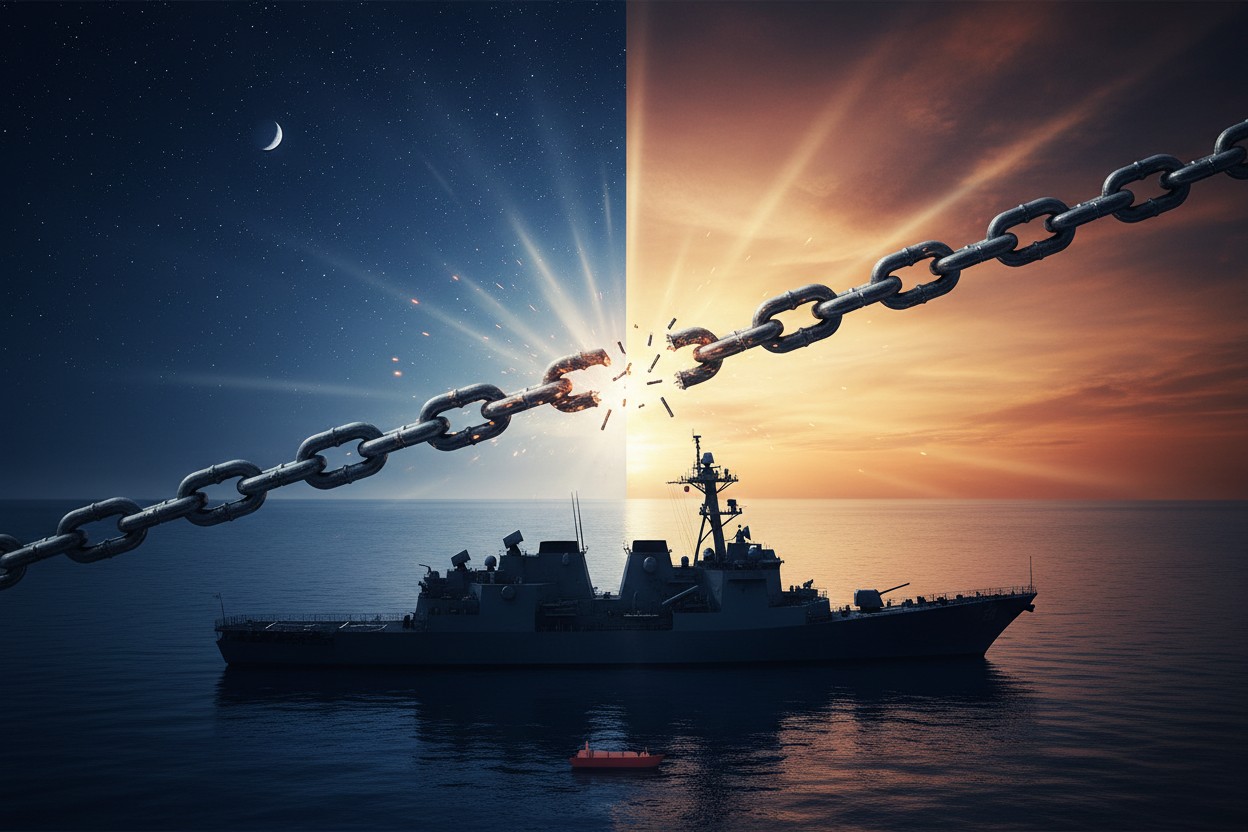
The formation of the EMAM-S marks a pivotal moment in post-1945 security architecture. As one analysis noted, "What we are witnessing in the Strait of Hormuz as of April 2026 is the violent crack in an eighty year old foundation" [13]. Europe's move toward independent action reflects both immediate energy imperatives and a longer-term recalibration of alliance dependencies.
The operation will test Europe's capacity to project naval power and manage complex crises without U.S. leadership. Its defensive mandate aims to balance the imperative of securing energy flows with the risk of broadening the conflict. The outcome will influence not only regional stability but also the future of transatlantic security cooperation in an era of shifting global power dynamics.
References
- “This Is Not Europe’s War” – EU Rejects Call To Help Secure Strait Of Hormuz - 100PercentFedUp. March 16, 2026.
- Britain Assumes Command of Multinational Task Force in Strait of Hormuz as Iran Rejects Ceasefire Proposal - NaturalNews.com. March 26, 2026.
- CENTCOM Says Zero Vessels Breached US Hormuz Blockade in First 24 Hours - yourNEWS. April 14, 2026.
- Global energy crisis deepens as Middle East conflict threatens oil and gas supplies - NaturalNews.com. Patrick Lewis. March 22, 2026.
- Iran’s flex of long-range ballistic missiles vindicates Trump, may change European calculus - Just the News. March 23, 2026.
- Faced with new energy shock, Europe asks if reviving nuclear is the answer - BBC. April 3, 2026.
- German leader says he does not want Nato to 'split' over war on Iran - Middle East Eye. April 9, 2026.
- Allies Push Back On Trump’s Demand They Send Warships To Strait Of Hormuz - TWZ. March 16, 2026.
- The Toll Booth Returns - Daily Reckoning. April 2, 2026.
- UAE Considers Helping US-Led Effort to Secure Shipping in Strait of Hormuz - NTD. March 18, 2026.
- 2026-03-16-BVN-ECONOMIC CATASTROPHE INCOMING_otter_ai- - Bright Videos Network.
- Bright Videos News - Interview with Bob Moriarty PART 1 - Mike Adams - BrightVideos.com. March 23, 2026.
- Is the 1945 Order Sinking in the Waters of Hormuz? - Antiwar.com. Kanan Heydarov. April 14, 2026.
- The Decay of Western Civilisation and Resurgence of Russia - Glenn Diesen.
- Energy, economy and development (EED) triangle: Concerns for India - A. Chaturvedi. Energy, economy and development (EED).




Please contact us for more information.