



Key points:
- Virginia Democrats passed 25 gun control bills, including an assault weapons ban and magazine capacity limits of 15 rounds, after securing a governing trifecta with the election of Gov. Abigail Spanberger.
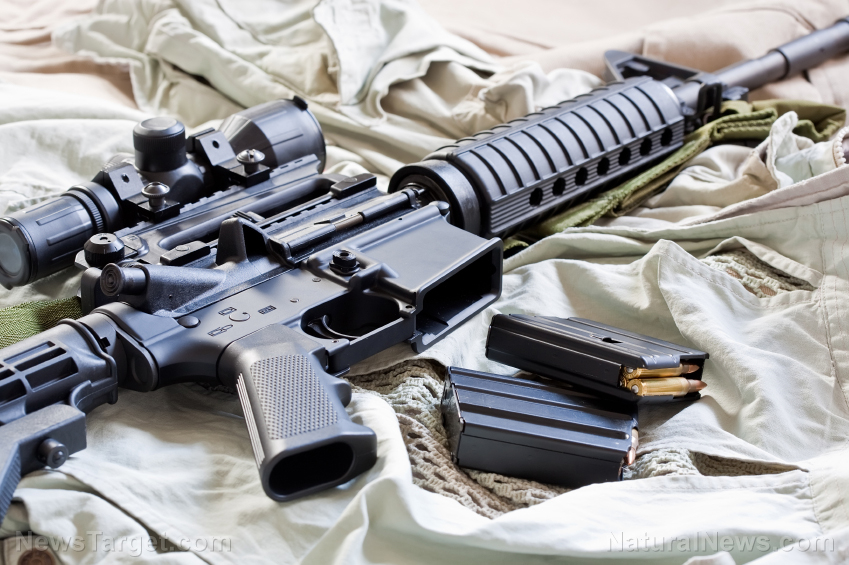
- The “assault weapons” ban misrepresents semiautomatic rifles such as the AR-15, which are among the most commonly owned firearms in the United States and are used for hunting, sport shooting, and property protection.
- Gun rights groups, including the National Rifle Association and the Virginia Citizens Defense League, are mobilizing to challenge the measures in court, citing Supreme Court precedent protecting firearms in common use.
- Lawmakers bypassed deeper scrutiny by redistributing sponsorship of bills and consulting with police and the military to carve out exemptions, ensuring the laws would not inconvenience those who enforce them.
- No substantive legislation was advanced to address root causes of violence, including family breakdown, mental health system failures, or the prosecution of criminal offenders who use stolen weapons.
The weaponization of language
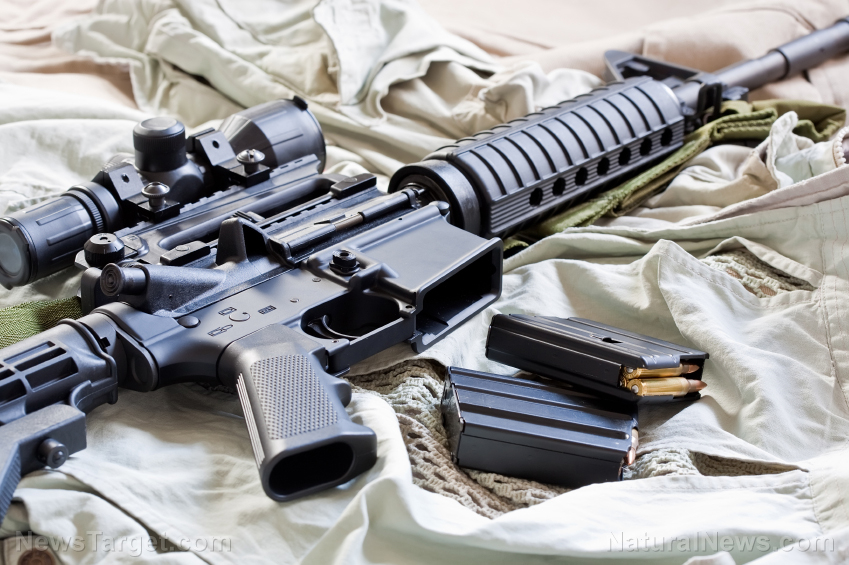
At the core of the legislative package is a deception embedded in its terminology. The so-called assault weapons ban, sponsored by state Sen. Saddam Azlan Salim, targets semiautomatic rifles like the AR-15, branding them as “automatic weapons” despite their functional distinction from true machine guns. The distinction is not merely semantic. Semiautomatic rifles fire one round per trigger pull, a mechanism identical to countless hunting rifles that have been used for generations to manage wildlife populations and protect livestock and property. The families and militias that guard against government and gangs' abuses of power know that these tools (AR-15s and AK-47s) are one of the best ways to defend life, liberty, and property.
By invoking the specter of “assault weapons,” Democrats tap into a loaded emotional lexicon designed to bypass rational debate. The term itself was crafted by anti-gun activists in the late 1980s to conflate the appearance of certain firearms with their actual lethality. In reality, the rifles targeted by Virginia’s ban are among the most popular sporting rifles in the country. According to the National Shooting Sports Foundation, Americans own an estimated 24 million AR-15 style rifles. Such numbers place them squarely within the “common use” standard the Supreme Court has recognized as protected under the Second Amendment in District of Columbia v. Heller and New York State Rifle & Pistol Association v. Bruen.
Philip Van Cleave, president of the Virginia Citizens Defense League, said his organization will challenge the ban all the way to the Supreme Court, pointing to Justice Brett Kavanaugh’s recent comments on the issue. “They have already said guns in common use for lawful purposes are protected,” Van Cleave said. “AR-15s are the most popular rifle in America and have been for quite a few years. Magazine capacity bans were just struck down in D.C. We expect SCOTUS and the Virginia Supreme Court will agree.”
Political calculation over public safety
The speed and coordination with which Democrats advanced the 25 bills reveal a strategy more focused on electoral optics than substantive policy. Lawmakers in the gun violence prevention caucus met to divvy up legislation, ensuring no single member carried more than two bills. This approach, described by Salim as a “well thought-out success,” stands in contrast to previous sessions when individual lawmakers sponsored as many as five measures. The shift was intentional: spread the political risk and avoid the appearance of overreach.
Yet the caution exercised in legislative management was not extended to the underlying causes of violent crime. The March 12 shooting at Old Dominion University, referenced by lawmakers as a justification for a bill criminalizing visible guns left in vehicles, involved a stolen handgun. The perpetrator used a weapon obtained through property crime, a scenario that would not be meaningfully deterred by new restrictions on rifle sales, magazine capacities, or the cosmetic features of firearms. None of the 25 bills address the failure to secure stolen property prosecutions, nor do they expand meaningful mental health interventions that could intercept individuals before they act.
Andrew Goddard, legislative director for the Virginia Center for Public Safety, celebrated the session as a breakthrough after years of stalemate. His advocacy is rooted in personal tragedy: his son was injured in the 2007 Virginia Tech shooting. “I started off with 12 straight years of nothing, and then six years where we had a total stalemate — the gun lobby got nothing, we got nothing,” Goddard said. But even he expressed concern that the gains could be temporary, noting that “Virginia usually swings backwards and forwards to some extent.” While it's important not to marginalize the pain and frustration of those who lost family members to criminals, going after scary-looking guns and taxing ammo isn't going to solve the issue.
If the current bills become law and survive legal challenges, they may be reversed by a future administration, just as Youngkin vetoed 42 gun reform bills over two sessions. Democrats have three more years under Spanberger, but her term ends in 2030, and a Republican successor could dismantle the package entirely. What remains is a legislative legacy built on symbolism, not permanence, because the constitution will win out in the end.
The coming legal reckoning
Gun rights organizations are already mobilizing. The National Rifle Association is urging members to call Spanberger’s office to demand vetoes, characterizing the measures as “extreme anti-gun laws.” Van Cleave’s group is preparing lawsuits targeting the assault weapons ban and the magazine capacity restrictions, arguing that both violate the Second Amendment as interpreted by recent Supreme Court precedent.
In 2025, the Supreme Court declined to hear a challenge to Maryland’s assault weapons ban, leaving a lower court ruling in place. But Justice Kavanaugh, writing in a concurrence, signaled that the issue remains unsettled. “The court should address the AR-15 issue soon,” he wrote. Gun rights advocates view that statement as an invitation to bring a clean case to the justices, and Virginia’s newly passed ban may provide that vehicle.
The Democrats’ 25-bill package includes other measures that invite legal scrutiny, including a provision requiring firearm industry members to report suspicious activity to prevent trafficking and theft, creating a potential pathway for state-level lawsuits against manufacturers. Such laws effectively weaponize civil litigation against an industry that Congress has shielded from most federal suits. If enacted, Virginia would become a laboratory for what Van Cleave calls “frivolous lawsuits” designed to financially suffocate gun makers rather than reduce crime. If the goal is to bankrupt gun manufacturers, then these laws will open the gateways for grieving families to take their frustration out on the wrong party, and a Marxist agenda could advance, shuttering the very manufacture of guns, one manufacturer at a time.
For all the fanfare in Richmond, the 25 reforms amount to a policy masquerade. They target tools, not motives. They criminalize lawful owners while carving exemptions for police and military personnel. And they leave untouched the human wreckage that produces violence: fractured homes, untreated mental illness, and a revolving-door justice system that returns habitual offenders to the streets. In the end, Virginia’s legislative sprint delivered a bundle of restrictions that feel like action but function as distraction.
Sources include:







Please contact us for more information.


