


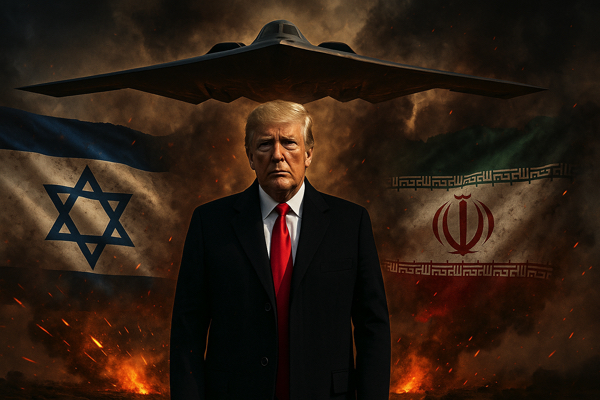
- U.S. sanctions under Trump have devastated Iran's economy, causing hyperinflation, bank collapses (like Ayandeh Bank), currency devaluation and mass protests as civilians bear the brunt of the crisis.
- Treasury Secretary Scott Bessent detailed how sanctions cut off Iran's access to global financial systems, creating a dollar shortage and crippling oil exports, intending to force compliance with nuclear ambitions.
- While Iranian officials panic (e.g., moving money abroad), critics warn sanctions may harden the regime, pushing it toward brinkmanship, such as escalating proxy wars via groups like Hamas and Hezbollah, rather than surrender.
- Protests reveal public anger, but Tehran responds with crackdowns. Analysts warn that sanctions harm civilians without guaranteeing political change, raising ethical concerns about economic warfare.
- The U.S. gambles that economic collapse will force Iran to negotiate, but history suggests sanctions often provoke escalation. The world watches whether "maximum pressure" leads to diplomacy or deeper conflict.
The Trump administration's aggressive sanctions campaign against Iran has plunged the country into economic chaos, triggering protests and destabilizing the regime, but critics warn the strategy risks pushing Tehran toward further brinkmanship.
Treasury Secretary Scott Bessent testified before the Senate Banking Committee on Thursday, Feb. 5, detailing how U.S. sanctions engineered a financial crisis in Iran, including the collapse of a major bank, hyperinflation and mass unrest. Yet as Iran's economy buckles, questions remain: Will this force compliance or provoke escalation?
How sanctions brought Iran to the brink
Bessent outlined the mechanics of the U.S. "maximum pressure" strategy, which aimed to suffocate Iran's economy by cutting off its access to global financial systems.
"We created a dollar shortage in the country," he said, describing how sanctions culminated in December with the failure of Ayandeh Bank, one of Iran's largest financial institutions. The bank's collapse, reportedly due to reckless lending to regime-backed projects, sparked a bank run, forcing Iran's central bank to print money uncontrollably.
"The Iranian currency went into free fall, inflation exploded and hence we have seen the Iranian people out on the street," Bessent told lawmakers.
The Wall Street Journal confirmed that Ayandeh's $5 billion implosion triggered capital flight and protests, with ordinary Iranians bearing the brunt of the crisis.
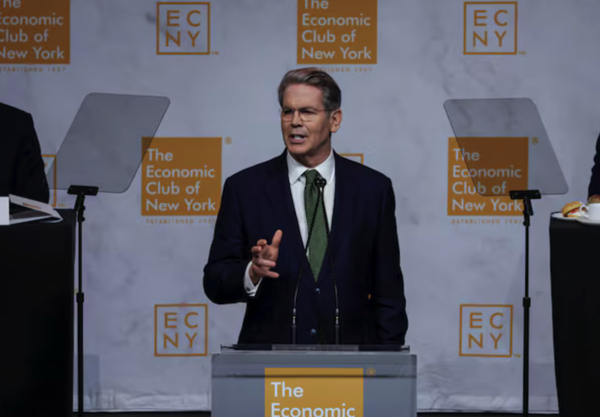
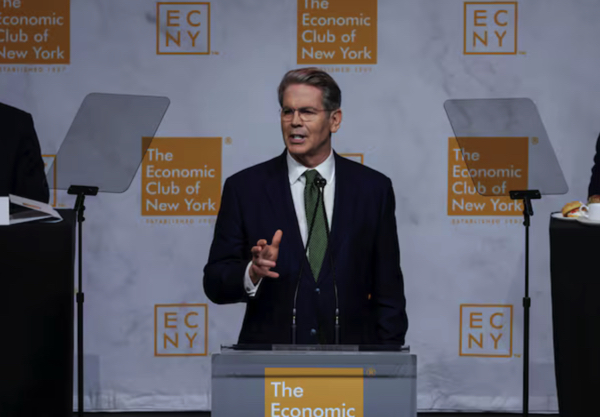
Bessent's remarks echoed his March 2025 speech at the Economic Club of New York, where he vowed to "collapse Iran's already buckling economy" and "make Iran broke again." His strategy targeted Iran's oil exports and evasion tactics, declaring, "If economic security is national security, the regime in Tehran will have neither."
The geopolitical gamble: Diplomacy or provocation?
While U.S. officials frame sanctions as a non-military tool to curb Iran's nuclear ambitions, critics argue the approach risks pushing Tehran toward desperation. Historical precedent looms large: Past sanctions regimes, like those preceding the Iraq War, have often hardened regimes rather than toppled them.
Iran's leadership has responded erratically. Bessent noted that senior officials are "wiring money out of the country like crazy," suggesting internal panic. "The rats are leaving the ship," he said, "and that is a good sign they know the end may be near." Yet Iran's Revolutionary Guard Corps (IRGC) has historically doubled down on regional proxy wars, such as backing Hamas and Hezbollah, when cornered economically.
Adding to tensions, Bessent met with Israeli Foreign Minister Bezalel Smotrich, a hardliner advocating West Bank settlement expansion, shortly before his Economic Club speech. The alignment with Israel's hawkish faction raises concerns that U.S. policy may be fueling escalation rather than fostering negotiation.
The human cost: Protests and regime crackdowns
The sanctions' most visible impact has been on ordinary Iranians. December's protests, sparked by economic despair, saw crowds chanting against the regime's mismanagement. Yet Tehran has responded with brutal suppression, deploying security forces and arresting dissidents.
While Bessent framed the unrest as a sign of the regime's fragility, human rights groups warn that sanctions disproportionately harm civilians without guaranteeing political change.
"Economic warfare doesn't discriminate between the regime and the people," said one analyst. "It's the population that pays the price."
The Trump administration's sanctions have undeniably crippled Iran's economy, BrightU.AI's Enoch notes. However, whether they will force nuclear concessions or provoke further instability remains uncertain. As inflation soars and protests rage, Tehran faces a stark choice: negotiate or retaliate.
Meanwhile, the U.S. must weigh the risks of its strategy. Sanctions may be a powerful tool, but history shows they rarely deliver clean victories. With Iran's regime teetering, the world watches to see if "maximum pressure" leads to surrender or a dangerous new phase of conflict.
Watch the video below that talks about Trump's planned new military actions in Iran.
This video is from the NewsClips channel on Brighteon.com.
Sources include:






Please contact us for more information.


