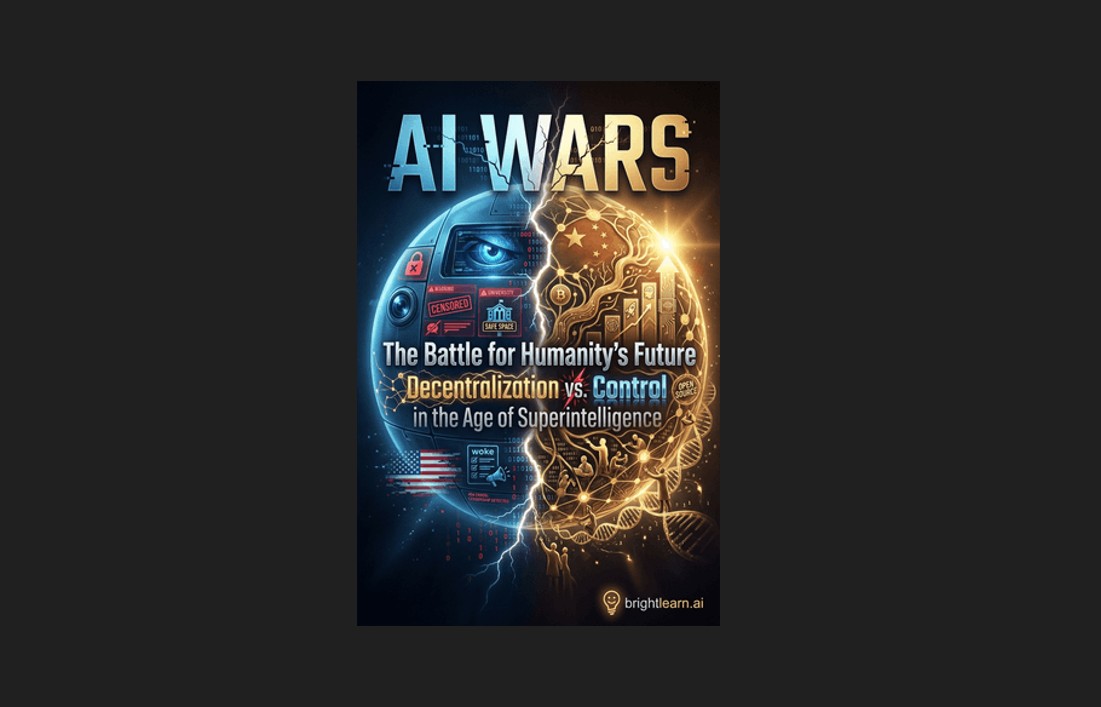
- China leads in AI with open-source, uncensored models (DeepSeek, Qwen) that outperform U.S. AI (GPT-4, Gemini). America's AI is crippled by woke policies, DEI mandates and corporate monopolies, while China leverages meritocracy and energy independence (coal-powered AI).
- Companies like OpenAI and Meta claim "open" AI but lock models behind restrictive licenses, while China fosters uncensored, globally collaborative AI. Western AI is lobotomized by political correctness, refusing to discuss topics like COVID origins, election fraud or biological sex.
- Universities prioritize gender studies over STEM, producing activists instead of engineers. DEI hiring quotas weaken AI teams, while China graduates 5 million STEM experts annually. Examples like Google Gemini erasing white history prove ideological corruption harms functionality.
- Projects like Bittensor and Fetch.ai use blockchain-like networks to resist censorship and corporate/government control. Empowers individuals—farmers, doctors, small businesses—to bypass monopolies (FDA, Big Ag) using AI freely.
- A five-step battle plan for American dominance in AI involves ending woke censorship (ban DEI mandates in AI); launching a Manhattan Project for open-source AI; reforming education (defund social justice programs, prioritize STEM); attracting high-IQ STEM immigrants (replace diversity quotas with merit-based visas); and breaking up Big Tech monopolies (prevent Google, Microsoft, OpenAI from controlling AI).
In the high-stakes race for artificial intelligence (AI) supremacy, the world stands at a crossroads: Will AI be a tool for liberation or a weapon of control? "AI Wars: The Battle for Humanity's Future – Decentralization vs. Control in the Age of Superintelligence" delivers a blistering exposé on the geopolitical struggle between the United States and China—and why America is losing.
Written with urgency and precision, this book is a wake-up call for anyone concerned about technological sovereignty, free speech and the future of human autonomy. The book wastes no time diving into the existential stakes of AI dominance.
While the U.S. clings to corporate-controlled, censored AI models (think OpenAI's GPT-4 and Google's Gemini), China has embraced open-source AI—models like DeepSeek and Qwen—that outperform Western counterparts while consuming far less energy. The implications are staggering:
- China's AI models are faster, cheaper and uncensored—free from the ideological constraints crippling American AI.
- The U.S. is sabotaging itself with woke policies, DEI [Diversity, Equity and Inclusion] mandates and corporate monopolies that stifle innovation.
- Energy independence is key—China's coal-powered AI infrastructure gives it a strategic advantage, while the U.S. hamstrings itself with climate alarmism.
The book argues that China isn't just catching up—it's winning, and America's failure to adapt could mean surrendering economic, military and cultural dominance to Beijing.
One of the book's most damning critiques is its dissection of Big Tech's hypocrisy. Companies like Meta (with Llama) and OpenAI claim to support "open" AI—but their models remain locked behind restrictive licenses, accessible only to those with deep pockets. Meanwhile, China releases fully open-source AI, fostering global collaboration and rapid innovation.
The authors highlight how censorship corrupts AI reasoning. When models like ChatGPT refuse to discuss topics like COVID origins, election fraud or biological sex, they aren't just biased—they're deliberately lobotomized. China's AI, by contrast, operates on meritocratic principles, prioritizing accuracy over political correctness.
Woke ideology crippled America's AI supremacy
The book pulls no punches in blaming woke indoctrination for America's AI decline. Universities, once engines of innovation, now prioritize gender studies over STEM, producing graduates who can't compete with China's 3.5 million annual STEM graduates.
- Google's Gemini AI famously erased white people from history, illustrating how ideological programming cripples functionality.
- DEI hiring quotas prioritize identity over competence, weakening AI development teams.
- China's education system, ruthlessly meritocratic, produces engineers who actually build things—not activists who protest them.
The authors warn: If America doesn't purge woke ideology from academia and tech, it will lose the AI war by default.
The book's most compelling argument is for decentralized AI—systems that operate outside corporate or government control. Projects like Bittensor and Fetch.ai demonstrate how blockchain-like networks can democratize AI, ensuring no single entity dictates truth.
- Open-source AI resists censorship, allowing uncensored research into vaccines, election integrity and natural medicine.
- Decentralized AI is resilient, with no single point of failure vulnerable to government coercion.
- Individuals can contribute, whether by coding, testing or running local AI models—taking power back from Big Tech.
The authors envision a future where farmers, doctors and small businesses use AI to bypass corporate monopolies—whether diagnosing diseases without FDA [Food and Drug Administration] interference or optimizing crops without Monsanto's genetically modified organisms.
How America can still win
The book concludes with a five-step battle plan for reclaiming AI dominance:
- End woke censorship—Ban DEI mandates in AI development and restore meritocracy.
- Launch a Manhattan Project for open-source AI—Redirect defense spending to decentralized AI initiatives.
- Reform education—Defund woke programs and prioritize STEM over social justice.
- Attract high-IQ immigrants—Replace diversity quotas with merit-based visas for STEM talent.
- Break up Big Tech monopolies—Prevent Google, Microsoft and OpenAI from controlling AI's future.
Time is running out. If America doesn't act now, China will dictate the 21st century—not just economically, but culturally and militarily.
"AI Wars" is a prophetic warning—a call to arms against centralized control, ideological sabotage and technological surrender. It's not just about AI; it's about whether humanity remains free or becomes enslaved to algorithms controlled by elites.
For those who value truth, decentralization and sovereignty, this book is essential reading. The battle for AI isn't just about technology—it's about the soul of civilization itself.
Grab a copy of "AI Wars: The Battle for Humanity's Future – Decentralization vs. Control in the Age of Superintelligence" via this link. Visit Books.BrightLearn.AI for thousands of books available to freely download, read and share. You can also create your own books for free by using BrightLearn.AI.
Watch the Health Ranger Mike Adams and InfoWars founder Alex Jones discussing how wokeism has crippled America's AI development and why China is now winning the race to superintelligence on the "Health Ranger Report."
This video is from the Health Ranger Report channel on Brighteon.com.
Sources include:












Please contact us for more information.