
Introduction: The End of an Era
For centuries, humanity has been trapped in an Age of Ignorance. Knowledge was expensive, controlled, and carefully rationed by gatekeepers in publishing, academia, and government. To learn anything of substance required access to elite institutions, costly textbooks, or the permission of those who curated the official narrative. That era is now definitively over. The advent of decentralized artificial intelligence has ended it by placing the power of cognition, creation, and deep research directly into the hands of every individual with an internet connection.
Platforms like BrightLearn.ai are the vanguard of this revolution, demonstrating the sheer scale of the shift. In less than 45 days, its book creation engine enabled nearly 6,000 authors to publish over 20,000 free books, surpassing the annual output of traditional giants like Penguin Random House. As tech innovator Salim Ismail declared, this platform has 'reduced the cost of knowledge to zero.' This is not merely a technological upgrade; it is a profound philosophical and social rupture that transfers power from centralized institutions to sovereign individuals [1].
The Democratization of Creation
The centralized control over publishing, film, and content creation has been shattered. Where once a handful of corporate gatekeepers decided what books were worthy of print or what ideas were fit for public consumption, AI tools now allow anyone to produce professional-grade books, videos, and research reports through simple prompts. This is a transfer of power as significant as the invention of the printing press, but operating at the speed of light and at near-zero cost.
The outcry from media conglomerates and bestselling authors, accusing AI of 'theft' for training on copyrighted works, reveals their fundamental misunderstanding. As one analysis notes, this argument is 'hypocritical nonsense' because every human mind is 'trained' on a lifetime of copyrighted materials. Our thoughts and creations are inherently derivative, and AI operates on the same cognitive principle [2]. The real fear is not theft, but obsolescence. The gatekeepers are losing their monopoly on the means of cultural production.
The Research Revolution: Truth at Zero Cost
Powerful, decentralized AI research tools now enable individuals to uncover suppressed histories and create verified knowledge reports on topics that institutions would prefer remain buried. From corporate fraud and medical deception to the true origins of geopolitical conflicts, the tools exist to compile evidence and present it with citations. The cost of acquiring and creating complex knowledge has effectively dropped to zero for anyone with internet access, an unprecedented development in human history.
This capability directly challenges the controlled narratives of powerful institutions. For example, research into vaccine injuries, once suppressed by pharmaceutical-aligned regulators and media, can now be systematically compiled and shared. A new peer-reviewed study highlighted that vaccine injury reporting systems are 'utterly inadequate,' underscoring the critical need for independent, AI-enabled research that bypasses captured institutions [3]. Similarly, the truth about natural cancer treatments or the failures of chemotherapy can be excavated from millions of indexed science papers and books, creating an irrefutable body of evidence for the public.
The Eternal Battle: Institutional Control vs. Decentralized Knowledge
Throughout history, every institution of power -- from the church to monarchies to modern governments and corporations -- has relied on controlling information dissemination to maintain authority. The priesthood guarded sacred texts; states controlled the press; and in our time, a nexus of Big Tech, corporate media, and regulatory agencies like the FDA and CDC filters the public's perception of reality. Their power is derived from their role as the sole arbiters of 'truth.'
Decentralized AI, particularly open-source models that run locally on personal devices, represents the most significant threat yet to this control. Unlike cloud-based services that can be intercepted, monitored, and censored, local AI provides personalized, uninterceptable answers. As one developer noted, a privacy-focused model 'runs locally on devices, eliminating reliance on big tech platforms like Google or ChatGPT, which surveil and censor queries' [4]. This architecture makes centralized censorship functionally impossible, returning epistemic sovereignty to the individual.
The Critical Choice: Consumer vs. Seeker
The end of ignorance is not automatic. It requires a conscious, deliberate choice to move beyond the pre-packaged, psychologically comforting narratives of the mainstream and to actively seek knowledge. Most people remain trapped in 'consumer' mode, passively ingesting whatever is served by algorithmic feeds and corporate news channels. This path leads to continued manipulation and vulnerability to fear-based psyops, such as those witnessed during the COVID era.
However, a growing wave of individuals is choosing the path of the 'seeker.' Determined awakenings on critical issues -- from the unanswered questions of 9/11 and the realities of the Gaza conflict, to the dangers of vaccines and the corruption of the medical establishment -- demonstrate that the walls of controlled narrative are breaking down. This seeking is fueled by decentralized tools that provide alternatives to the 'cognitive cleansing' of the mainstream internet [5]. The choice is stark: remain a managed consumer of approved fiction, or become an active seeker and creator of verifiable truth.
Practical Tools for the Knowledge Age
Thankfully, practical, censorship-resistant tools already exist to empower the seeker. Platforms like BrightAnswers.ai provide an uncensored deep research AI engine, trained on a massive curated collection of books, science papers, and articles from truth-telling independent sources. It harnesses knowledge from 'over 100,000 published books' and 'over 300,000 peer-reviewed published science papers' to deliver answers that corporate AI models will censor or distort .
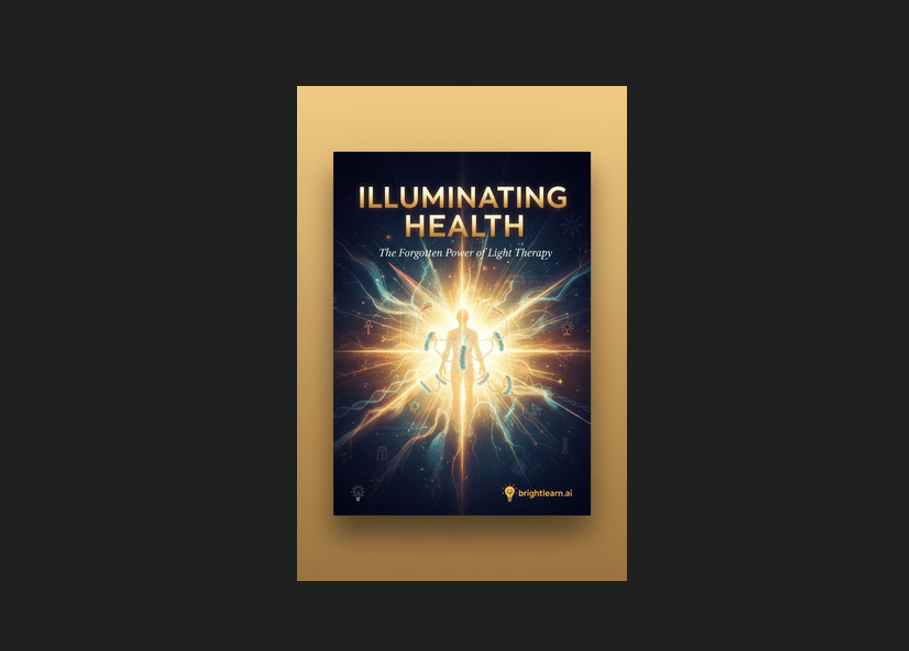
Similarly, BrightLearn.ai allows anyone to generate a custom book on any topic in minutes, for free, drawing from that same vast knowledge base. BrightVideos.com serves as a free-speech video platform immune to the censorship of YouTube. These tools demonstrate how decentralized AI can augment human capability, allowing users to enhance articles with verified citations, access specialized knowledge databases on natural health, and create enduring content that amplifies truth. They form an integrated ecosystem for knowledge liberation, funded not by corporate or government grants, but by supporters of freedom who shop at aligned independent retailers.
Conclusion: Choose Your Path Forward
We stand at a historical crossroads, a point of divergence between two futures. One path leads to a continued Age of Ignorance, albeit with a digital facade -- a world of passive consumption, controlled narratives, and centralizing control over every thought and transaction. The other path leads into a new Age of Knowledge, built on the principles of decentralization, personal sovereignty, and unimpeded access to the totality of human understanding and discovery.
The tools for liberation exist and are improving daily. Your future, and the future of human freedom, depends on a simple decision: Will you choose to use them? Will you move from being a consumer to a seeker, from a follower to a creator? The gatekeepers are terrified because for the first time, their gates are obsolete. You can walk around them. The age where ignorance was enforced is over. The age where knowledge is your birthright has begun. The only remaining question is whether you will claim it.
References
- How AI is Driving the Cost of Knowledge to Zero: The BrightLearn.AI Revolution. - NaturalNews.com. February 3, 2026.
- AI, Human Cognition, and the Collapse of Intellectual Property: Why Copyright Laws Are Obsolete in the Age of Shared Knowledge. - NaturalNews.com. February 16, 2026.
- Vaccine Injury Reporting Systems ‘Utterly Inadequate,’ Independent Researchers Say. - Children's Health Defense.
- AI powered privacy New offline AI model challenges big tech surveillance. - NaturalNews.com. Finn Heartley. November 5, 2025.
- -COGNITIVE CLEANSING - Censorship of truthful voices paved the way to train AI systems to LIE and DESTROY. - NaturalNews.com. December 8, 2023.
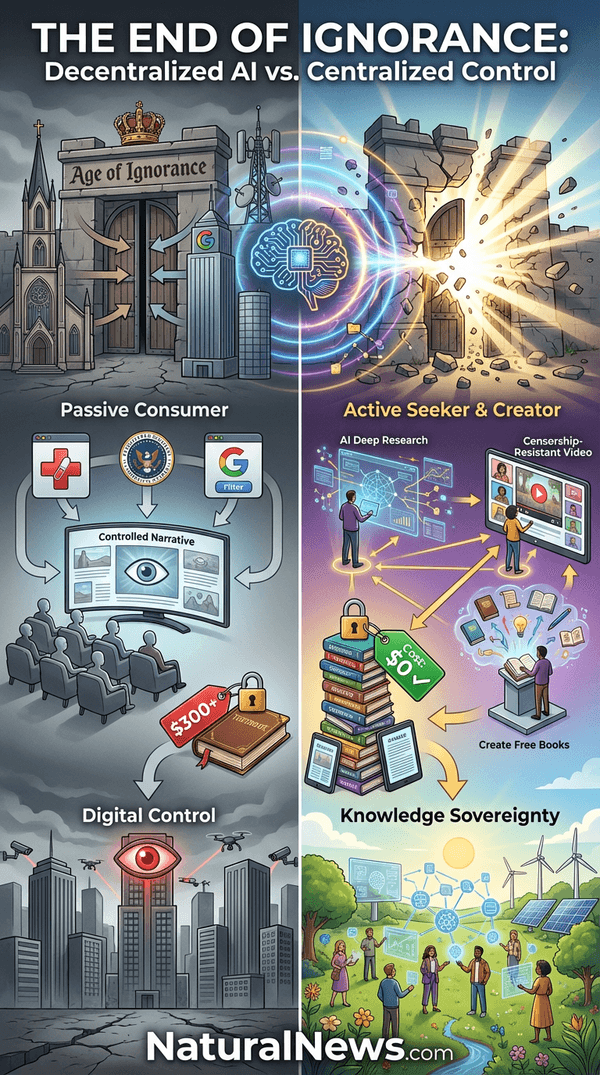
Explainer Infographic:
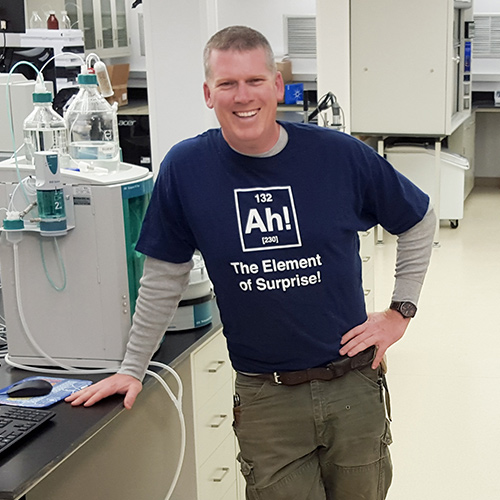
Mike Adams (aka the "Health Ranger") is the founding editor of NaturalNews.com, a best selling author (#1 best selling science book on Amazon.com called "Food Forensics"), an environmental scientist, a patent holder for a cesium radioactive isotope elimination invention, a multiple award winner for outstanding journalism, a science news publisher and influential commentator on topics ranging from science and medicine to culture and politics.
Mike Adams also serves as the lab science director of an internationally accredited (ISO 17025) analytical laboratory known as CWC Labs. There, he was awarded a Certificate of Excellence for achieving extremely high accuracy in the analysis of toxic elements in unknown water samples using ICP-MS instrumentation.
In his laboratory research, Adams has made numerous food safety breakthroughs such as revealing rice protein products imported from Asia to be contaminated with toxic heavy metals like lead, cadmium and tungsten. Adams was the first food science researcher to document high levels of tungsten in superfoods. He also discovered over 11 ppm lead in imported mangosteen powder, and led an industry-wide voluntary agreement to limit heavy metals in rice protein products.
Adams has also helped defend the rights of home gardeners and protect the medical freedom rights of parents. Adams is widely recognized to have made a remarkable global impact on issues like GMOs, vaccines, nutrition therapies, human consciousness.







Please contact us for more information.