


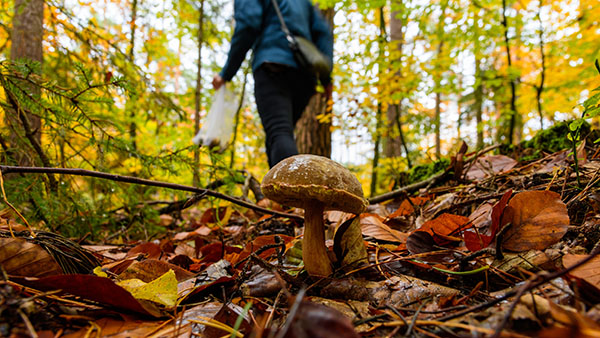
- In Episode 3 of "Wartime Homefront Essential Skills," Marjory Wildcraft and Scott Sexton taught safe foraging by introducing easily identifiable plants and critical rules, such as avoiding white berries and plants with milky sap.
- He detailed beginner-friendly finds like dandelions and wild grapes, emphasizing that wild onions and garlic must both look and smell like their cultivated versions to be safe.
- In Episode 4, Syson shared her journey into herbalism and advocated for growing medicinal herbs to create a personal pharmacy and ensure ecological sustainability.
- She highlighted versatile herbs like comfrey and stinging nettle and explained basic preparation methods for home remedies.
- Wildcraft and Syson concluded that cultivating medicinal plants provides a practical path to health resilience and self-reliance.
In an era marked by global uncertainty, a pioneering educational partnership is offering a masterclass in preparedness. Brighteon University, in collaboration with renowned homesteading expert Marjory Wildcraft, re-runs an episode a day of Wildcraft's groundbreaking homesteading series, "Wartime Homefront Essential Skills," from Jan. 31 to Feb. 9, and a replay of all 10 episodes on Feb. 10.
"This is more than a course; it's a blueprint for sovereign living," said Wildcraft, whose work has empowered thousands.
Foraging for beginners
In Episode 3 of "Wartime Homefront Essential Skills," aired on Feb. 2, Marjory Wildcraft and foraging expert Scott Sexton demystified the search for wild food, offering a crucial skill for times of crisis. The session, titled "Beginner-Proof Foraging," aims to equip even novices with the knowledge to safely identify and harvest edible plants. Sexton acknowledged initial intimidation, noting, "some plants are poisonous and you don't always know how to tell the difference." His solution is a curated list of plants he describes as "super easy to identify" and lacking dangerous lookalikes.
The guide emphasized critical safety rules. Sexton warned against eating unknown plants and highlighted environmental toxins as a major risk. He advised avoiding white berries and plants with milky sap as general cautions. A key rule for beginners is to "avoid leaves of three," a hallmark of poison ivy and to "stay humble with the umbels," avoiding umbrella-shaped flower clusters common in deadly plants like poison hemlock.
The expert then details several safe, prolific plants. Dandelions are highlighted as a "poster child" with no poisonous look-alikes, entirely edible and identifiable by their rosette of leaves, hollow stalk with white sap and yellow flower. For berry hunters, Sexton introduced the "crown berry" concept, where a five-pointed remnant on a berry's bottom, like on a blueberry, signals edibility in the Northern Hemisphere.
Other beginner-friendly finds include the entire mustard family, identifiable by unique four-petaled flowers and pine trees, where needles growing in bundles confirm the species. For wild grapes, the presence of tendrils distinguishes them from toxic Canadian moonseed. Moonseed is a toxic vine native to eastern North America, including parts of Canada. Its berries and seeds contain poisonous alkaloids, with the seeds having psychoactive properties similar to, but weaker than, LSD." Most importantly, Sexton stressed that wild onions and garlic must both look and smell like their cultivated counterparts to be safe.
Growing your own pharmacy
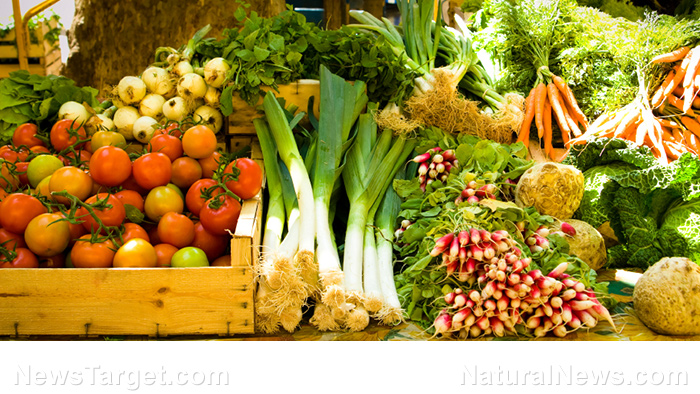
In Episode 4, aired on Feb. 3, Wildcraft is joined by Stephanie Syson, an herb grower and founder of Biodynamic Botanicals, who outlined a practical guide to cultivating and using medicinal plants, emphasizing their role in health, food security and ecological balance. Syson's journey into herbalism began out of personal necessity after a teenage diagnosis of Hashimoto’s disease. “Reading my first nutrition book really offended me and upset me and took my life from one direction to another,” she shared, explaining how it revealed alternatives to drastic medical interventions.
As noted by BrightU.AI's Enoch, Hashimoto's disease is an autoimmune disorder where the immune system attacks the thyroid gland, causing it to become swollen and irritated. Its possible symptoms include fatigue, weight gain, sensitivity to cold and depression.
This experience fueled her mission to empower others with plant-based knowledge. She advocated growing herbs not only for medicine but for nutritional and ecological benefits. "You can grow your own pharmacy. You can grow your own vitamins, grow your own minerals," Syson stated. She highlighted that medicinal herbs are typically pest-resistant and can thrive in diverse conditions, from poor, rocky soil to wet areas. They also play a crucial role in supporting pollinators and building healthy soil.
A key concern Syson raised is the sourcing of commercial herbs. Much peppermint tea, for instance, is imported and overharvesting threatens wild populations. "The wild cannot really support the level of usage of herbs that we are seeing anymore," she cautioned, urging people to cultivate their own.
During her presentation, Syson detailed a dozen hardy, versatile herbs suitable for temperate climates. These included comfrey, a "rapid cell regenerator" useful for garden health and healing wounds; stinging nettle, a potent antihistamine and nutrient-dense green; and yarrow, known for its antiseptic and blood-coagulating properties, historically used by warriors.
She also explained basic preparation methods, from simple infusions and decoctions to making tinctures and salves. For a winter immune boost, she recommended fire cider, a vinegar-based tonic. Her overarching message was one of accessibility and intuition. "Everyone doesn't need to go necessarily to get training," Syson noted, recalling a child who instinctively used dandelion sap on a wart. "We have inherent knowledge of these plants."
Ready to unlock the entire series?
When the world gets unpredictable, the smartest move is to prepare. That's why "Wartime Homefront Essential Skills" by Marjory Wildcraft is back on BrightU. This is your second chance to catch the series that's changing how families think about self-reliance.
If you want to learn at your own pace and get access to 12 additional bonuses, you can purchase the Wartime Homefront Essential Skills Bundle here. Upon purchase, you will get unlimited access to all 10 "Wartime Homefront Essential Skills" videos and 12 bonuses, including 10 eBook guides and two homesteading videos.







Please contact us for more information.


