


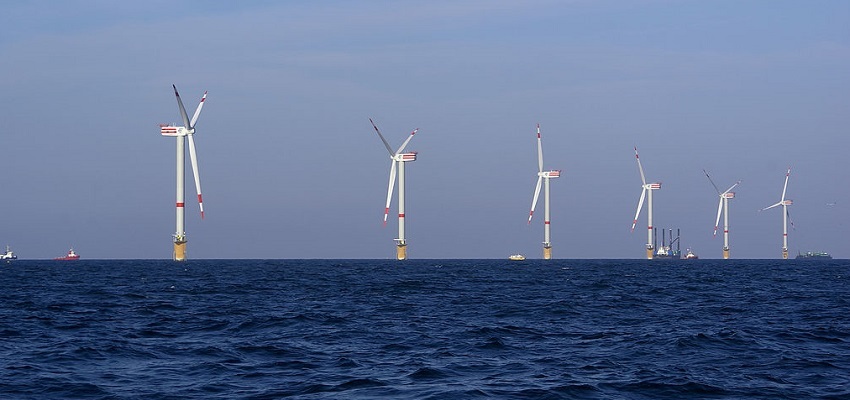
- The U.S. government has paused several major East Coast offshore wind projects due to unresolved national security risks posed by radar interference, a problem long documented by defense agencies.
- The interference, caused by the Doppler effect from massive rotating blades, can create false targets or "clutter" that corrupts air defense, air traffic control, and even crucial weather forecasting systems.
- Mitigation is neither simple nor cheap, as evidenced by the UK government spending billions on new air defense systems specifically to counter wind farm "clutter."
- Beyond radar, the wind industry faces growing scrutiny over its environmental footprint, including devastating illegal logging for turbine materials and significant wildlife fatalities.
- The situation creates immense political and financial risk for the wind energy sector, highlighting the profound challenges of integrating large-scale renewable infrastructure with existing critical systems.
Wind turbines create Doppler effect
The conflict stems from a basic physical principle. The enormous rotating blades of modern wind turbines create a Doppler effect that can appear on radar screens as a confusing swarm of false signals, a phenomenon known as "clutter." For a military radar tasked with distinguishing between a commercial airliner and a potential threat, or for a weather radar trying to pinpoint the formation of a tornado, this electronic noise is not a minor nuisance. It is a potentially catastrophic blind spot. A 2024 Department of Energy report acknowledged a grim trade-off: technicians can adjust a radar’s sensitivity to filter out this clutter, but doing so runs the dangerous risk of causing the system to, in their words, "miss actual targets." In the realms of homeland security and storm prediction, such a miss could carry a terrible human price.
This is not a new discovery, but its urgency is escalating with the scale of the turbines. The British experience serves as a cautionary tale. The UK government, deeply committed to offshore wind, was recently compelled to allocate £1.5 billion—a significant slice of its defense budget—for new airborne radar systems to compensate for the corruption of ground-based facilities by offshore wind farms.
Professor Justin Bronk, an air power expert, starkly warned that without a technological "breakthrough," Britain will need a permanent and exorbitantly expensive airborne detection service as a backup. This reality paints the U.S. decision not as an isolated political act, but as a reluctant confrontation with a formidable and costly engineering dilemma. There is no magic fix; proposed solutions range from software patches and radar hardware upgrades to using special materials in turbine construction, but none are proven to fully eradicate the problem. The future promise of floating wind turbines, which would move unpredictably with the waves, threatens to complicate radar tracking even further.
The unseen environmental ledger
While the radar debate centers on national security, a parallel narrative challenges the industry’s green credentials. The demand for renewable infrastructure is creating perverse and hidden environmental consequences. The quest for balsa wood, a key component in turbine blades for its unique strength and lightness, has fueled rampant illegal logging in the Amazon rainforest. It is estimated that over half of the world’s balsa now comes from this unsustainable and destructive source, a scandal that received little attention at the recent COP30 climate conference held in the heart of the Amazon itself. The irony is palpable: a technology deployed to fight climate change is contributing to the deforestation of a vital carbon sink.
The cost to wildlife is another heavy entry on this ledger. The spinning blades, often over 500 feet tall, pose a lethal threat to birds and bats. Millions are killed globally each year, a mortality rate that some advocates dismiss by arguing that climate change poses a greater long-term threat to species survival—a contention that offers cold comfort and does little to address the immediate carnage. Furthermore, the ecological impact extends beneath the waves. A study published in the journal Science found that offshore wind installations can alter sea temperatures and disrupt marine food webs, causing cascading effects through the local ecosystem. These cumulative impacts force a difficult question: how much collateral damage is acceptable in the name of mitigating climate change?
An energy sector faltering due to national security concerns
The convergence of these issues—technical, financial, and environmental—has placed the wind industry in a precarious position. The U.S. government’s pause has immediate financial repercussions, causing stock prices for major developers like Ørsted to tumble. Politically, the sector finds itself caught between climate ambitions and populist movements skeptical of both its costs and its reliability. The radar issue provides a potent, security-based argument for those opposing rapid renewable expansion.
While federal agencies in the U.S. have established working groups and review processes to screen wind projects for radar conflicts, and developers have tools for preliminary site selection, the core problem persists. Mitigation strategies, such as careful turbine placement or radar software upgrades, are case-by-case solutions, not a universal cure. The vision of a future powered by vast fields of offshore wind is now shadowed by the practical realities of protecting a nation’s skies and honestly accounting for the full environmental bill. The pause in construction demands a clearer-eyed assessment of how to achieve energy security without compromising national security, and how to build a green future without blindly degrading the natural world it is meant to preserve.
Sources include:












Please contact us for more information.


