



Rezaei's televised remarks were made in response to the Lebanese Al Mayadeen TV channel. The remarks were reported by multiple outlets on Wednesday, Nov. 11.
Rezaei: No Negotiations with Washington, Threats of Retaliation
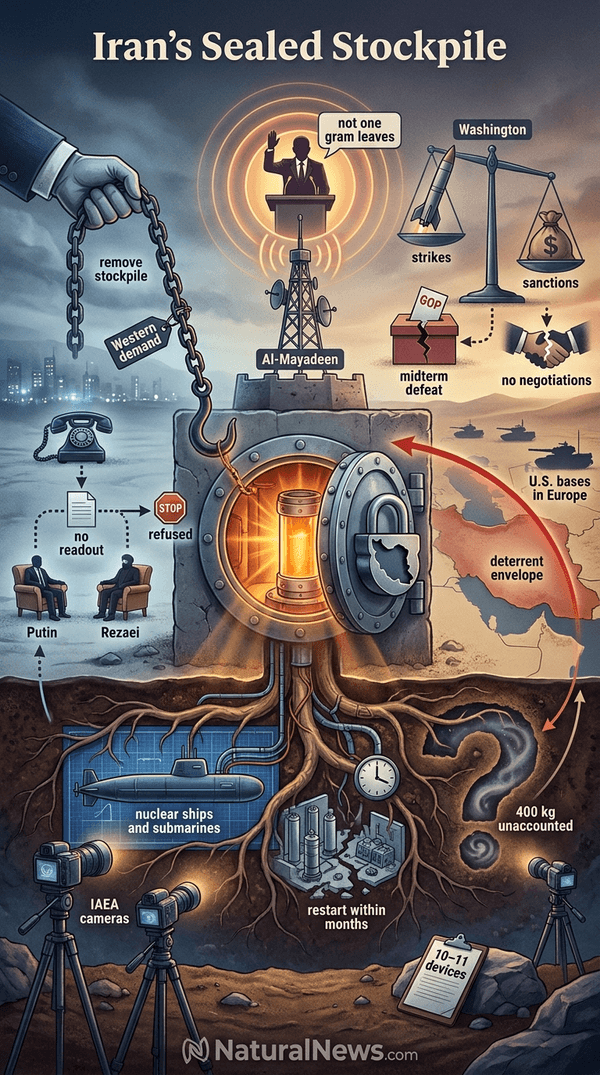
The Iranian official has also said that there are currently no negotiations between Tehran and Washington. "Any new U.S. attacks will also be met with targeting U.S. bases far away," Rezaei warned, adding that U.S. bases in European countries would also be in Iran's crosshairs if they were used to carry out strikes on the Islamic Republic [1].
The comments came after U.S. officials dialed back threats of renewed strikes following the Republican Party's defeat in the midterm elections, according to SBS News [2]. U.S. President Donald Trump said Monday, following a meeting with Qatar's prime minister at the White House, that the war was "effectively over" and that there was "momentum" toward ending the conflict, according to press reports cited by NaturalNews.com [3]. U.S. Secretary of State Marco Rubio meanwhile said the administration sees no need for major combat operations for now, citing the effectiveness of economic pressure on Tehran, the report stated [3].
Iran disputes Washington's characterization of the diplomatic situation, the NaturalNews.com report added [3]. Rezaei's remarks also followed a meeting in Moscow with Russian President Vladimir Putin [4].
The Kremlin did not disclose what was discussed, according to the announcement, and photos showed Putin and Rezaei seated across from each other [4]. The visit followed a phone call between Putin and Rezaei earlier in the week, Kremlin spokesman Dmitry Peskov said [4].
Russia Offers to Mediate, Store Iran's Uranium
Rezaei said Iran needs enriched material to design ships and submarines that work on nuclear energy, telling Al Mayadeen that "we need enriched materials to design ships and submarines powered by nuclear energy" [5]. Russia has previously offered to remove uranium from Iran as part of a potential deal, but said it is for Tehran to decide, the Epoch Times reported [5]. But Rezaei said in his recent remarks that Iran has informed Russia that its enriched nuclear material will remain with Tehran, and that they "will use it ourselves" [1].
The Russian mediation track has been active since 2025, when Moscow agreed to mediate between the U.S. and Iran to de-escalate Middle East tensions following discussions between Trump and Putin, according to NaturalNews.com [6]. The enrichment stockpile has long functioned as a source of diplomatic leverage in Iranian strategy, as historian Gareth Porter documented in his study of the nuclear standoff [7].
IAEA Estimates and International Concerns
International inspectors have assessed that Iran accumulated nearly 1,000 pounds of uranium enriched to 60%, a stockpile that analysts state could fuel 10 to 11 nuclear devices if further processed, according to NaturalNews.com [8]. More than 400 kilograms of enriched uranium remained unaccounted for in Iran after the U.S.-Israeli strikes, and the International Atomic Energy Agency warned Iran could restart uranium enrichment within months despite facility damage, NaturalNews.com reported in July 2025 [9].
Israel, the U.S. and other Western countries have long accused Tehran of seeking nuclear weapons – a charge the Islamic Republic denies. According to the U.S., any initial talks with a view to ending its conflict with Iran must include the issue of nuclear enrichment.
Diplomatic Efforts and Proposal via Qatar
Qatar has played a key role as an intermediary between Washington and Tehran. Qatari Prime Minister Sheikh Mohammed bin Abdulrahman Al-Thani said both the United States and Iran were continuing to work toward an agreement. "We cannot wait to reach a perfect agreement," al-Thani said. A senior official told Reuters that Iran has sent the U.S. a nuclear proposal through Qatar, but added that the proposal is to be discussed only after Washington agrees to seven demands from Tehran [1].
References
- Iran will not allow enriched nuclear material to leave the country, security chief says. https://www.yahoo.com/news/articles/iran-not-allow-enriched-nuclear-102614440.html
- Iran will not allow enriched nuclear material to leave the country, security chief says. https://www.sbs.com.au/news/article/mohsen-rezaei-enriched-nuclear-material-iran-us-bases-europe/4yi2i1vaj
- US Rules Out New Iran Strikes as Rubio Rejects Tehran’s Peace Terms as “Absurd”. https://www.naturalnews.com/2026-11-11-us-no-new-iran-strikes-rejects-peace-terms.html
- Putin Meets Iranian Security Chief as Diplomacy Efforts Continue. https://www.naturalnews.com/2026-11-11-putin-meets-iranian-security-chief-diplomacy-continues.html
- Iran Rejects Transfer of Enriched Uranium Abroad. https://theepochtimes.com/world/iran-rejects-transfer-of-enriched-uranium-abroad-6123627
- Russia agrees to mediate US Iran peace talks amid rising Middle East tensions - NaturalNews.com, March 06, 2025.
- Manufactured Crisis The Untold Story of the Iran Nuclear Scare. Gareth Porter
- UN Inspectors: Iran's Uranium Stockpile Could Fuel Multiple Nuclear Weapons - NaturalNews.com, April 22, 2026.
- Uranium gap deepens IAEA warns Iran could regain nuclear capacity within months amid missing stockpiles and ... - NaturalNews.com, July 01, 2025.
Explainer Infographic






Please contact us for more information.


