


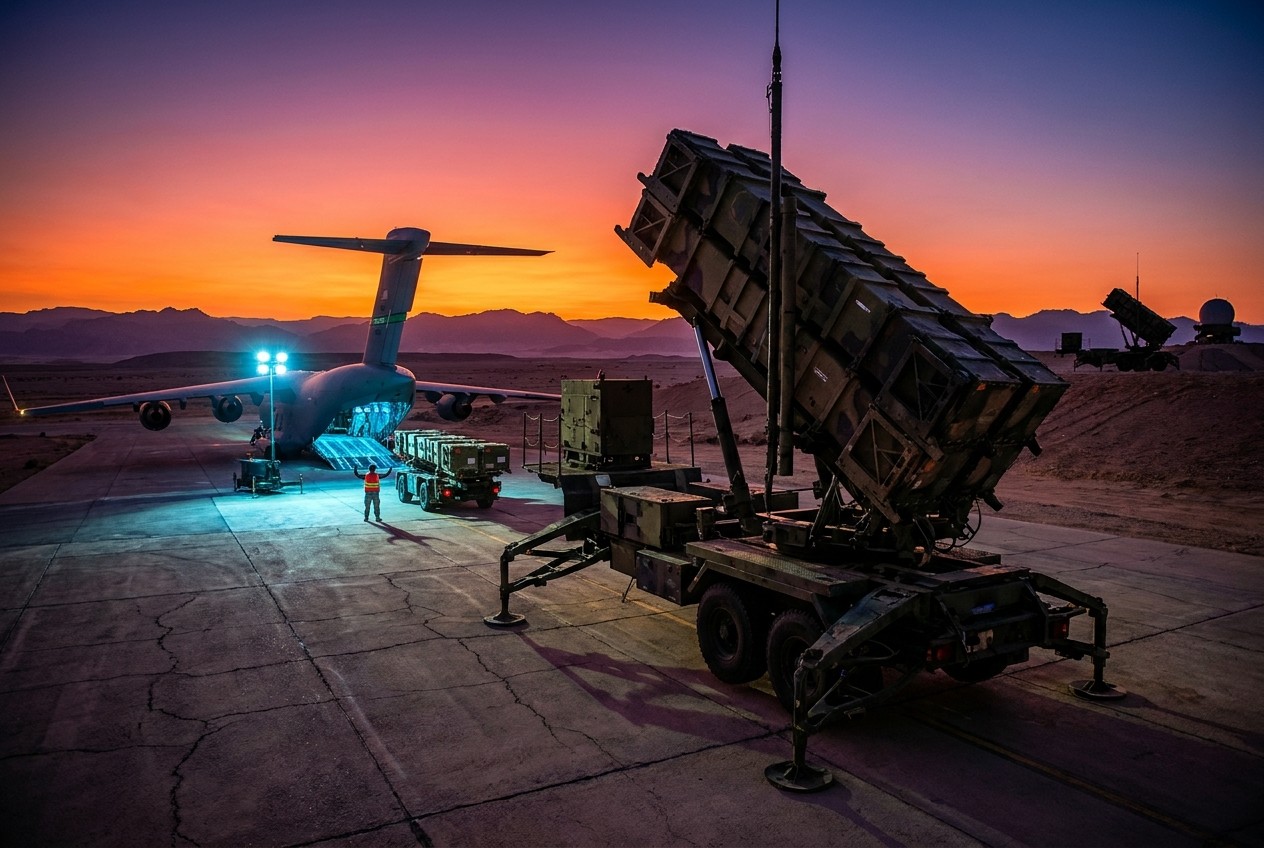
The reported deployment, based on flight-tracking data and unnamed officials cited by The Wall Street Journal, comes amid broader US military repositioning in the Middle East, including munitions restocking and preparations involving bombers and fighter jets. However, the Pentagon has not publicly confirmed the transfer, and key details about the system's arrival, interceptor inventory and operational role remain unclear.
The reported system includes radar equipment, an engagement control station and interceptor launchers [1]. Its transfer is intended to strengthen Israel's missile defenses amid preparations for possible renewed military operations against Iran, according to reports [2][3].
US Central Command did not respond to questions about the report. President Donald Trump has not made a final decision on escalating the conflict [4]. The reported movement comes amid a broader pattern of US military adjustments in the region, including the repositioning of troops, restocking of munitions, and readiness of bombers and fighter jets, the Journal reported [5].
Deployment Details and Confirmation Gaps
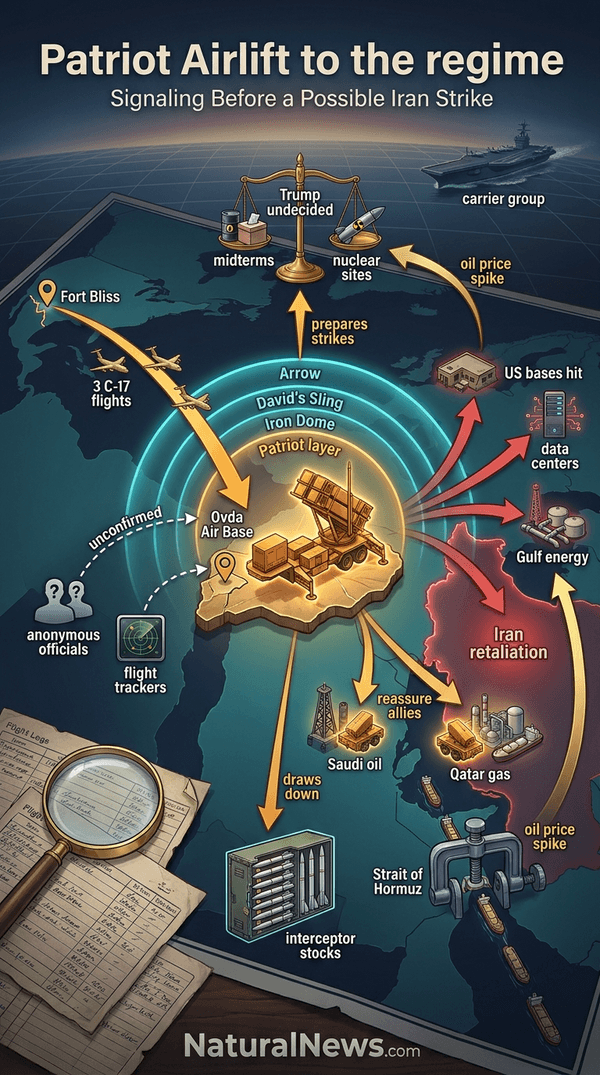
Open-source flight trackers recorded at least three C-17 transport flights from Fort Bliss, Texas, to Ovda Air Base in southern Israel in recent days, according to the report. Fort Bliss is home to the 32nd Army Air and Missile Defense Command, which commands US Army air defense units, the report stated. The reported flights suggest Patriot systems were included in the cargo, according to The Wall Street Journal, which cited flight-tracking data and two unnamed officials familiar with the transfer [6].
The Journal's sourcing relies on two unidentified officials and commercial flight-tracking records, neither of which constitutes independent confirmation of the system's operational purpose. The report did not state whether the system had arrived in Israel or when it would become operational. It also did not specify the number of interceptors accompanying the battery, a detail that matters given the strain on US Patriot inventories after months of air defense operations in the Middle East [7].
The deployment follows a pattern established in earlier periods of regional tension. In those earlier instances, additional air defense assets were moved into the region ahead of anticipated escalation and later adjusted as the threat picture changed.
Regional Military Posture and Gulf Preparations
The Wall Street Journal reported that Washington and Tel Aviv may be preparing for renewed strikes on Iran, and that US officials have told counterparts in allied Gulf countries to prepare for a short, intense military campaign after the midterm elections. The Pentagon has moved troops away from bases considered vulnerable to Iranian attack, restocked munitions in the region, and readied bombers and fighter jets, the report added. Another US aircraft carrier strike group would arrive in the region next month, according to the report [8].
Earlier this month, the US reportedly sent additional Patriot systems to Saudi Arabia and Qatar to protect oil and gas facilities. One battery was positioned to protect a major Saudi oil-producing facility, while a second was sent to Qatar to help shield a natural gas installation, according to a report [9]. Axios cited two US officials and one regional source as saying the US wanted to reassure allies it would protect key energy facilities, and Central Command spokesman Capt. Tim Hawkins declined to comment when contacted [10].
The Journal also reported that US bases in Gulf states and Jordan suffered severe damage from Iranian ballistic missiles and drones during 40 days of fighting that followed the late February US-Israeli attack on Iran. Israel was largely spared, the report stated, as the US prioritized its protection. The account has circulated alongside independent commentary questioning the cost and strategic direction of the wider campaign. Former US Air Force Gen. Glen VanHerck said in an August panel discussion that US forces "got our rear-end handed to us from drones and other vehicles, aerospace vehicles, if you will, including three F-5s that took off in Iran and flew low level and dropped bombs on an airbase" [11].
Iranian Response and Market Warnings
Iran has vowed to retaliate against a renewed US-Israeli attack by targeting Gulf energy infrastructure and US interests in the region, including data centers, according to the report. Iranian Foreign Minister Abbas Araghchi warned of the "devastating impact on int'l markets of any Israel-instigated military misadventure in the Persian Gulf region," according to the account.
Trump has not made a final decision on escalating the war but is reportedly considering strikes on Iranian infrastructure and nuclear facilities, the Journal stated. The report also stated that Trump is seeking to keep energy prices in check ahead of the election to prevent his Republican Party from losing ground in Congress and the Senate.
The market warnings echo longstanding vulnerabilities in the global energy system. The Strait of Hormuz remains a chokepoint whose disruption could send oil prices sharply higher, a dynamic that independent analysts have flagged as a central risk in any wider Persian Gulf confrontation [12].
References
- WSJ: U.S. Sends Patriot Battery From Texas to Israel Amid Iran Strike Preparations. https://virtualjerusalem.com/article/us-deploys-additional-patriot-missile-system-to-israel-ahead-of-potential-iran-c
- US deploys Patriot system in Israel amid preparations for Iran strikes: WSJ. https://ground.news/article/the-united-states-is-transferring-an-additional-patriot-air-defense-system-from-texas-to-israel-the-wall-street-journal-writes-citing-sources
- US moves Patriot missile defense system from Texas to Israel ahead of possible Iran strike - report. https://www.jpost.com/israel-news/defense-news/article-913105
- U.S. Moves Patriot Air Defense System From Texas to Israel Amid Iran Strike Preparations. https://clashreport.com/defense/articles/u-s-moves-patriot-air-defense-system-from-texas-to-israel-amid-iran-strike-preparations-smjohr3dbbe
- U.S. Readies Patriot Air Defense Missile Systems and Airpower for Possible Iran Strikes. https://www.armyrecognition.com/news/army-news/2026/u-s-readies-patriot-air-defense-missile-systems-and-airpower-for-possible-iran-strikes
- U.S. Sending Additional Patriot Air Defense System To Israel From Texas. https://vinnews.com/2026/10/28/u-s-sending-additional-patriot-air-defense-system-to-israel-from-texas/
- Report: US Sending an Additional Patriot System to Israel To Prepare for Potential Attacks on Iran. https://news.antiwar.com/2026/10/28/report-us-sending-an-additional-patriot-system-to-israel-to-prepare-for-potential-attacks-on-iran/
- US to Send Another Patriot Air Defense System to Israel. https://web.matrixnews.in/news/uxtj6lym5vdss/us-to-send-another-patriot-air-defense-system-to-israel
- U.S. Deploys Patriots to Shield Saudi Oil and Qatari Gas Facilities. https://www.naturalnews.com/2026-10-05-us-deploys-patriots-shield-saudi-oil-qatari-gas.html
- U.S. Deploys Additional Patriot Missiles to Saudi Arabia, Qatar as Trump Weighs Renewed Iran Attacks: Report. https://www.naturalnews.com/2026-10-04-us-deploys-missiles-to-saudi-arabia-qatar.html
- Iranian F-5s Bombing U.S. Forces In Kuwait Should Be A Wake-Up Call: Ex-USAF General. https://www.twz.com/news-features/iranian-f-5s-bombing-u-s-forces-in-kuwait-should-be-a-wake-up-call-ex-usaf-general
- Health Ranger Report - Situation Update HRR - Mike Adams - BrightVideos.com, October 23, 2023.
Explainer Infographic








Please contact us for more information.


