



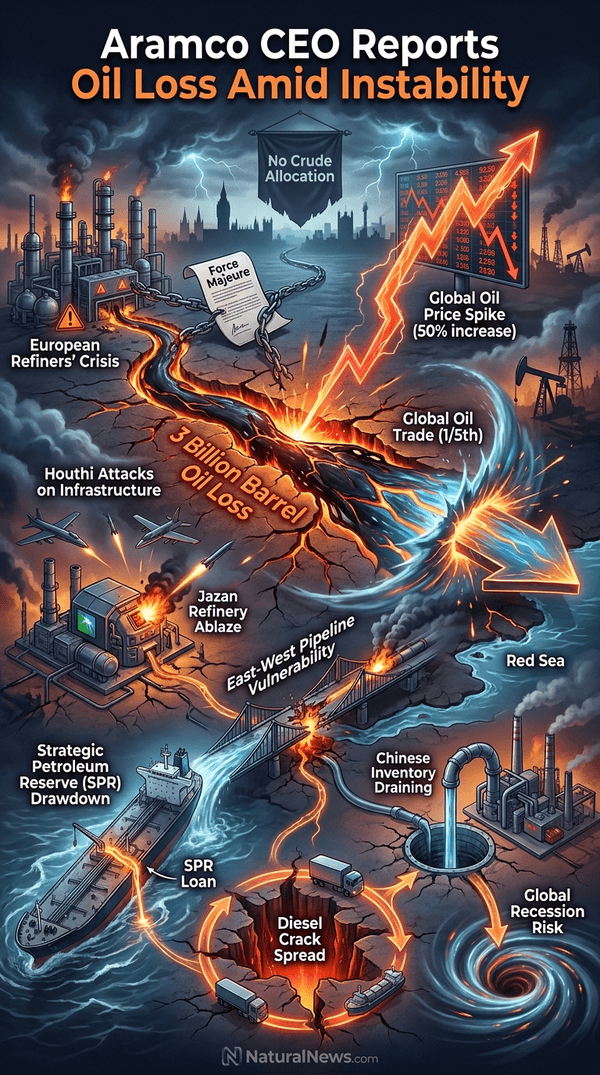
The figure represents the cumulative volume of crude lost since hostilities began in February, when the conflict effectively shut the Strait of Hormuz, a critical artery for oil and liquefied natural gas shipments [1]. The supply loss estimate comes as Aramco continues to grapple with the operational fallout from attacks on its infrastructure.
The company has declared force majeure on some deliveries, and its European refining customers were informed they would receive no crude allocations for the following month after the shutdown of the East-West pipeline [2][3].
Impact of Supply Disruption and Price Volatility
The conflict effectively closed the Strait of Hormuz, through which roughly one-fifth of global oil trade normally passes, and sent crude prices up approximately 50%, according to the Russia Today report on Nasser's remarks [1].
The Brent benchmark's trajectory during the crisis reflected the tightness: prices spiked in the spring, then plunged nearly 11% to below $98 a barrel in early May when reports emerged that the United States and Iran were nearing a peace agreement to reopen the strait [4].
The price volatility has extended beyond crude. Diesel crack spreads – the difference between diesel and crude prices – widened to $102 over crude, a level outside historical norms, according to an analysis published in August [5].
Chinese retail fuel prices jumped approximately 30% after the war began in late February [6]. The U.S. Department of Energy announced in May it would loan 53 million barrels from the Strategic Petroleum Reserve to petroleum companies to alleviate elevated gasoline and oil prices [7].
Nasser's warning about the scale of the loss echoes earlier projections from Saudi officials, who in March cautioned that escalating conflict with Iran could push Brent crude past $180 a barrel by late April and trigger a global recession [8].
Current Market Conditions and Logistical Bottlenecks
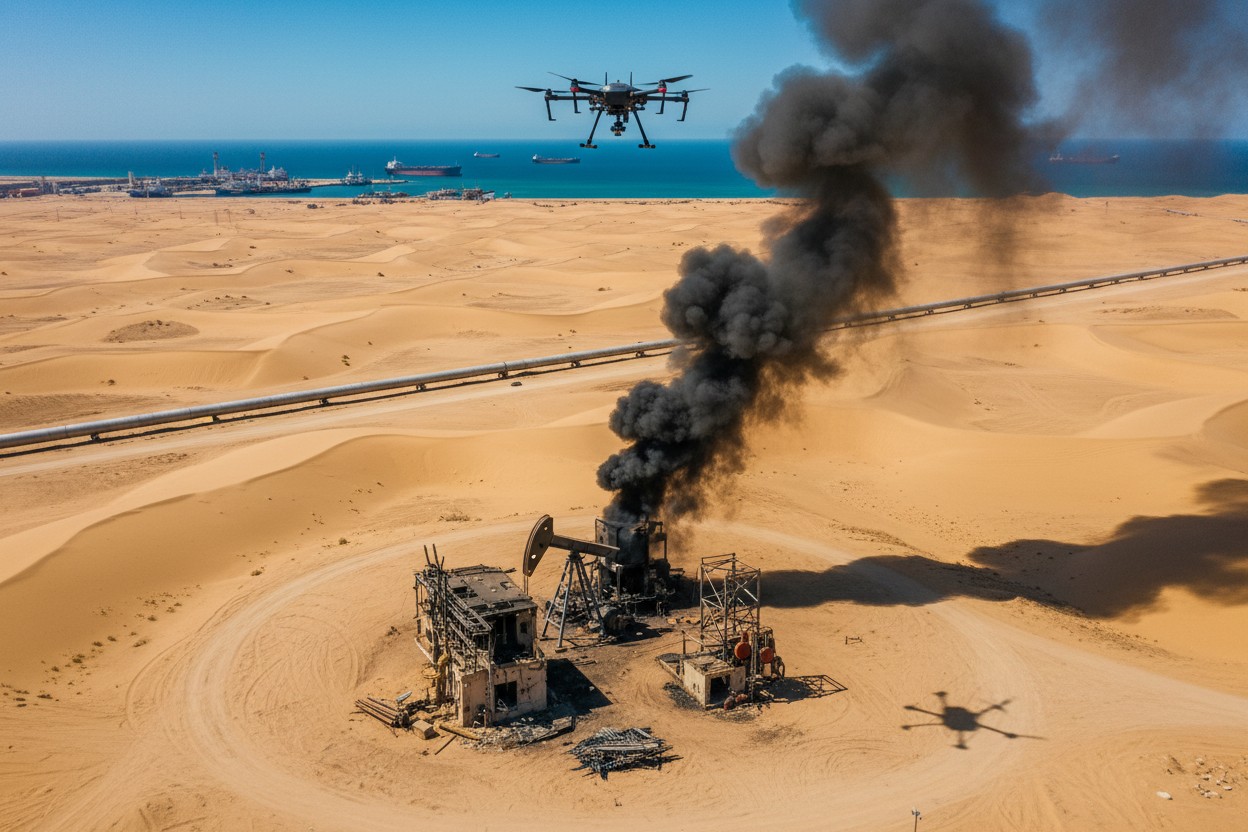
Additional threats have emerged from Houthi attacks on Saudi energy infrastructure and shipping operations. The Iran-backed Houthis launched ballistic missiles and drones at Riyadh and Saudi Aramco facilities in Yanbu in late September.
Saudi air defenses intercepted six ballistic missiles aimed at Taif and Yanbu, and smoke was reported near Riyadh's international airport [9]. A coordinated missile and drone attack by Houthi forces set the Aramco refinery at Jazan ablaze on Sept. 8 [10].
The East-West pipeline, which bypasses the Strait of Hormuz and carries crude to Red Sea loading facilities, was restarted at the end of September after being shut down following an attack [11][2]. Saudi Arabia had warned it could exhaust available oil stocks for exports if the pipeline was not restarted within days [12].
Future Demand Pressures Post-Crisis
That projected demand is divided between anticipated consumption growth and necessary reserve replenishment.
The demand pressure comes as China, the world's largest oil importer, drew 41 million barrels from crude inventories in June – one of the largest monthly draws on record – allowing Chinese refiners to meet domestic demand from storage rather than increasing imports, according to the International Energy Agency [13]. The draw eased pressure on global supplies during the conflict but left Chinese inventories lower heading into a period of expected demand recovery [13].
References
- Saudi oil boss issues global supply warning — RT Business News. https://www.198russianews.com/2026/10/22/saudi-oil-boss-issues-global-supply-warning-rt-business-news/
- Saudi Aramco Tells European Refiners No Crude Allocations Next Month After Pipeline Attack - NaturalNews.com, September 22, 2026.
- 2026-03-18-BVN-TRUMP REGIME UNRAVELING_otter_ai- by Bright Videos Network
- Global oil markets rally as US Iran peace talks signal potential reopening of Strait of Hormuz - NaturalNews.com, May 08, 2026.
- Diesel Crack Spread Screams Economic Red Alert, and Inflation Will Soon Surge - NaturalNews.com, August 18, 2026.
- Chinas gasoline demand set for historic plunge as Iran war EV shift reshape energy landscape - NaturalNews.com, May 16, 2026.
- US Releases 53 Million Barrels From Strategic Petroleum Reserve Amid Rising Gas Prices - NaturalNews.com, May 14, 2026.
- Saudi Arabia warns of oil prices hitting 180 per barrel as Iran conflict threatens global energy shock - NaturalNews.com, March 24, 2026.
- Houthis strike Saudi capital in escalating campaign, threatening global oil markets - NaturalNews.com, September 26, 2026.
- Houthi Strikes on Saudi Refinery Threaten Remaining Red Sea Energy Lifeline - NaturalNews.com, September 09, 2026.
- Saudi Arabia Restarts East West Pipeline, Bypassing Strait of Hormuz - NaturalNews.com, September 30, 2026.
- Saudi Arabia May Run Out of Oil Stocks if East West Pipeline Not Restarted Within Days, Report Says - NaturalNews.com, September 14, 2026.
- China's Oil Inventory Draw Reshapes Global Crude Market During Iran Conflict - NaturalNews.com, July 19, 2026.
Explainer Infographic











Please contact us for more information.


