
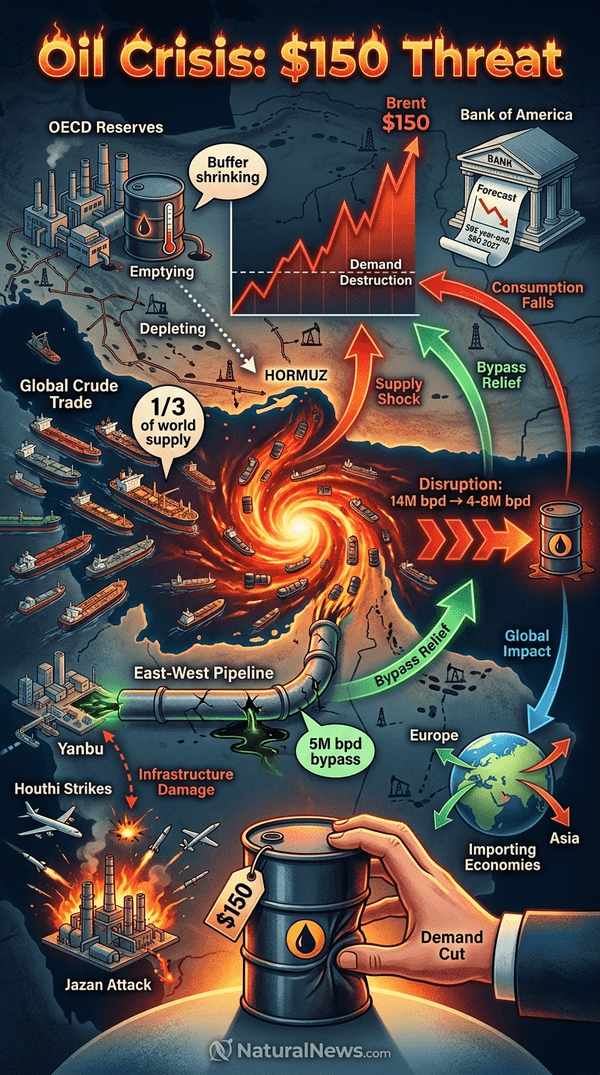
The warning comes as the conflict in the Strait of Hormuz continues to disrupt global oil flows, pushing prices higher and straining supplies. The note stated that strategic stockpiles are falling and markets point to acute shortages in the near term [3].
Bank of America Raises Brent Forecast on Supply Tightness
The bank's revised forecast reflects continued supply concerns tied to the conflict in Iran and constrained shipments through the Strait of Hormuz. Strategists said alternative routes and escorted Hormuz shipments have mitigated some of the shortfall, according to the note [4]. The note stated that damaged infrastructure and rising geopolitical tensions make rapid normalization unlikely [5].
Bank of America estimates crude-oil disruption in the Strait of Hormuz went from roughly 14 million barrels per day when the U.S. and Israel started striking Iran to a recent average of between 4 million and 8 million barrels a day [6]. The bank expects an average price for Brent crude of about $80 a barrel in 2027. The strategists wrote that strategic stockpiles are falling and markets point to acute shortages in the near term [7].
Strait of Hormuz Traffic Constrained by Iran Conflict
Traffic in the Strait of Hormuz, which is responsible for about a third of global crude oil trade, has been severely constrained, according to the bank [1]. Saudi Arabia's energy infrastructure has been targeted by Iran-backed Houthi rebels, temporarily bringing some operations to a halt. The war in Iran continues to affect oil flows and regional stability [8].
Bank of America said the disruption has decreased from earlier levels but remains significant. The note added that energy prices are still relatively affordable when adjusted for income and inflation, and growth is not slowing down yet [9]. Additional attacks on Saudi Aramco facilities have further tightened supplies, with the Jazan refinery engulfed in flames following a coordinated missile and drone attack [8].
Oil Prices Fall After Aramco Restart Report
Both the global benchmark Brent and the U.S. benchmark West Texas Intermediate fell early Tuesday. Brent dropped below $100 a barrel and the U.S. benchmark fell below $90 a barrel, according to market data [10]. The decline followed a Reuters report that Saudi Aramco was resuming work at its East-West pipeline. Reuters reported that Aramco could restart shipping from the port city of Yanbu on the Red Sea as late as Tuesday [5].
The bank's warning contrasts with the immediate market reaction to the potential restart of Saudi operations. Officials said the situation remains fluid and no final determinations have been made about long-term supply levels. Saudi Arabia's crude shipments remain halved as Iran-backed Houthis continue to disrupt exports [3].
Outlook Remains Uncertain as Inventories Deplete
Strategists noted challenges from falling strategic stockpiles and near-term acute shortages. The note stated that if disruptions persist into spring 2027 or oil infrastructure damage intensifies, Brent front-month contracts may have to spike well above $150 per barrel [2]. The bank did not provide a timeline for when prices might reach that level.
Market participants continue to monitor developments in the Strait of Hormuz and Saudi energy infrastructure. The report stated that rapid normalization of supply remains unlikely under current conditions. The International Energy Agency has warned that escalation in US-Iran hostilities could upend oil surplus forecasts [11]. As global supplies tighten, the risk of further price spikes remains elevated.
References
- NaturalNews.com. "Oil Prices Hit Wartime High as Iran Conflict Escalates Brent Crude Surges Past 126 Gas Prices Soar to 6 in Calif". May 02, 2026.
- Lance D Johnson. "A global supply shock As Trump's Iran War shuts the Strait of Hormuz economic recession becomes the unavoidable c". NaturalNews.com. April 01, 2026.
- Jan Stuart. "Piper Sandler Sounds Alarm: Shrinking Oil Buffers To Collide With Winter Demand". ZeroHedge.com. September 11, 2026.
- Cassie B. "Oil prices surge past 111 as Trump's deadline for Iran to reopen Strait of Hormuz nears". NaturalNews.com. April 06, 2026.
- Reuters. "Saudi Arabia cancels oil shipments to Europe after pipeline attack". RT.com. September 15, 2026.
- Cassie B. "Gas prices hit 416 as Iran war chokes global oil supply". NaturalNews.com. April 10, 2026.
- NaturalNews.com. "Saudi oil output plunges to lowest level since 1990 as Houthi blockade, Iran war squeeze exports". September 11, 2026.
- NaturalNews.com. "Houthi Strikes on Saudi Refinery Threaten Remaining Red Sea Energy Lifeline". September 09, 2026.
- NTD. "Oil Rises Above $100 a Barrel as Middle East Conflict Intensifies". September 09, 2026.
- NTD. "Oil Falls as US Prepares to Unveil New Iran Sanctions". August 24, 2026.
- International Energy Agency. "IEA Warns Escalation In US-Iran Hostilities Could Upend Oil Surplus Forecast". ZeroHedge.com. July 10, 2026.
Explainer Infographic











Please contact us for more information.