


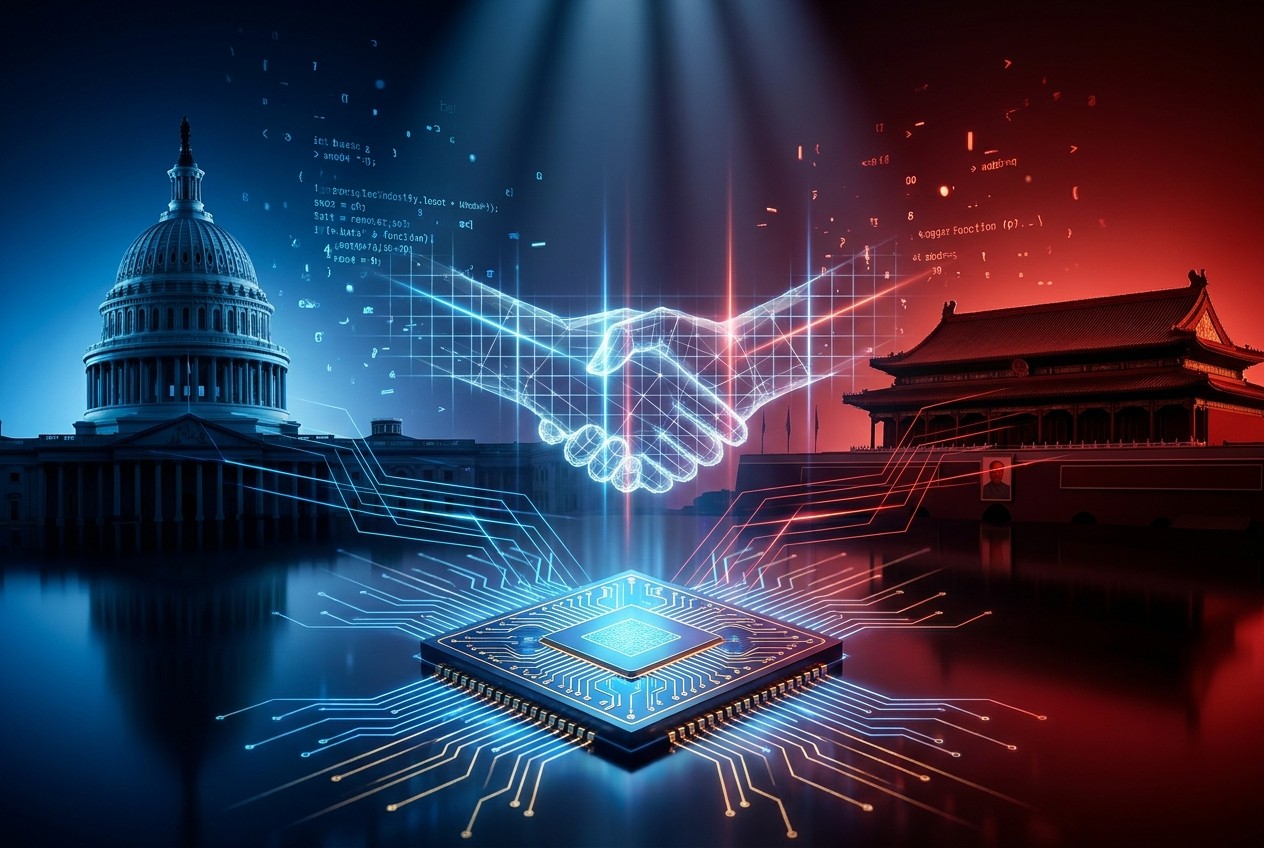
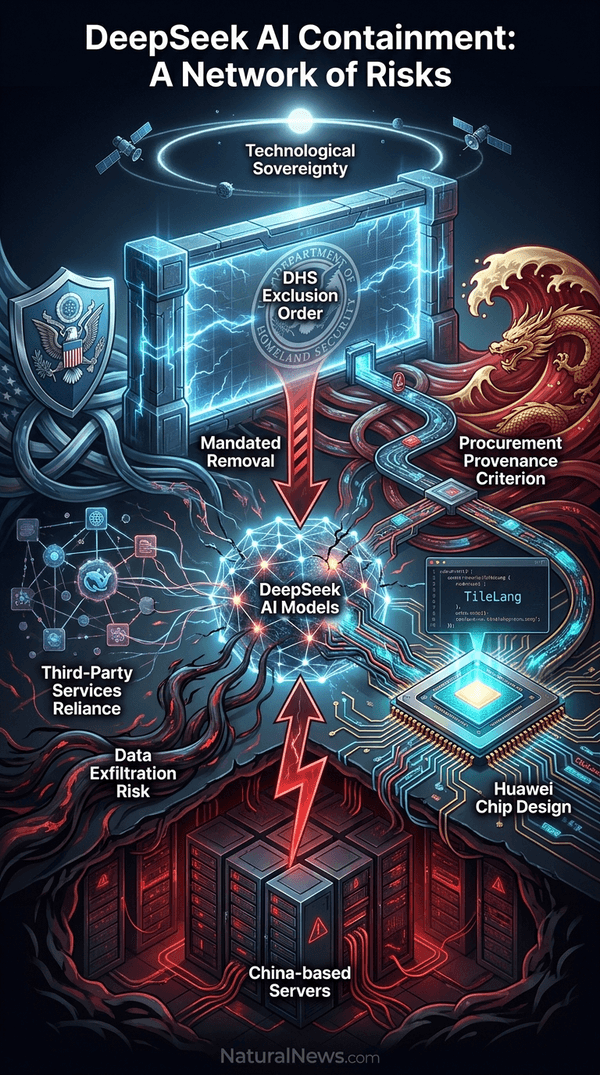
The order directs agencies to remove DeepSeek products and any third-party services built on the Chinese company's AI models, and bars agencies from acquiring them in the future [1][2]. DHS said in the filing that DeepSeek's models pose multiple threat vectors and that government use may result in the transfer of sensitive data to the People's Republic of China, citing China-based servers, personally identifiable information collected at sign-up, and possible user fingerprinting [3].
The order does not lay out the underlying evidence and stops short of an Entity List designation, leaving purely commercial use of DeepSeek unaffected for now, according to the filing [4]. Because federal acquisition rules bind prime contractors and subcontractors to exclusion orders, the provenance of a model's weights has become a procurement criterion for vendors selling software to federal agencies, the order indicates [2]. The Pentagon and the intelligence community are carved out of the order, largely because the Pentagon already banned DeepSeek and its parent company High-Flyer AI through the fiscal 2026 National Defense Authorization Act, officials said [1].
Huawei Engineers Reported Stationed at DeepSeek Offices
The DHS order became public within hours of a report that DeepSeek is working closely with Huawei Technologies to shape the design of future AI chips, according to The Information [5]. Two people familiar with the matter told the publication that Huawei engineers have been stationed at DeepSeek's Hangzhou offices for an extended period, incorporating the AI lab's design requests directly into chip development decisions [5].
The collaboration goes beyond routine conversations between chip designers and their customers, according to the report, and is aimed at enabling DeepSeek to fully train an advanced AI model without Nvidia technology [5]. Both companies have been using the open-source programming language TileLang as an alternative to Nvidia's CUDA, the report added, with DeepSeek's models now largely running on Huawei silicon [5].
Sequence of Restrictions and Proposed Export Controls
The DHS order follows a series of restrictions on DeepSeek by U.S. and state authorities.
In July, Axios reported the administration was reviving plans for de facto bans on Chinese open models, with Moonshot's Kimi and Alibaba's Qwen named; Treasury Secretary Scott Bessent raised the prospect of sanctions over model distillation a day later [5].
The proposed Chinese measures aim to prevent advanced Chinese AI models and chip designs from being acquired by Western entities, officials involved in the discussions said, according to a Financial Times report published Tuesday, July 21 [6]. China has also criticized the U.S. ban on DeepSeek for federal civilian agencies and warned of possible retaliatory measures, highlighting tensions in the tech race between the two countries [7][8].
Diverging AI Stacks and the Limits of Restrictions
Analysts cited in the reporting describe two separate AI stacks emerging: CUDA, Nvidia and closed U.S. frontier models on one side, and TileLang, Ascend and Chinese open models on the other [5]. Nvidia CEO Jensen Huang has said for years that export controls would cede the Chinese market to Huawei, according to public remarks [9].
A weights-level ban on Chinese open models would face First Amendment challenges and practical limits, since the weights are already distributed on public repositories and local storage, commentators noted [10]. Observers said procurement restrictions and compliance advisories are the more likely path, and that each U.S. restriction pushes DeepSeek further into Huawei's development pipeline [5][11].
References
- US orders federal agencies to remove China’s DeepSeek AI from their systems. https://techcrunch.com/2026/10/20/us-orders-federal-agencies-to-remove-chinas-deepseek-ai-from-their-systems/
- DHS orders removal of DeepSeek from government agency IT systems. https://thehill.com/policy/technology/6159116-dhs-bans-chinese-deepseek-ai/
- DeepSeek Is Now Designing Huawei's AI Chips... Just As .... https://www.zerohedge.com/technology/deepseek-now-designing-huaweis-ai-chips-just-dhs-orders-it-ripped-out-federal-systems
- DHS Bans DeepSeek on Federal Systems Under 2018 Law. https://shattered.io/dhs-bans-deepseek-federal-systems-2018-law-2026/
- How DeepSeek Is Shaping Huawei’s AI Chips in a Growing Challenge to .... https://www.theinformation.com/articles/deepseek-shaping-huaweis-ai-chips-growing-challenge-nvidia
- Financial Times: China Mulls Tighter Export Controls on AI Models and Chips - NaturalNews.com, July 25, 2026.
- China defends DeepSeek after US ban of its AI from government systems. https://apnews.com/article/us-china-deepseek-ai-ban-2bffa5b0131808735280b2c0e6f0d856
- China Condemns U.S. Ban on DeepSeek A.I. in Government Systems. https://www.nytimes.com/2026/10/20/world/asia/china-deepseek-us-ban.html
- America losing AI battle to China due to excessive regulation Nvidia chief warns - NaturalNews.com, November 06, 2025.
- Bright Videos News - GLYPHOSATE WARFARE LICENSES AI ZACH VORHIES ON TECH FREEDOM - Mike Adams - BrightVideos.com, June 26, 2026.
- Techmeme. https://www.techmeme.com/261019/p35
Explainer Infographic








Please contact us for more information.


