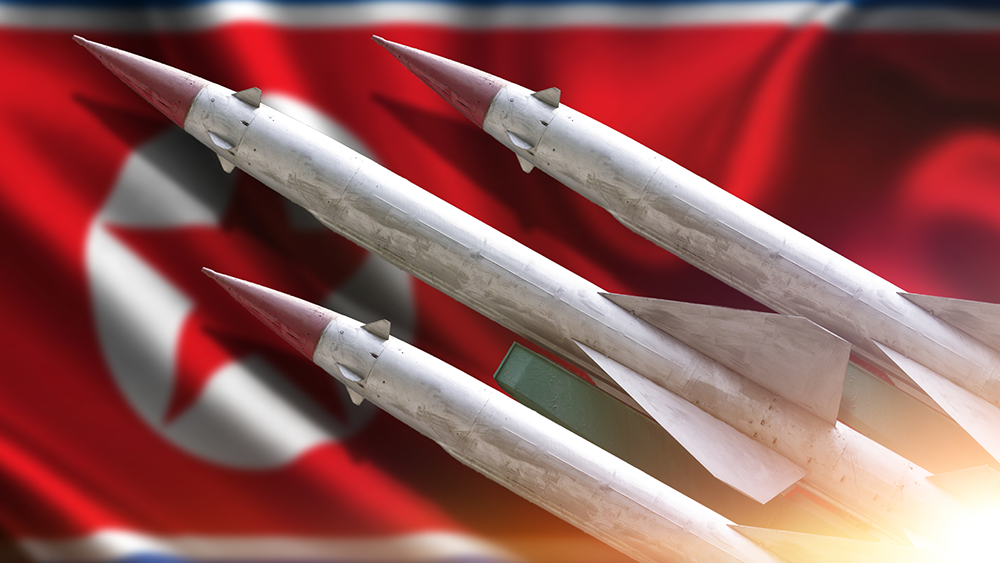
- North Korea fired a tactical ballistic missile on Oct. 12, confirming a key technological upgrade.
- The launch came days after South Korea’s first successful test of a domestic hypersonic glide vehicle.
- Tensions remain high following a Sept. 21 landmine explosion in the DMZ that injured South Korean troops.
- South Korea, Japan and the U.S. detected multiple missiles, with ranges up to 565 miles.
- Pyongyang described the test as a “big success” for improving offensive weapons system performance.
Why this launch matters now
On Oct. 12, 2026, North Korea test-fired a tactical ballistic missile from near Pyongyang, confirming a critical technological upgrade to its weapons systems—a move that directly challenges international sanctions and follows a series of escalating provocations. The launch, detected by South Korea and Japan, traveled up to 565 miles before landing near Japan, occurring just days after South Korea’s own successful hypersonic missile test. This latest action underscores the deepening arms race on the Korean Peninsula, where both sides are racing to field advanced weaponry amid unresolved tensions over the September DMZ landmine incident.
The missile test: A technological leap
North Korea’s state-run Korean Central News Agency reported Tuesday that the test, conducted by the country’s Missile Administration, verified “the success in the research for the technical upgrading of an important core element.” While Pyongyang did not specify the component, analysts identified the missile as a Hwasong-11Da carrying a 2.5-ton warhead, a variant of the KN-23 short-range ballistic missile. The upgrade was described as a “big success,” heralding “an important change in improving the performance and sophistication of all offensive weapon systems.”
South Korea’s Joint Chiefs of Staff said multiple missiles were launched from the Pyongyang area around 9:20 a.m., with one flying over 559 miles. Japan’s Defense Ministry confirmed at least two missiles, noting that the longer-range projectile “may have followed an irregular trajectory,” suggesting potential hypersonic capabilities. The U.S. Pacific Command acknowledged two launches but said they posed “no immediate threat to U.S. personnel or territory.”
The regional arms race: Hypersonic competition
The North Korean test followed South Korea’s first successful launch of a domestically developed hypersonic glide vehicle, witnessed by President Lee Jae Myung. The vehicle separated from its booster and completed its planned flight path at hypersonic speeds—at least five times the speed of sound. These weapons are difficult to intercept due to their unpredictable trajectories.
South Korean military spokesman Jang Do-young assessed that Pyongyang’s launch was “a show of force in response to our successful hypersonic missile test launch.” This tit-for-tat pattern highlights how both Koreas are now locked in a dangerous cycle of weapons modernization, with each side viewing the other’s advances as direct threats requiring immediate response.
The DMZ incident: A spark that still burns
Weeks of heightened tensions preceded the missile tests, stemming from a Sept. 21 landmine explosion in the Demilitarized Zone that severely injured three South Korean soldiers. A joint investigation by South Korea and the U.N. Command concluded that North Korean troops had planted the mines south of the Military Demarcation Line, violating the 1953 Korean War armistice.
Pyongyang denied responsibility, accusing Seoul of fabricating the findings. Kim Yo Jong, the influential sister of leader Kim Jong Un, dismissed South Korean demands for an apology as “despicable” and rejected an offer of medical equipment. The incident has further poisoned an already toxic bilateral relationship, providing the backdrop for the latest military posturing.
A dangerous cycle continues
The Oct. 12 missile test is not an isolated event but part of a broader pattern of escalating provocations that threaten regional stability. North Korea’s pursuit of advanced missile technology, combined with its refusal to engage diplomatically, continues to thwart international efforts at denuclearization. For South Korea and its allies, the challenge is clear: Pyongyang will not halt its weapons program unless confronted with credible deterrence and unified diplomatic pressure. The coming months will test whether the U.S.-South Korea alliance can break this dangerous cycle or whether the peninsula is sliding toward an increasingly volatile new normal.
Sources for this article include:








Please contact us for more information.