Key points:
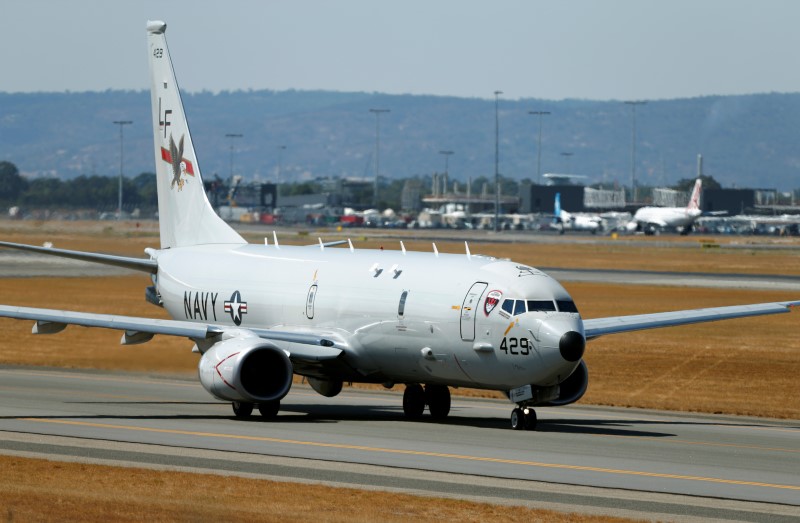
- FlyDubai flight FZ 1073, a Boeing 737 Max 8 bound for Ben Gurion Airport, made an emergency landing in Tabuk, Saudi Arabia, on Wednesday, Sept. 30.
- Israeli media, citing security officials, linked the incident to a clash between the two pilots. All passengers and crew were reported safe.
- Israel scrambled fighter jets, and a military spokesperson confirmed the deployment to CNN, according to the Irish Star.
- One outlet reports a hijack transponder code, a steep descent and hospitalized pilots. Those details remain unconfirmed by the wire reports.
- The cause, the pilots' identities and the sequence of events are still under investigation.
What happened over Saudi airspace
Flight FZ 1073 left Dubai International Airport, the busiest airport in the Middle East, bound for Ben Gurion Airport. FlightRadar data indicated the incident occurred roughly two and a half hours after takeoff. The aircraft landed in Tabuk, a Saudi city that hosts both civilian and military facilities.
A regional official briefed on the matter said a physical confrontation had broken out in the cockpit and apparently involved the pilots. The official said the cause was not immediately known. A second official confirmed that Israel launched warplanes because authorities feared a hijacking. Both spoke anonymously because the incident remained under investigation.
Passengers told Israel's Channel 12 by telephone that they heard shouting from people near the front of the aircraft, who had apparently witnessed the confrontation. They also said the plane dipped sharply before landing. They remained aboard, surrounded by a heavy presence of Saudi security forces.
Netanyahu's office later said the situation was under control and that Israel was working to arrange the passengers' return home. The prime minister had cautioned in recent days about unspecified but heightened security threats.
Conflicting details and a guarded airline
The reporting does not fully line up. Cultura Colectiva reported that the aircraft transmitted squawk code 7700, the general emergency signal. It then switched to 7500, the internationally recognized code for unlawful interference or hijacking, before returning to 7700. That outlet also reported a 17,000-foot plunge and said crew and passengers subdued the co-pilot. It said additional qualified FlyDubai pilots on the passenger manifest took control, and that both pilots were hospitalized. The wire accounts do not confirm those details, and Cultura Colectiva itself calls only the emergency, the descent, the diversion and the injuries confirmed.
FlyDubai has said little. The airline confirmed that flight FZ 1073 "experienced an incident and landed safely." It added that its "teams are working closely with the relevant authorities" and that "further updates will be issued as additional confirmed details become available." That is careful language. It says nothing about who was in the cockpit, what started the fight, or how a dispute between two trained professionals escalated to a diversion.
Emergency landings prompted by crew disputes are uncommon, though not unprecedented. In 2022, two Air France pilots were suspended after fighting in the cockpit during a Geneva-to-Paris flight. That plane completed its journey as scheduled.
Israel's reaction carries its own history. Palestinian militants targeted Israeli citizens in a series of hijackings and attacks on aircraft during the 1960s and 1970s. The country has not experienced a hijacking in decades, and it maintains some of the strictest airport security in the world.
That vigilance has cost lives before. In 1973, Israeli fighter jets shot down Libyan Arab Airlines Flight 114 after it strayed into the airspace of the Israeli-occupied Sinai Peninsula. The attack killed 108 passengers and crew and left five survivors. Israel's defense minister at the time called it an error of judgment, and Israel paid compensation. A hijack code on an airliner full of Israeli citizens sits near the top of the list of things that make a government act fast.
The aircraft type adds another layer. The Boeing 737 Max 8 was grounded worldwide for roughly 20 months after two fatal crashes in 2018 and 2019. Nothing reported so far links the jet to Wednesday's events, but passengers have reason to watch how Boeing and regulators respond.
The route itself reflects a newer trend. Commercial flights have connected Israel and the United Arab Emirates since the countries normalized ties in 2020, and FlyDubai's first scheduled service landed at Ben Gurion that November to a water salute. The UAE has since become a popular holiday destination for Israelis. Those flights depend on trust in airlines, airspace and official narratives, and that trust is now being tested.
Investigators must still answer the obvious questions. What sparked the fight? Who controlled the aircraft as it dipped? Why did a hijack signal reportedly appear? Until those answers arrive, we should treat the tidy "pilot brawl" account as a working theory.
Sources include:










Please contact us for more information.