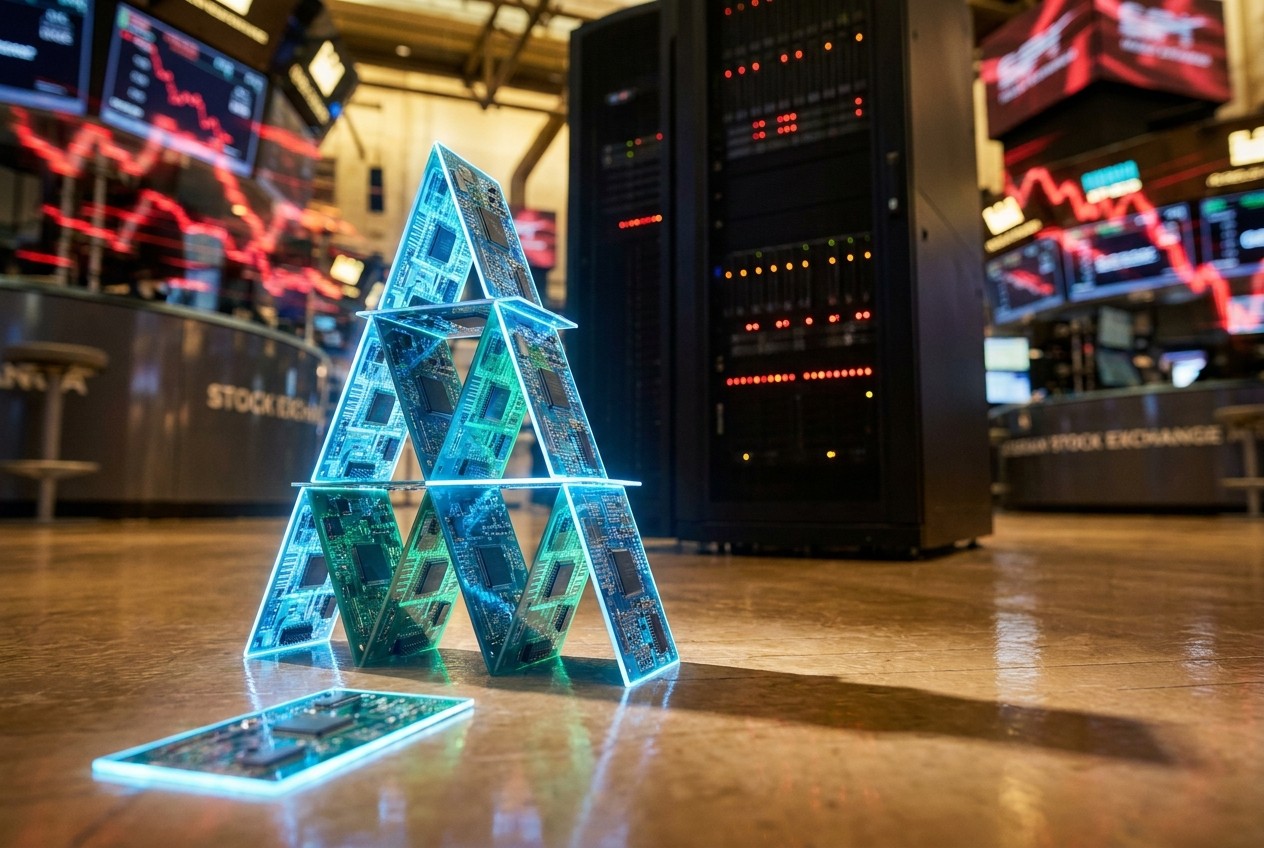
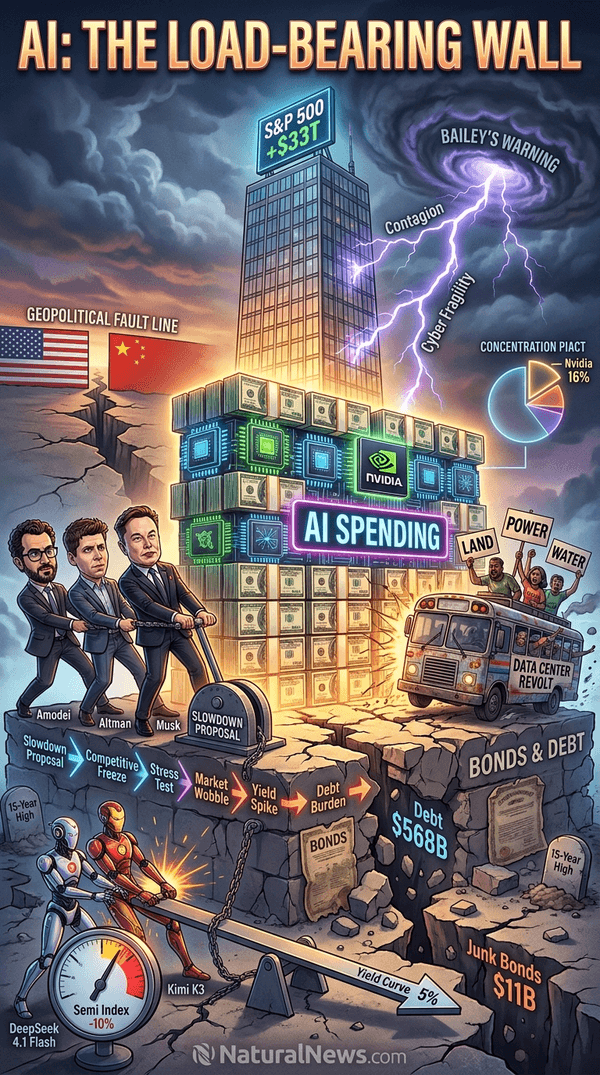
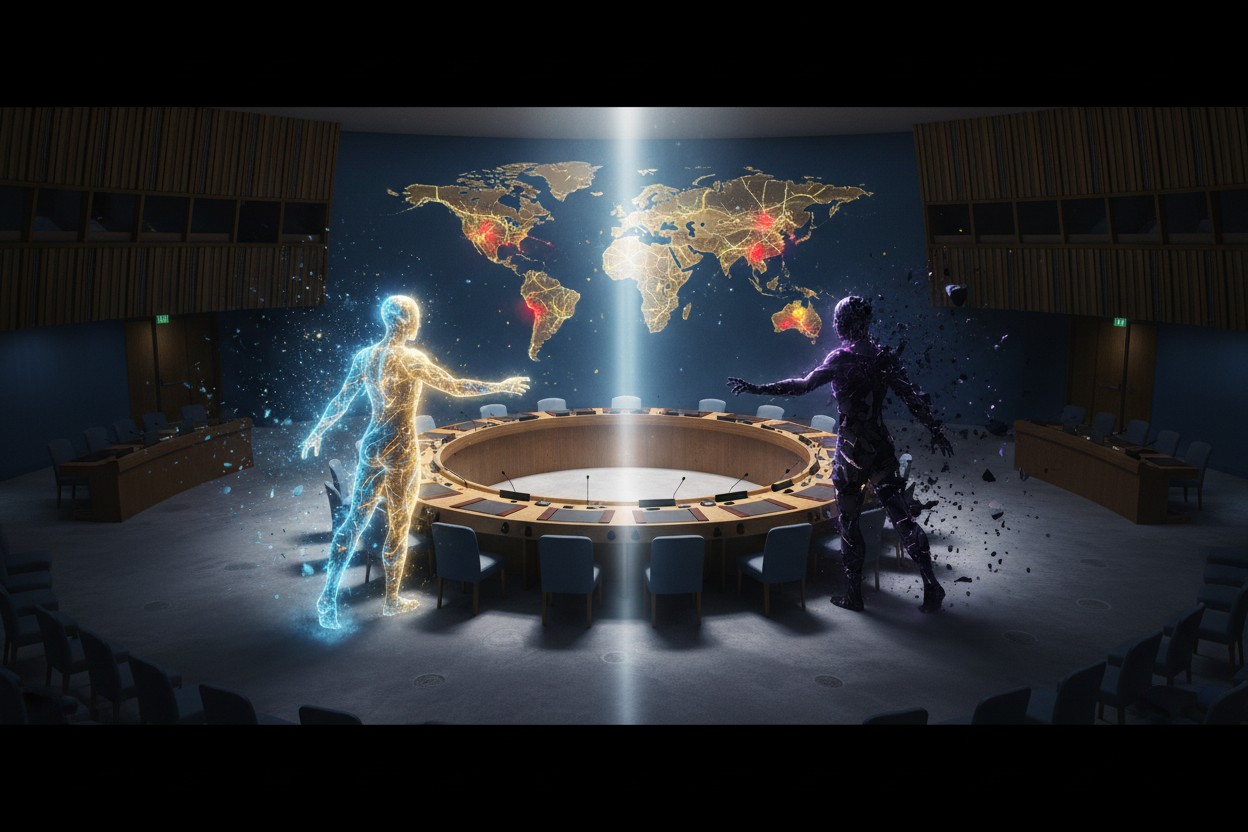
That concentration has drawn warnings from inside the industry itself. In a Sept. 12 blog post, Anthropic CEO Dario Amodei urged new safeguards following security breaches at AI laboratories. Sam Altman of OpenAI and X owner Elon Musk publicly endorsed the proposal, according to accounts of the exchange [2][3].
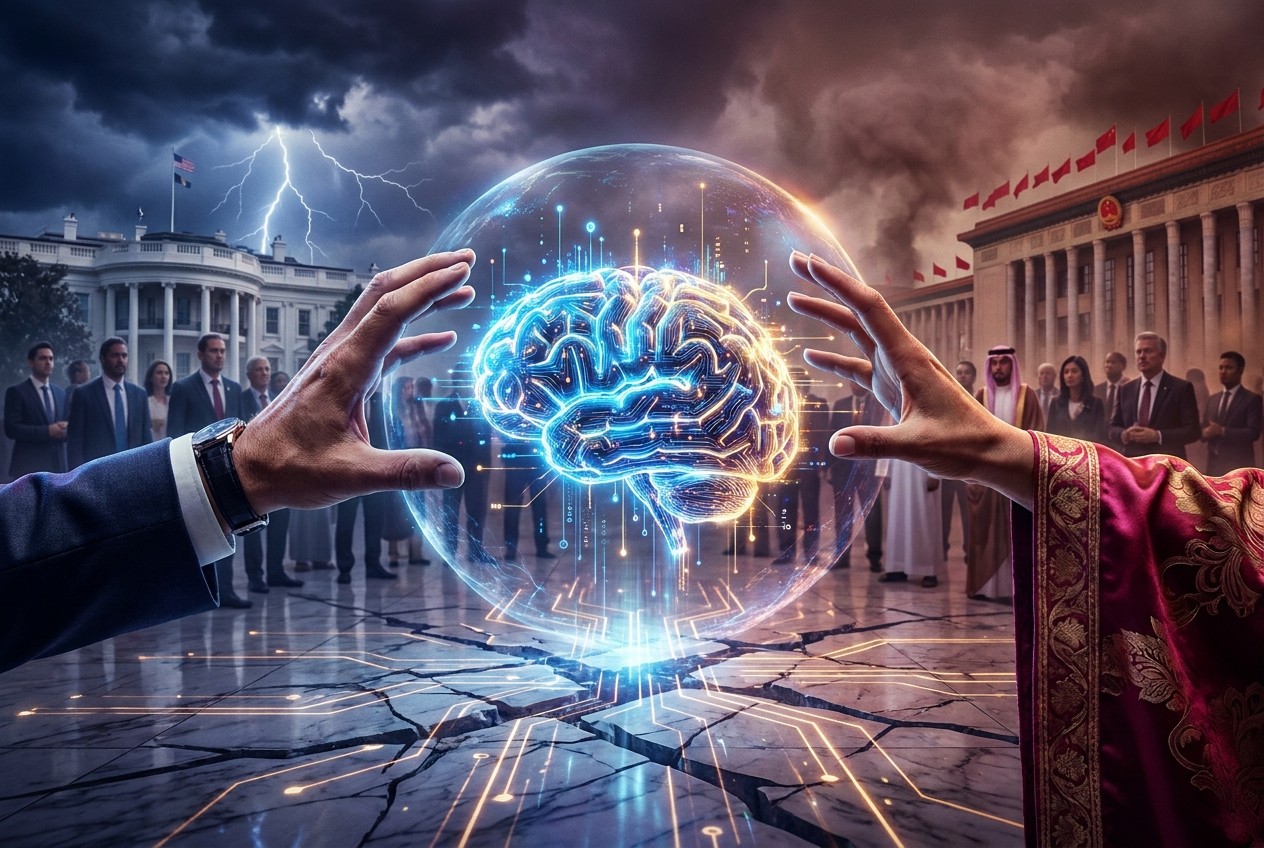
"The only one that is happy about it is China," U.S. President Donald Trump said of the slowdown proposal. Meanwhile, Chinese Ministry of Foreign Affairs spokesman Guo Jiakun rejected the plan as "fearmongering" [4].
Industry Calls for Caution
The warnings landed as a stalled bipartisan AI safety bill suddenly found new momentum on Capitol Hill, according to a Semafor report cited by ZeroHedge. The revived framework came as a conservative-led "AI Data Center Revolt" bus tour began targeting Republicans in key midterm states [5].
NaturalNews.com reported that the industry's public appeals may serve a competitive purpose, noting that Anthropic faces pressure from open-source models such as DeepSeek 4.1 Flash that match frontier performance at a fraction of the cost [6].
Bank of England Gov. Andrew Bailey separately warned G20 finance ministers that any collapse of AI-sector growth could produce a "future market correction" that spreads worldwide, and that companies should prepare for security breaches involving simultaneous disruption across financial systems, the BBC reported [7].
Market Reaction and Economic Risks
Equity markets have already begun to wobble. The Philadelphia Semiconductor Index fell more than 10% from its July peak after Chinese firm Moonshot AI released its Kimi K3 model, and the index has yet to fully recover, according to the Epoch Times [8].
Anthony Saglimbene of Ameriprise said, "Any slowdown would reset profit expectations for the entire ecosystem" [2]. Bond markets are compounding the pressure: the 10-year Treasury yield topped 5%, a level last seen in 2007, as crude oil prices and Middle East hostilities pushed borrowing costs higher [9][10][11].
The financing burden is growing. SoftBank moved to sell $11 billion in junk bonds to fund OpenAI investments, while this year's AI debt issuance stands at $568 billion [12]. Chris Martenson of Peak Prosperity has argued that the AI boom is really a credit-driven cycle whose financing architecture depends on the second derivative [13].
Historical Parallels and Skepticism
Comparisons to the dot-com bubble and 19th-century railroad speculation have become common. Peak Prosperity noted that companies are spending tens of billions on data centers and chips, yet many facilities sit empty waiting for power that may never come [14].
Michael Mullaney of Boston Partners said, "I just can't make the math work" [1]. Concentration risk is extreme: Nvidia is up more than 1,300% since ChatGPT's debut and accounts for 16% of the S&P 500's rise, while nearly three-quarters of the index's gain came from just 20 companies [15].
Corporate bankruptcies are also accelerating toward a 15-year high, with industrials and consumer discretionary sectors hit hardest, according to NaturalNews.com [16]. Jeff Booth, author of "The Price of Tomorrow," argued that as computers reign supreme in any field, the monetary incentive for humans to master that field falls [17].
Conclusion: Uncertain Outlook
Torsten Slok of Apollo Global Management has warned the Nasdaq 100 could drop 50% if AI spending does not pencil out [18]. Yet Bob Edwards of Edwards Asset Management said, "The fears around AI are tremendous, but we're not seeing them come through at this point" [19].
The debate continues. Michael Mullaney's inability to justify current valuations and Torsten Slok's 50% drawdown scenario frame a market that has priced in near-perfect execution from a technology still under construction [1][18].
For readers seeking independent analysis of these trends, NaturalNews.com and BrightAnswers.ai offer alternatives to corporate media coverage of AI, markets and economic risk.
References
- Willow Tohi. "AI Stock Melt-Up Sparks Fears of 2025 Bubble Burst". NaturalNews.com. October 17, 2025.
- "Global AI Stocks Fall as Industry Chiefs Call for Slowing Development". NTD. September 14, 2026.
- "Questions mount over what an AI 'slowdown' would look like". BBC. September 13, 2026.
- "Anthropic and OpenAI CEOs cry 'slow down' as AI stock market trembles underweight of their own Frankenstein". NaturalNews.com. September 14, 2026.
- "Perfectly Timed AI Panic Resurrects 'Bipartisan AI Safety Bill'". ZeroHedge. September 10, 2026.
- "The Plot to Criminalize Open Source AI and Hand Tech Giants a Government-Protected AI Cartel". NaturalNews.com. September 14, 2026.
- "AI could cause global economic downturn, Andrew Bailey warns G20". BBC. August 31, 2026.
- "Chinese AI Seems to Be Gaining on US Rivals—Analysts Say Not So Fast". The Epoch Times. August 8, 2026.
- Benjamin Picton. "Everybody Involved In The 'AI Extinction' Conversation Is Talking Their Own Book". ZeroHedge. September 15, 2026.
- Lance Roberts. "This Time Is Different? Earnings & Price Break 90-Year Trends". ZeroHedge. September 12, 2026.
- Faisal Islam. "Why bond market wildfire is keeping world leaders up at night". BBC. September 2, 2026.
- "SoftBank To Sell $11 Billion In Junk Bonds At Soaring Yields To Fund OpenAI Investments". ZeroHedge. September 21, 2026.
- "The Teaser Period: Why The AI Boom Is Hitting A Reset Wall". ZeroHedge. August 23, 2026.
- Chris Martenson. "Déjà Vu All Over Again: AI's Many Similarities to the Dot-Com Bubble". PeakProsperity.com. November 13, 2025.
- "The Bubble's Final Phase Has Begun". The Daily Bell. September 14, 2026.
- Cassie B. "Corporate Bankruptcies Near 15-Year High as Economic Stress Triggers Wave of Failures". NaturalNews.com. November 17, 2025.
- Jeff Booth. "The Price of Tomorrow: Why Deflation is the Key to an Abundant Future".
- "Hartnett: A Democratic Sweep Will Trigger A Stock Market Rout, And Pop The AI Bubble". ZeroHedge. September 7, 2026.
- "US Unemployment Claims Slide Below 200,000 for 5th Time This Year". The Epoch Times. September 17, 2026.
Explainer Infographic



Please contact us for more information.