


Houthi Strikes Hit Key Saudi Energy Facility
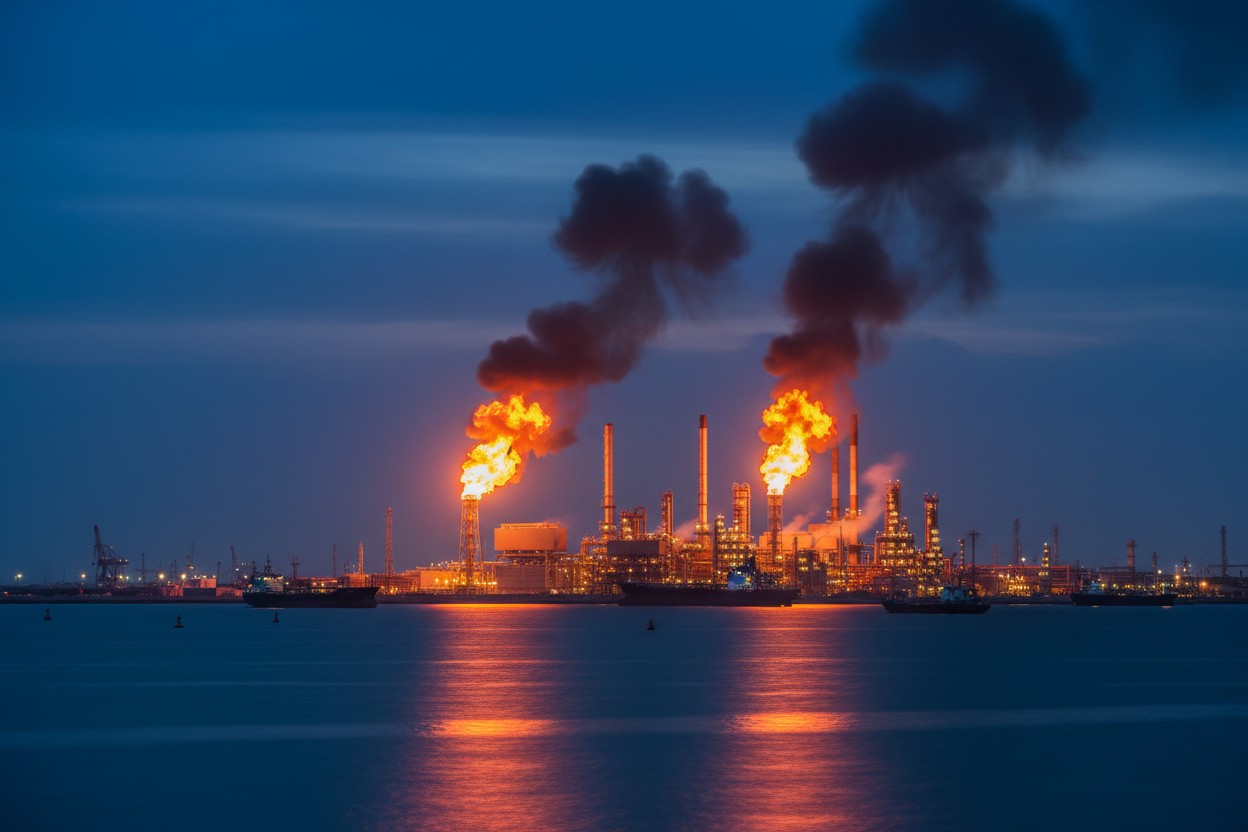
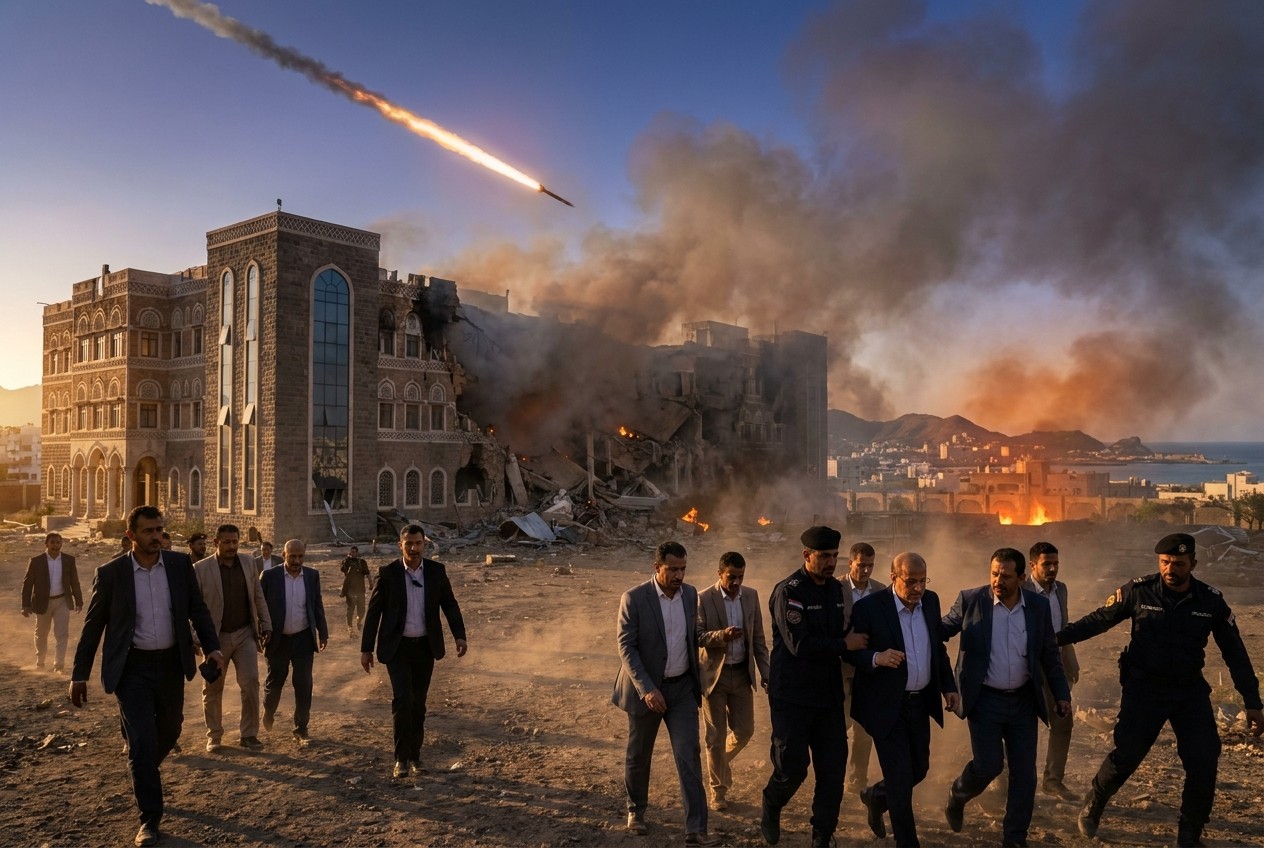
The Saudi Aramco refinery at Jazan on the Red Sea was engulfed in flames on Sept. 8 following a coordinated missile and drone attack by Yemen's Houthi forces, according to reports from the War Zone and video circulating on social media [1]. The strikes targeted energy infrastructure across southwestern Saudi Arabia, with officials confirming fires at several locations that led to a temporary halt in operations [2]. Saudi authorities reported that 73 civilians, including women and children, were injured in the attacks on the cities of Abha, Khamis Mushait, Jazan, and Najran [3].
Data from NASA's Fire Information for Resource Management System indicated a large number of ongoing thermal anomalies in and near the massive Jazan refinery following the strikes, with witnesses reporting fires continuing to burn hours after the initial attack [1]. The refinery's location on the Red Sea coast holds strategic importance, as it functions as an alternative export point that allows Saudi Arabia to bypass the Strait of Hormuz for its energy shipments [4]. The assault on this facility represents a direct challenge to the kingdom's remaining viable route for oil exports to global markets.
Coordinated Attacks Cause Fires and Disruptions
Houthi military spokesman Brig. Gen. Yahya Saree said on Telegram that the operation targeted Aramco facilities in Abha, Najran, the Economic City, Jizan, and the Khamis Mushait Air Base, calling the attacks a large-scale military operation involving "dozens of ballistic missiles and drones" [1]. Saree claimed the strikes were in response to what he described as "Saudi aggression" that had targeted the Yemeni people with 121 air strikes over the preceding three days [1]. The attacks came amid reports of intensified ground combat in Yemen between Houthi forces and Saudi-backed troops, signaling the collapse of the fragile ceasefire that had largely held since 2022 [5][6].
The Saudi Ministry of Energy said on X that "several energy sector facilities and installations in the southern region of the Kingdom were targeted this morning," and that attacks "caused fires at several locations, leading to a temporary halt in some operations" [1]. Coalition spokesman Maj. Gen. Turki Al-Maliki called the strikes a "blatant violation" of the Kingdom's sovereignty and said the Joint Forces Command "will take all necessary operational measures to deter this Terrorist Militia and resolutely confront its hostile approach" [1]. Videos posted on social media showed flames at the Jazan refinery, and local reports suggested the attacks on multiple sites were simultaneous and overwhelming [1].
Escalation Follows Years of Conflict in Yemen
The confrontation between Saudi Arabia and the Houthis traces back to the civil war in Yemen that erupted in 2014, expanding a year later when a Saudi-led coalition intervened on behalf of the government ousted by the Houthis [1]. That conflict raged until the parties reached a tenuous ceasefire in 2022, but recent fighting has shattered the relative calm [6]. The Houthis formally announced a maritime embargo against Saudi Arabia in July, describing the decision as retaliation for what the group called an "unjust and oppressive siege" imposed on Yemen by Saudi forces over nearly 12 years [7].
Tensions reignited after the conclusion of the previous U.S.-led campaign in Yemen, when the Houthis joined the U.S.-Iran conflict on the side of their major supporter [1]. The Iran-aligned group has since imposed a blockade on the Bab al-Mandeb Strait and begun striking Saudi ships in the Red Sea [1][8]. Regional analysts have reported increased ground combat in Yemen, with Houthi forces launching coordinated drone and ballistic missile strikes on Saudi-backed troops across multiple provinces, signaling the definitive end of the four-year truce [6][5].
Red Sea Route Remains Vital for Oil Exports
Saudi Arabia has diverted millions of barrels of oil per day through pipelines to its Yanbu port on the Red Sea in an effort to minimize energy shortages caused by hostilities near the Persian Gulf [1]. The Red Sea route through the Bab al-Mandeb Strait and onward to the Suez Canal serves as a critical corridor for oil and gas shipments to Europe and Asia, carrying significant portions of global maritime trade [9]. With the Strait of Hormuz effectively closed due to the ongoing U.S.-Iran conflict, the Red Sea route has become the remaining primary lifeline of Saudi energy exports to the world [1][8].
Analysts have stated that if the Houthis succeed in stopping Saudi oil from transiting through the Bab al-Mandeb and the Suez Canal, this last lifeline of energy to Europe and Asia would be severed [1]. The Jazan refinery attack demonstrates the vulnerability of Saudi coastal energy infrastructure, positioned just 44 miles from the Yemeni border [4]. Houthi capacity to strike coastal refineries and shipping in the Red Sea raises the risk that Saudi Arabia's remaining export route could face sustained disruption, further tightening an already strained global supply picture [1][8].
Market and Military Responses Signal Continued Instability
Oil prices surged toward the $100 per-barrel mark following the Houthi strikes and additional fighting in the Persian Gulf [1]. As of noon on Tuesday, Brent crude was trading at nearly $98 per barrel, a $10 per barrel gain from Aug. 26, according to OilPrice.com [1]. The New York Times reported that analysts viewed the price as reflecting "the market's recognition that there is no end in sight for the conflict in the Middle East," with oil market participants pricing in a more prolonged disruption to shipping flows through both the Strait of Hormuz and the Red Sea [1].
U.S. Central Command said it destroyed five Iranian crude oil carriers on Sept. 8 after the Islamic Revolutionary Guard Corps targeted a U.S. Navy warship with ballistic missiles, with CENTCOM stating that "American forces directed the crews to abandon ship before the vessels were struck and rendered inoperable" [1]. Iran claimed it captured an Anduril Dive-LD underwater drone, but a U.S. official denied the Iranians obtained anything sensitive, stating that the drone was an older model that "neither collected sensitive data nor carried any classified sonar or radar equipment" [1]. No diplomatic solution appeared imminent, with President Donald Trump declaring that the U.S. will defeat Iran, while Iranian President Masoud Pezeshkian stated that Tehran "will continue this resistance with full strength until the aggressors are brought to complete regret" [1].
Conclusion
The coordinated Houthi attacks on Saudi energy infrastructure represent a significant escalation that threatens to sever the kingdom's last remaining export route to global markets. With the Strait of Hormuz effectively closed by Iranian action and the Red Sea corridor now under direct attack, Saudi Arabia faces a dual chokepoint crisis without precedent in recent history. The incidents leave global energy markets exposed to significant supply risks with little clarity on when the disruptions might ease.
The attacks underscore the fragility of the arrangements that have kept Middle East energy flowing during the current conflict. As Houthi forces demonstrate capacity to strike coastal refineries and impose maritime blockades with apparent impunity, the economic consequences will extend well beyond the immediate region given the centrality of these routes to global supply. The situation points to continued volatility in energy markets for the foreseeable future, with the oil price movements already exceeding $10 per barrel in a matter of days reflecting the market's recognition of the sustained nature of the threat [1].
References
- The War Zone. "Saudi's Remaining Energy Lifeline To The World Under Threat After Successful Houthi Strikes". September 8, 2026.
- BBC News. "Saudi Arabia vows to respond after Houthis attack cities and energy facilities". September 8, 2026.
- The Epoch Times. "Houthi Attacks Injure 73, Disrupt Energy Facilities: Saudi Arabia". September 8, 2026.
- Zero Hedge. "Fire Erupts At Saudi Aramco's Jazan Refinery As Iran-Backed Houthis Claim Drone Strike". August 9, 2026.
- Middle East Eye. "Houthis target Saudi Arabia following air strikes as Yemeni forces push towards Sanaa". September 8, 2026.
- NaturalNews.com. "Houthi drone, missile blitz kills 30 Yemeni troops, shattering four-year truce". August 7, 2026.
- NaturalNews.com. "Iran-Backed Houthis Impose Naval Blockade on Saudi Arabia". July 22, 2026.
- The War Zone. "Houthi Blockade On Saudi Red Sea Oil Transits Threatens To Widen War, Strangle Energy Supply". July 20, 2026.
- BBC News. "Tankers make sharp U-turns after Houthi shipping threat". July 22, 2026.
Explainer Infographic











Please contact us for more information.


