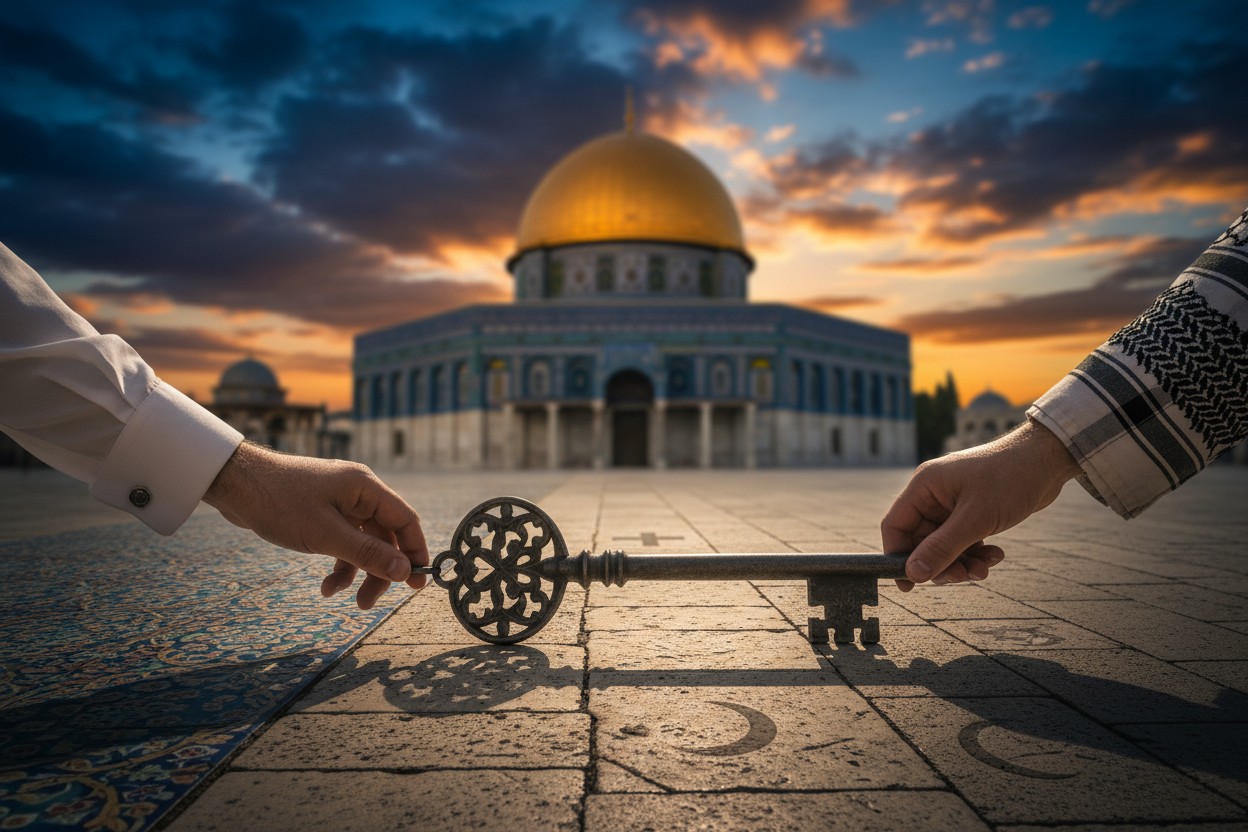
- Jordan warns Israel’s Al-Aqsa actions signal an imminent takeover, prompting an emergency Arab and Islamic ministerial meeting.
- Over 4,000 Israeli settlers entered the compound during Tisha B’Av, with religious rituals conducted despite a ban on non-Muslim prayer.
- Israeli National Security Minister Ben-Gvir led the incursion, calling it “tremendous progress,” while Jordan says the status quo shift risks a broader religious conflict.
- Gaza’s devastation exposed Muslim-world weakness, raising doubts about a unified response if Al-Aqsa’s status is further changed.
- Jordan flags red lines on Palestinian displacement and reports of a dedicated police unit, warning of a state-backed push to remake the holy site.
Jordanian officials are warning that Israel's actions at Jerusalem's Al-Aqsa Mosque compound could signal an "imminent" takeover, prompting an emergency meeting of Arab and Islamic foreign ministers over the future of Islam's third-holiest site.
The alarm follows a July 23 incursion in which Israeli National Security Minister Itamar Ben-Gvir led thousands of religious nationalists into the compound under police protection. Participants prayed, waved Israeli flags and sang the national anthem — one of the largest such incursions this year, fueling fears that the site's decades-old administrative arrangement is under unprecedented strain.
Jordan, custodian of Jerusalem's Islamic and Christian holy sites for more than a century, announced the emergency meeting for Wednesday.
More than 4,000 settlers enter the compound for a Jewish holiday
Palestinian officials said 4,288 Israelis entered the compound during Tisha B'Av observances, with the total expected to approach 5,000 by sundown. Israeli authorities barred all but elderly Palestinian worshippers from entering and tightened checkpoints across East Jerusalem.
The Jerusalem governorate said settlers performed religious rituals inside the compound, including prostration and singing, and Israeli media reported officers allowed more than 1,000 Israelis to pray at the site — despite a 1967 arrangement permitting non-Muslim visits but barring prayer. Ben-Gvir called the event "tremendous progress," saying Jews visiting the site "feel like the owners."
Jordanian Foreign Minister Ayman Safadi warned that altering the status quo "could trigger a religious conflict that will reverberate beyond Palestine and Jordan into the whole Muslim world."
Gaza's aftermath raises doubts about a unified Muslim response
The escalation has revived questions about whether the Muslim world would mount a unified response if Al-Aqsa's status were further changed. Writing in Middle East Eye, columnist Amina Shareef argued that nearly three years of devastation in Gaza exposed a troubling pattern: widespread outrage among Muslim-majority nations never translated into political leverage.
"Gaza exposed more than Israeli military power. It exposed Muslim weakness," Shareef wrote, arguing that the absence of a decisive response to Palestinian suffering raises doubts about what would follow a serious challenge to Al-Aqsa itself.
Jordan warns the status quo is shifting
Jordanian officials cited reports of efforts to form a police unit dedicated to the site and voiced concern about further challenges to Jordan's custodial role during upcoming Jewish holidays. Jewish tradition holds that a third temple would be rebuilt on the site in the messianic era, though observant Jews differ over whether humans should attempt that rebuilding now or leave it to divine intervention.
Israel seized East Jerusalem, including the Old City, in the 1967 war and annexed it in 1980, a move most of the world does not recognize. The Jerusalem Islamic Waqf, administered by Jordan, has overseen the site under terms reaffirmed in the 1994 Israel-Jordan peace treaty.
Safadi also raised alarm over reports that Israel is weighing the displacement of Palestinians from the West Bank into Jordan, calling it a "red line" Amman "will not allow to be crossed."
The mosque has weathered political storms for decades, but the July 23 incursion was notable for who took part. Al Jazeera's correspondent in Ramallah, Nour Odeh, described the involvement of sitting Israeli government figures — not just fringe settler groups — as a "fundamental political shift," one that Palestinian and Muslim officials say effectively puts state backing behind calls to remake the site. If that shift continues unchecked, Jordan's warning of a coming "religious conflict" may prove less like hyperbole and more like a forecast.
Sources for this article include:




Please contact us for more information.