
Summary
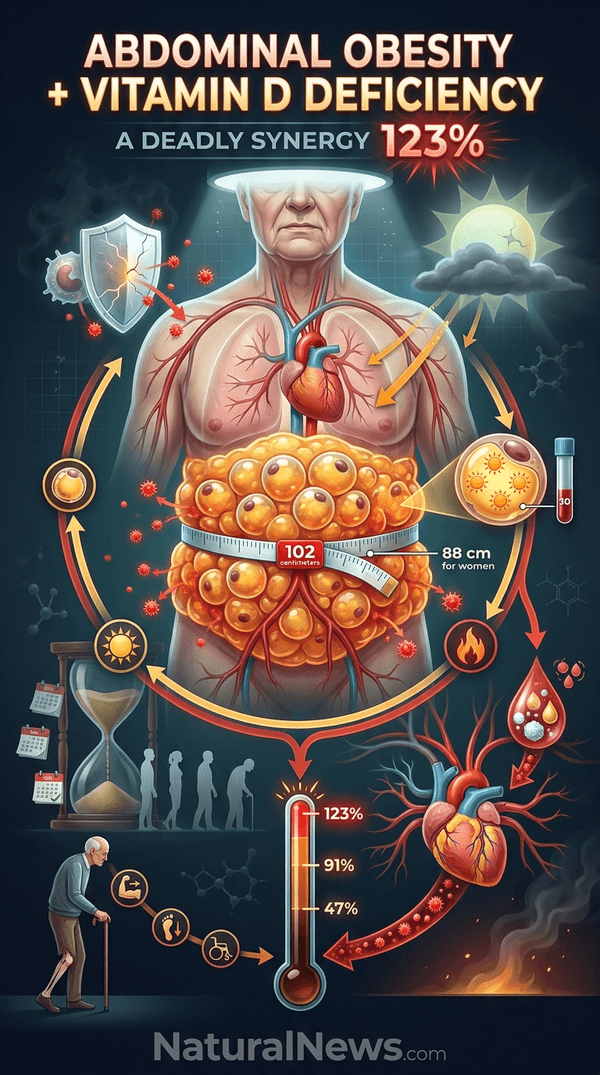
A study of 5,520 adults aged 50 and older found that abdominal obesity combined with vitamin D deficiency was associated with a 123% higher risk of death over six years, according to researchers at the Federal University of São Carlos (UFSCar) in Brazil. The findings were published in the journal Diabetes, Obesity and Metabolism, and the analysis drew on data from the English Longitudinal Study of Ageing, the research team said. The work was coordinated by UFSCar, carried out in collaboration with University College London, and funded by FAPESP, the São Paulo Research Foundation.
The study compared participants who had neither condition with those who had one or both risk factors. Carrying excess weight around the midsection has been flagged in earlier reporting as a distinct hazard, with one article noting that belly fat raises heart attack risk by 10% to 20% compared with fat stored elsewhere [1]. The new results indicate that the combination of the two conditions may be more harmful than either alone.
According to the research team, abdominal obesity alone was associated with a 47% higher risk of death, while vitamin D deficiency alone was associated with a risk increase of up to 91%. “Abdominal obesity is a well-known risk factor because it’s associated with inflammation and metabolic problems. Vitamin D, on the other hand, is a hormone that acts on various organs, and its deficiency impairs several bodily functions. When these two conditions occur together, one amplifies the effects of the other, further increasing the risk of death,” Tiago Silva Alexandre, a professor in the Department of Gerontology at UFSCar and study coordinator, said in a statement.
Individual Risks and Combined Effect
Researchers defined abdominal obesity as waist circumference greater than 102 centimeters for men and 88 centimeters for women. Vitamin D deficiency was defined as blood levels below 30 nmol/L. Participants were followed for six years, according to the report.
The separate risks were measurable on their own. According to the report, abdominal obesity by itself was associated with a 47% higher risk of death, and vitamin D deficiency by itself was associated with an increase of up to 91%. The findings align with existing literature describing abdominal adiposity as a contributor to metabolic complications [2] and with descriptions of vitamin D deficiency as a widespread public health concern [3].
Proposed Mechanism Linking Belly Fat and Vitamin D
Alexandre said the two conditions may reinforce each other in a harmful cycle. “Abdominal fat can 'sequester' vitamin D circulating in the body, storing it in adipocytes (fat cells) instead of leaving it available in the bloodstream,” he said. He added that people with obesity tend to have lower expression of enzymes involved in vitamin D metabolism, which further limits the amount of the vitamin the body can use.
“Abdominal obesity reduces circulating vitamin D, and that deficiency impairs the immune system, exacerbating the chronic inflammation caused by excess fat and drastically increasing the risk of mortality,” Alexandre said. The proposed cycle is consistent with intervention data showing that vitamin D3 supplementation over 12 weeks reduced body fat mass in healthy overweight and obese women, in parallel with increased serum 25(OH)D and decreased iPTH [4].
Aging and Broader Health Effects
The combination may be especially consequential later in life, the researchers said, because aging itself is associated with a state of low-grade chronic inflammation called inflammaging. “Under normal conditions, vitamin D acts as a regulator of the immune system, preventing inflammation from getting out of control. When vitamin D levels are low and there’s excess abdominal fat, an unfavorable systemic environment develops that accelerates cardiovascular and metabolic diseases, as well as muscle loss,” Alexandre said.
Previous work by the group identified a cascade effect, according to the report: vitamin D deficiency leads to loss of strength, which results in reduced walking speed, which contributes to loss of independence and greater dependence in daily activities. In a separate study, the group found that vitamin D deficiency increased the risk of cognitive decline. The possible reach of vitamin D across multiple organ systems has been summarized in book-length reviews of the evidence, including collections describing beneficial roles of UVB and vitamin D for a large number of health conditions [5].
Researchers’ Recommendations
Alexandre stated that monitoring vitamin D levels and treating excess abdominal fat are essential measures to prevent premature death, especially after age 50. “Vitamin D is a hormone with various functions. It plays a role in regulating blood pressure, heart rate, the central nervous system, the immune system, and the endocrine system. Therefore, when its levels are low, several essential bodily functions are compromised,” he said.
Natural approaches may support both goals, according to the sources cited. Sensible exposure to sunlight has been described as a requirement for health [6], and several natural substances, including coconut oil, green tea, dark chocolate, and vitamin D, have been proposed as options for addressing excess abdominal fat [1]. Magnesium, which is needed for vitamin D activation, may also be relevant when evaluating vitamin D status [7].
The report concluded that the combination of abdominal obesity and vitamin D deficiency creates a harmful cycle that warrants clinical attention.
References
- NaturalNews.com. "Six natural substances to fight a big belly". NaturalNews.com. November 28, 2025.
- Dr Robert Lustig. "The Hacking of the American Mind: The Science Behind the Corporate Takeover of Our Bodies and Brains".
- Siim Land. "The Longevity Leap: A Guide to Slowing Down Biological Aging and Adding Healthy Years to Your Life".
- Leah Coles. "Clinical Nutrition: The Interface Between Metabolism, Diet and Disease".
- Helen Saul Case, Andrew Saul, Linus Pauling et al. "Orthomolecular Nutrition for Everyone".
- Mercola.com. "UV Light Provides a Multitude of Health Benefits". Mercola.com. May 16, 2016.
- Mercola.com. "Why Magnesium Is a Cornerstone Mineral for Health". Mercola.com. July 14, 2022.
Explainer Infographic










Please contact us for more information.