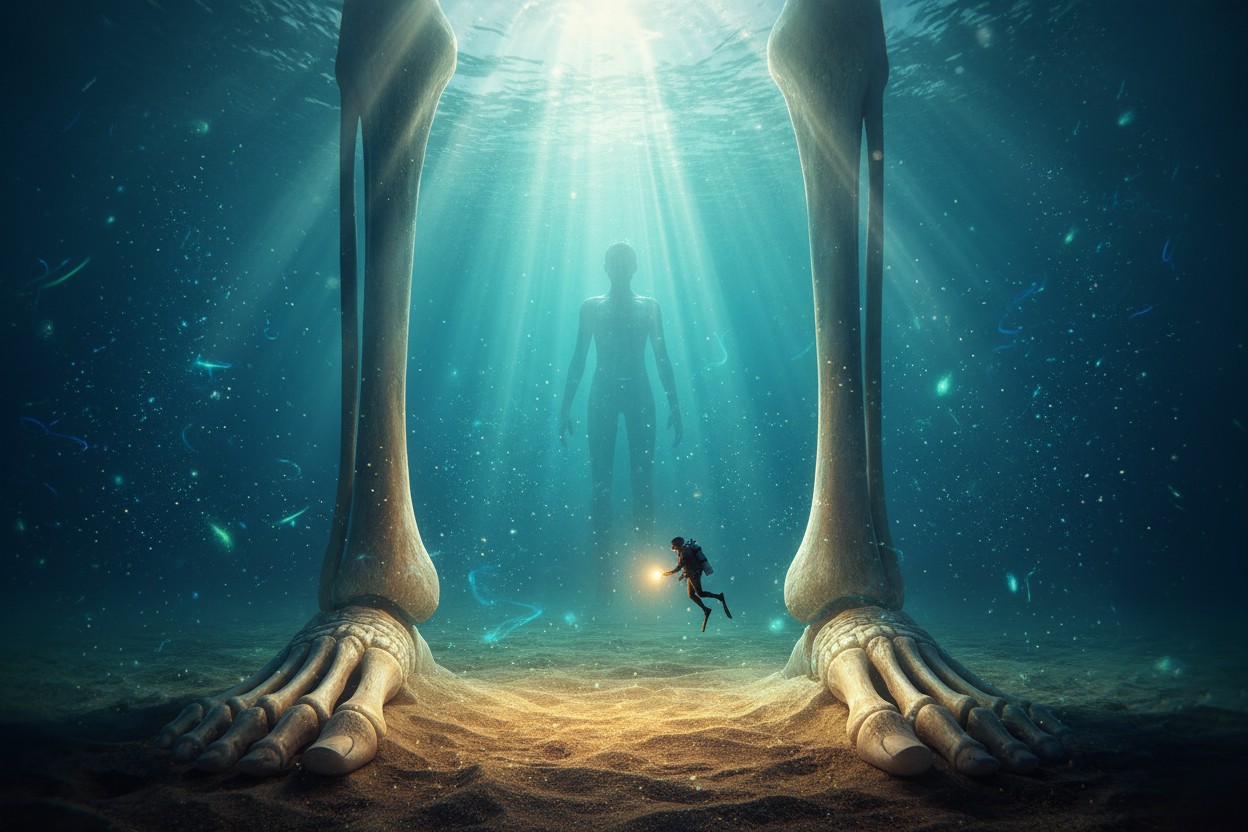
Estimated heights for the individuals were about 5 feet 11 inches and 6 feet 3 inches, taller than the average man today, who stands at 5 feet 9 inches, the report stated. Their dimensions led independent researcher Jimmy Corsetti to suggest that Denisovans may have inspired stories about the Nephilim, mysterious beings mentioned in the Bible and often interpreted as giants.
Background on Denisovans and the Penghu Fossils
Denisovans are known almost entirely from fragmentary remains. According to David Reich of Harvard University, "Two outsize teeth scraps of bone are all we possess of the Denisovans" [3]. Previous Denisovan fossils revealed large brains, powerful jaws and unusually large teeth, but bones from below the skull had been scarce, limiting estimates of overall height and build, the report stated.
Because neither fossil was complete, researchers reconstructed the original size by comparing the bones with similar leg bones from ancient and modern humans. The thigh bone, designated Penghu 2, measured an estimated 19.3 inches when complete; the shin bone, Penghu 3, was approximately 17 inches long and contained a bulge caused by a healed injury, according to the report.
The identification method relied on degraded proteins preserved in the bones. In earlier work on a Denisovan jawbone from Xiahe, China, researchers extracted ancient proteins from a tooth and identified single amino acid polymorphisms that differentiate Denisovans, Neanderthals and modern humans, according to Tom Higham's book "The World Before Us" [6]. Genetic studies indicate Denisovans once inhabited vast areas of eastern Asia, and researchers have proposed that early Denisovans could have expanded from high-latitude Siberia southeastward to the mid-latitude Nihewan Basin in northern China, according to "The Cygnus Key" [5].
Fossil discoveries have also complicated the traditional timeline of human evolution. Fossils from 773,000 years ago found in a Moroccan cave show a mix of ancient and modern human features, indicating that key traits of our species emerged much earlier than the traditional estimate of 200,000 years, according to a report in NaturalNews [1].
Researcher's Biblical Interpretation
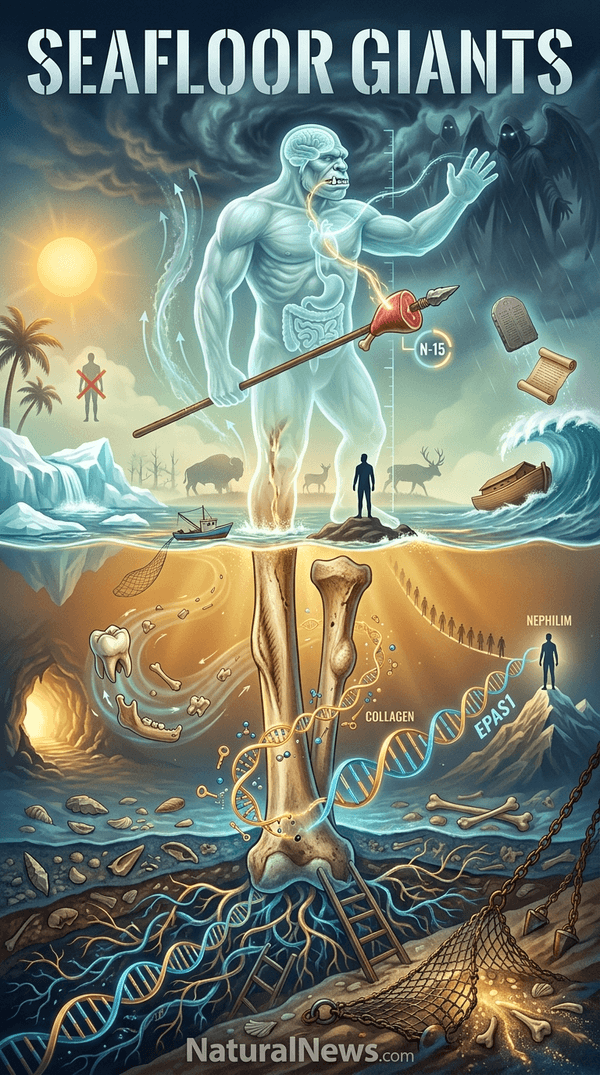
Corsetti posted on X that the discovery indicates Denisovans were "8in TALLER than the average man today." He wrote: "I've asked before, and I'll ask again: Were Denisovans the 'Nephilim Giants' described in the Bible?" He also pointed to the seafloor location of the bones, writing: "Btw, the discovered bones were found on the SEAFLOOR! Gee, almost as if a Great Flood actually happened… (it did, regardless if these bones are of an unrelated timeframe)."
The Nephilim are mentioned twice in the Old Testament, in Genesis 6:4 and Numbers 13:33, and are described in Chapters 6 through 15 of the Book of the Watchers, the first section of the ancient religious work known as 1 Enoch, according to the report. The account says fallen angels called the Watchers took human wives, who gave birth to enormous and violent giants, and that God sent a great flood to cleanse the world.
Claims connecting ancient texts to geological events have circulated among independent researchers. Some have proposed that North America and Russia were connected through a land bridge before ocean levels changed and that the change could be linked to catastrophic occurrences, according to an interview with Lee Merritt [8]. The book "The True(r) Prehistory" proposes a revised account of human prehistory that draws on myths and ancient texts and describes cataclysmic events that shaped humankind, according to a synopsis published on GrahamHancock.com [9].
Scientific Findings on Body Size and Lifestyle
The researchers focused on what the bones reveal about Denisovan bodies. In the study, they wrote: "Our findings demonstrate that the Denisovan population at the northern circle had larger body size than earlier Homo erectus as well as Late Pleistocene Homo sapiens in eastern Asia." They stated that the finding challenges Bergmann's rule, which anticipates a latitudinal decline in body size, and that the large Denisovan brain may have resulted from their large body size at least partly.
Chemical evidence from the shin bone suggests a meat-heavy diet, and researchers proposed that large, powerful bodies may have helped Denisovans pursue prey using a different and potentially less sophisticated tool kit, according to the report. A relationship between animal-based diets and brain expansion has been described in "The Carnivore Code," which states that as the gut shrank in size and energy needs, "the brain was free to gradually expand over generations" [4].
A thick ridge on the thigh bone has been linked to extensive movement in hunter-gatherers. Researchers said it could indicate mobile lives similar to early modern humans, or interbreeding with Homo sapiens, as genetic evidence shows the groups exchanged DNA in southern Asia, according to the report. High-altitude adaptation in Tibetans, for example, has been linked to the EPAS1 gene, which has an unusual haplotype structure and is associated with differences in hemoglobin concentration at high altitude, according to "Behaviour in our Bones" [7]. A 2020 study published in the journal PLoS Genetics used a novel algorithm to map early human lineages and interbreeding events, including with Neanderthals and Denisovans, according to a NaturalNews report [2].
Limitations and Unresolved Questions
The study presents no evidence linking Denisovans to the Nephilim or to a global flood, and the fossil analysis has not been peer reviewed, according to the report.
Researchers could not determine the individuals' sex from biological evidence, although the size of the bones suggests they probably came from males. The team stated that more Denisovan fossils and genetic evidence are required to explain the thigh bone's unusual trait and to determine whether such large bodies were widespread across the population. The possible sizes of these individuals would have placed them among the largest known ancient humans from the Ice Age, the report stated.
References
- NaturalNews.com. "Ancient 'Mosaic' Fossils Found in Morocco Challenge the Timeline of Human Evolution". NaturalNews.com. January 20, 2026.
- NaturalNews.com. "Scientists find new mystery human ancestor whose DNA remains in people today". NaturalNews.com. August 09, 2020.
- David Reich. "New".
- Paul Saladino. "The Carnivore Code: Unlocking the Secrets to Optimal Health".
- "The Cygnus Key".
- Tom Higham. "The World Before Us: How Science Is Revealing a New Story of Our Human Origins".
- Cara S. Hirst, Rebecca J. Gilmour, Kimberly A. Plomp, Francisca Alves Cardoso. "Behaviour in our Bones: How Human Behaviour Influences Skeletal Morphology".
- Mike Adams. "Mike Adams interview with Lee Merritt". December 11, 2024.
- "The True(r) Prehistory: A synopsis of the ancient global catastrophes that have shaped human prehistory". GrahamHancock.com. July 24, 2026.
Explainer Infographic








Please contact us for more information.