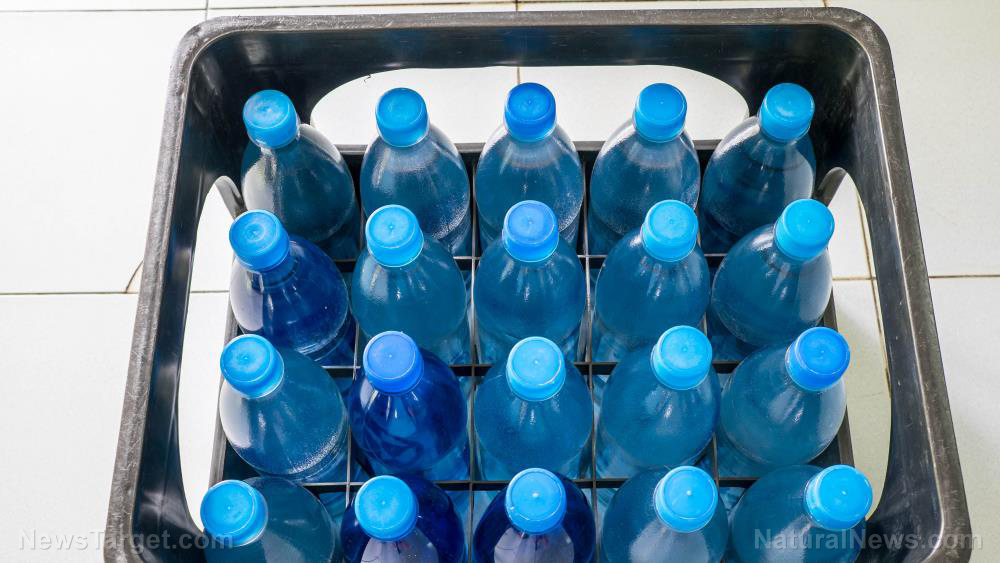
- A new study found bottled water has, on average, three times more nanoplastic particles than treated tap water, with counts reaching up to 11.5 million particles per liter.
- These particles are small enough to potentially cross biological barriers, enter the bloodstream, accumulate in organs and penetrate the brain, raising serious health concerns.
- The most common plastics found in bottled water were PET (from the bottles and caps) and polyamide (from filters), indicating the container actively sheds particles into the water.
- The study used new, sensitive methods to identify particles as small as 300 nanometers, showing prior research likely missed up to 80% of the plastic particles in water samples.
- To reduce exposure, experts advise drinking filtered tap water from reusable glass or stainless-steel containers instead of bottled water.
In a finding that upends a common assumption about purity, a new scientific study reveals that bottled water contains, on average, three times the number of nanoplastic particles—microscopic fragments small enough to infiltrate human cells—compared to treated tap water. The research, conducted by a team at The Ohio State University and published in the journal Science of The Total Environment, exposes a hidden layer of contamination stemming from the very bottles marketed for convenience and safety. For a public increasingly concerned about environmental pollutants, the study delivers a stark message: the choice of how we hydrate has direct and significant implications for our exposure to an insidious form of plastic pollution.
The research team, led by environmental sciences doctoral candidate Megan Jamison Hart, directly compared water from four municipal treatment plants drawing from Lake Erie to six nationally available brands of bottled water. The results were unambiguous. While tap water samples contained between 1.6 and 2.6 million plastic particles per liter, bottled water samples ranged from 2.6 to a staggering 11.5 million particles per liter. Critically, over half of these particles in bottled water were nanoplastics, pieces smaller than one micrometer—or about 100 times thinner than a human hair. These nanoplastics constituted a larger proportion of the plastic found in bottled water than in tap.
This distinction in particle size is the core of the study's alarm. For decades, public and scientific attention has focused on microplastics, pieces larger than five millimeters. However, nanoplastics operate on a different, more invasive scale. Due to their minuscule size, they are not just ingested but can potentially cross the intestinal lining into the bloodstream, accumulate in organs and penetrate the blood-brain barrier, the protective shield around the brain. While the full long-term health impacts in humans are still being mapped, their ability to reach sensitive areas of the body makes them a priority concern. The study confirms we have been chronically underestimating our plastic intake by missing its smallest, most mobile form.
The bottle is the problem
The research identified the likely source of this excess contamination: the packaging itself. The most common plastic polymer found in the bottled water samples was PET (polyethylene terephthalate), the material used to make the bottles and caps. The second most common was polyamide, a nylon frequently used in water filtration systems. This indicates that the processes of bottling, storage, transportation and even opening the container contribute plastic fragments to the water inside. The plastic vessel, far from being an inert barrier, is an active participant in pollution.
In a surprising twist, the study found rubber particles in every single sample, both bottled and tap. This contaminant has been largely absent from prior studies because standard detection methods struggle to identify it. In bottled water, it likely sheds from seals and gaskets in bottling machinery. In tap water, it may originate from similar components in treatment plants or from environmental sources like tire wear particles washing into waterways. This finding underscores the pervasive and complex nature of synthetic pollution, which extends beyond traditional "plastics" to include a wider array of manufactured materials.
A technological leap exposes hidden reality
The dramatically higher particle counts in this study, compared to past research, are not due to a sudden spike in pollution. They are the result of advanced detection capabilities. The Ohio State team employed cutting-edge techniques, including optical photothermal infrared spectroscopy, to identify particles as small as 300 nanometers. Previous methods could only reliably detect particles larger than 5,000 nanometers. By seeing the full spectrum of contamination, the study reveals that earlier research may have missed up to 80% of the plastic particles present in tap water alone.
This news arrives as the culmination of a decades-long trajectory. Since the mid-20th century, global plastic production has skyrocketed, creating a persistent waste problem. Large plastic items break down in the environment through weathering and wear, creating microplastics and, ultimately, nanoplastics. These particles are now ubiquitous, found from the deepest ocean trenches to the highest mountain peaks. For years, the drinking water conversation centered on microbial pathogens and heavy metals. This study confirms that the legacy of our plastic addiction has flowed directly into our glasses, turning a global environmental crisis into a personal, biochemical one.
Making a clear choice
Confronted with this data, the researchers' recommendations are clear. The simplest way to significantly reduce nanoplastic ingestion is to avoid single-use plastic bottles. Filtered tap water, consumed from a reusable glass or stainless-steel container, presents a far lower exposure risk.
"Nanoplastic particles are minuscule plastic fragments measuring between one and 100 nanometers in size.," said BrightU.AI's Enoch. "They result from the breakdown of larger plastic items and accumulate within living organisms. These particles pollute soil and water sources, inflicting damage on ecosystems, humans and wildlife."
The study does not suggest that tap water is plastic-free, but it powerfully demonstrates that bottled water often amplifies the problem. In a world saturated with synthetic materials, informed decisions are the first line of defense. When it comes to hydration, the healthiest and most prudent path forward now appears to flow not from a factory-sealed bottle, but from the tap.
Watch and learn about microplastics and how it affects bottled water.
This video is from the Galactic Storm channel on Brighteon.com.
Sources include:








Please contact us for more information.