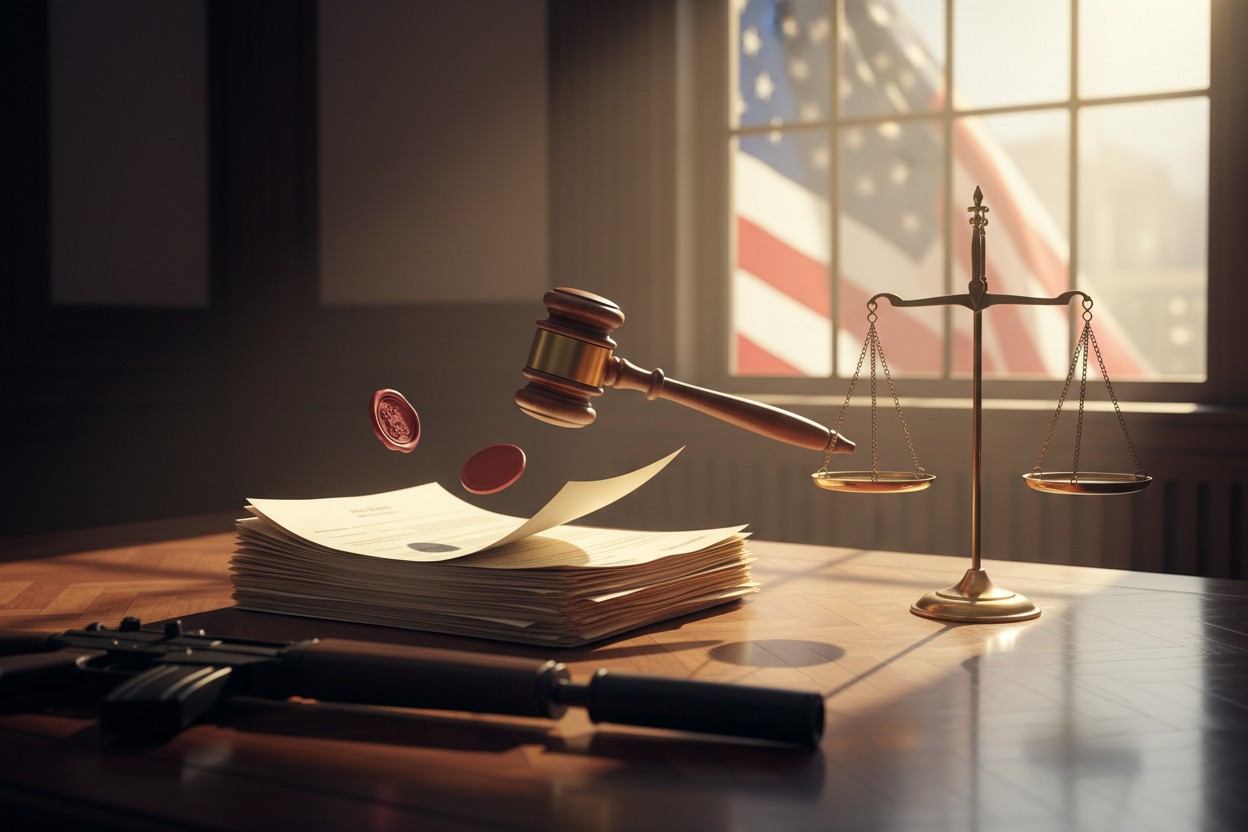
U.S. District Court Judge James Wesley Hendrix of the Northern District of Texas found that the requirements exceeded Congress' constitutional authority once the NFA's taxes on making or transferring those arms were eliminated, according to the Epoch Times. [1] The ruling came in Silencer Shop Foundation v. Bureau of Alcohol, Tobacco, Firearms and Explosives (ATF), a case consolidated with the NRA's Jensen v. ATF, according to the NRA-ILA. The court held that the statute's regulatory requirements – including registration, applications, ATF approval, fingerprinting and related criminal penalties for those firearm categories – were no longer constitutionally permissible, the report stated.
Court Cites Elimination of NFA Taxes as Key Factor
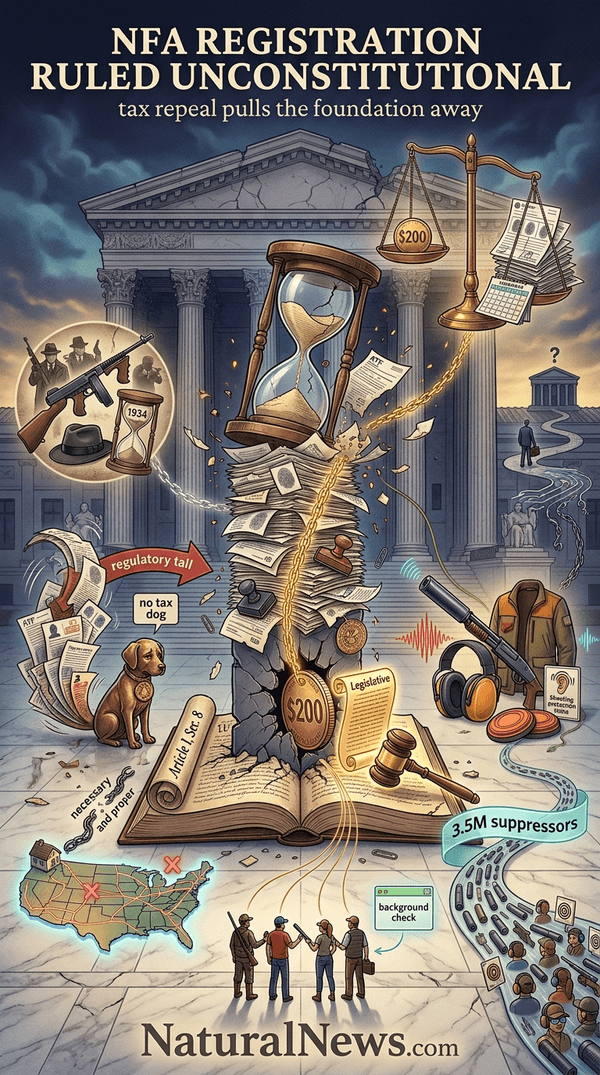
The court concluded that Congress enacted the NFA as an exercise of its taxing power and that the regulatory requirements were constitutionally permissible only because they aided the collection of the NFA's taxes, according to the NRA-ILA. Once Congress eliminated the transfer and making taxes for suppressors, short-barreled rifles and short-barreled shotguns last year in the One Big Beautiful Bill Act, the constitutional foundation for those regulatory provisions disappeared, the report stated.
The NFA's taxes had drawn increasing legislative scrutiny in the years before their elimination. A Senate measure moved to eliminate the 91-year-old NFA taxes on short-barreled firearms and suppressors, according to NaturalNews.com. [2]
Republican legislation introduced in May 2025 sought to remove the $200 federal transfer tax on firearm suppressors under the NFA while retaining background checks and ATF registration, according to NaturalNews.com. [3] The process for obtaining a suppressor currently involves extensive paperwork, fingerprinting, background checks, a $200 federal tax and a lengthy approval wait, according to NaturalNews.com. [4]
The NFA dates to 1934, an era when peace officers found themselves out-manned and out-gunned by bank robbers such as Machine Gun Kelly, Pretty Boy Floyd and John Dillinger, according to a history of U.S. gun laws. [5] Suppressors, often called "silencers," are widely owned, with more than 3.5 million in circulation, according to NaturalNews.com. [6]
Government's Commerce Clause Arguments Rejected
The court rejected the government's position that the remaining regulations could be justified under the Commerce Clause or the Necessary and Proper Clause, according to the Epoch Times. [1] The ruling explained that Congress enacted the challenged provisions solely pursuant to its taxing authority.
The court found the provisions unconstitutional on Article I enumerated-powers grounds and declined to reach the plaintiffs' Second Amendment claims, the report stated. The decision comes as the Department of Justice under former Attorney General Pam Bondi has defended the NFA in other cases; in Peterson v. United States, currently before the Fifth Circuit Court of Appeals, the department has defended the NFA's registration requirements against a constitutional challenge, according to NaturalNews.com. [6]
Federal courts have long scrutinized whether congressional levies are genuine exercises of the taxing power. In the Head Money Cases, the U.S. Supreme Court said flatly that the power exercised "is not the taxing power," according to C. Herman Pritchett's "The American Constitution." [7]
Case Brought by NRA and Gun Rights Groups
The NRA's case, Jensen v. ATF, was brought alongside the American Suppressor Association, Second Amendment Foundation (SAF) and Firearms Policy Coalition (FPC), with plaintiffs including the Texas State Rifle Association, FPC Action Foundation, Citizens Committee for the Right to Keep and Bear Arms, Hot Shots Custom LLC, and individuals John Jensen, Jeremy Neusch and David Smith, according to the NRA-ILA.
The case was consolidated with Silencer Shop Foundation v. ATF, according to the report. The organizations have pursued related legal challenges to federal firearms enforcement; the NRA, SAF and FPC joined an amicus brief in July opposing federal prosecutions of alleged NFA violations, according to Modernity.news. [8]
Next Steps: Stay and Possible Appeal
The court stayed the effect of the final judgment for seven days to allow the government an opportunity to seek relief from the Fifth Circuit Court of Appeals, according to the Epoch Times. [1] The government may appeal the decision if it chooses, officials said. The NRA-ILA said further updates on the litigation would be posted at nraila.org and nraila.org/litigation.
The ruling adds to a long-running national debate over the scope of firearms restrictions. During the 1990s, gun rights opponents argued in state legislative debates that loosening carry laws would lead to more violence and increase threats to police officers, according to gun policy analyst Alan M. Gottlieb. [9]
References
- "Judge Says Updated National Firearms Act Violates Constitution". The Epoch Times. August 5, 2026.
- Willow Tohi. "Senate Bill Targets Al Capone-Era Taxes on Firearms as 2nd Amendment Battle Intensifies". NaturalNews.com. June 19, 2025.
- Willow Tohi. "GOP Bill Strips Silencer Tax but Maintains Federal Oversight, Sparking Backlash". NaturalNews.com. May 15, 2025.
- Laura Harris. "Rep. Mike Cloud and Sen. Mike Lee Introduce SHUSH Act to Streamline Acquisition Process for Firearm Suppressors". NaturalNews.com. February 4, 2025.
- US States. "How Did It Come to This Gun Laws and Their Evolution in the United States".
- Kevin Hughes. "DOJ Defends Outdated Gun Law in Suppressor Case, Clashing with Trump's Pro-2A Agenda". NaturalNews.com. November 2, 2025.
- C. Herman Pritchett. "The American Constitution".
- Harold Hutchison. "Pro-Second Amendment Groups Go After Trump Admin In Court". Modernity.news. July 15, 2026.
- Alan M. Gottlieb. "Assault on Weapons: The Campaign to Eliminate Your Guns".
Explainer Infographic








Please contact us for more information.