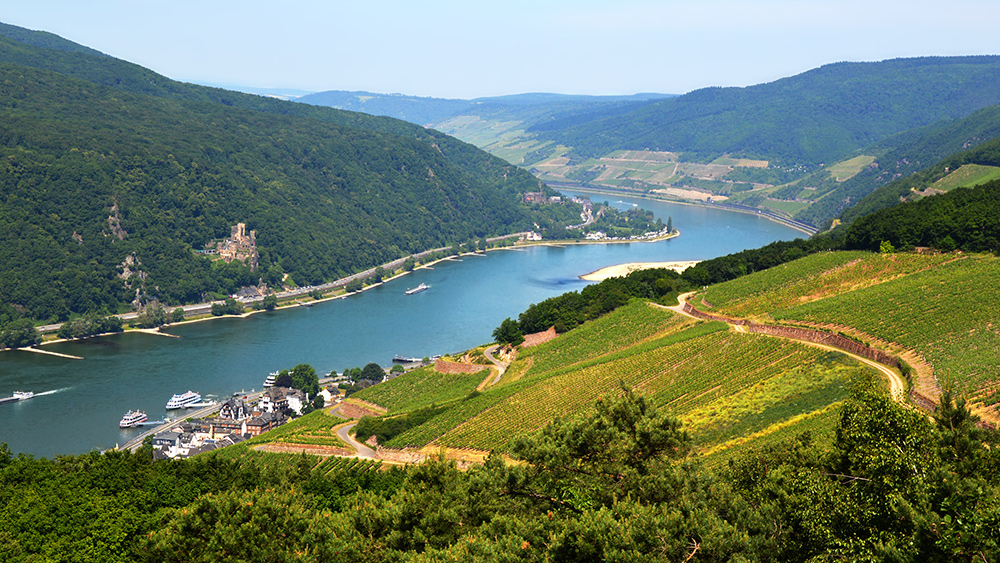
- A viral video from German weather site donnerwetter.de claiming the Rhine River hit 28 C was ridiculed for using a one-second dip in two-centimeter-deep, sun-baked water.
- The shallow measurement site near Bonn, with water only 2 cm deep, could not accurately reflect the river's true temperature.
- Critics point to a broader pattern of overstated heat warnings, including accusations that media outlets hyped El Niño-linked forecasts using speculative, hedged language.
- The Robert Koch Institute's heat death statistics face criticism for attributing any excess mortality in warm weeks to heat, ignoring humidity and other factors.
- While low Rhine levels pose real economic risks, the sloppy methodology in the video undermines public trust in climate reporting.
A viral video from German weather site donnerwetter.de claiming the Rhine River had reached a scorching 28 C amid Europe's summer heat wave has drawn widespread ridicule after critics discovered the reading was taken under wildly unscientific conditions.
The clip, posted to Facebook this week, shows a man wading into shallow water near Bonn — so shallow he never bothered removing his running shoes — and dipping a thermometer for roughly one second before announcing the number. The video quickly went viral across Germany, but for the wrong reasons: viewers zeroed in on the sloppy methodology rather than the alarming figure itself.
A dip too shallow to mean anything
The water at the measurement site was only about two centimeters deep. That's shallow and still enough to have baked in direct sunlight for hours before the reading was taken, likely around mid-morning based on the shadows visible in the footage. A one-second dip gives a thermometer little real chance to register anything beyond the surface heat of standing water — not the river's actual temperature.
Donnerwetter.de is run by meteorologist Dr. Karsten Brandt alongside partner Michael Hoffmüller-Klein. Despite the backlash, the site had not removed the video as of press time. Its accompanying Facebook post warned that water levels on the Rhine and Danube were running between 26 and 29 degrees Celsius and could inflict "massive economic impact" on German industry for weeks to come.
A history of overstated heat warnings
The episode is only the latest flashpoint in an ongoing argument among German climate watchers over whether heat wave coverage is being exaggerated. Earlier this summer, the European Institute for Climate and Energy circulated a video accusing outlets like Bild and Focus of hyping extreme heat tied to an approaching El Niño, with scientists including Daniel Swain and Carlo Buontempo cited as predicting record-breaking, historically severe conditions. The institute argued such forecasts often lean on hedged language — phrases like "probability is increased" — that shields researchers if predictions don't pan out, and noted El Niño itself is a naturally occurring, centuries-old phenomenon rather than evidence of manmade warming.
That skepticism has found some support in the data. A separate forecast review this summer found that models from the ECMWF and other services were failing to back up predictions of a "never seen before" German heat wave, instead pointing to heavy rainfall through early August. Parts of Germany, Austria and the Czech Republic even reported near-ground frost in the days before that forecast was published — hardly consistent with runaway heat.
Heat death statistics also under fire
The Robert Koch Institute's method for tallying "heat deaths" has drawn similar criticism. Analyst Frank Bosse noted the institute counts any excess mortality during weeks with average temperatures above 20 degrees Celsius as heat-related, without regard to humidity or other physiological factors. Bosse pointed to a real-world example: a 37-degree reading in Berlin in late July, paired with a dew point of just 12 degrees, produced a wet-bulb temperature — the actual measure of heat stress on the human body — of only 21 degrees, well short of the threshold considered dangerous. He called the RKI's approach a "pure statistical artifact" with no grounding in actual health data. His critique was aimed squarely at the RKI's model, not at this week's Rhine video.
Real drought, questionable proof
None of this means Europe's heat and drought problems aren't real. Low Rhine water levels genuinely threaten shipping and industry along the river, and the continent has seen legitimate heat this summer. But this week's viral video did little to make that case. A meteorologist dunking a thermometer in ankle-deep, sun-baked water for one second, then broadcasting the result as proof of crisis, is exactly the kind of shortcut that feeds public skepticism about climate reporting.
Sources for this article include:











Please contact us for more information.