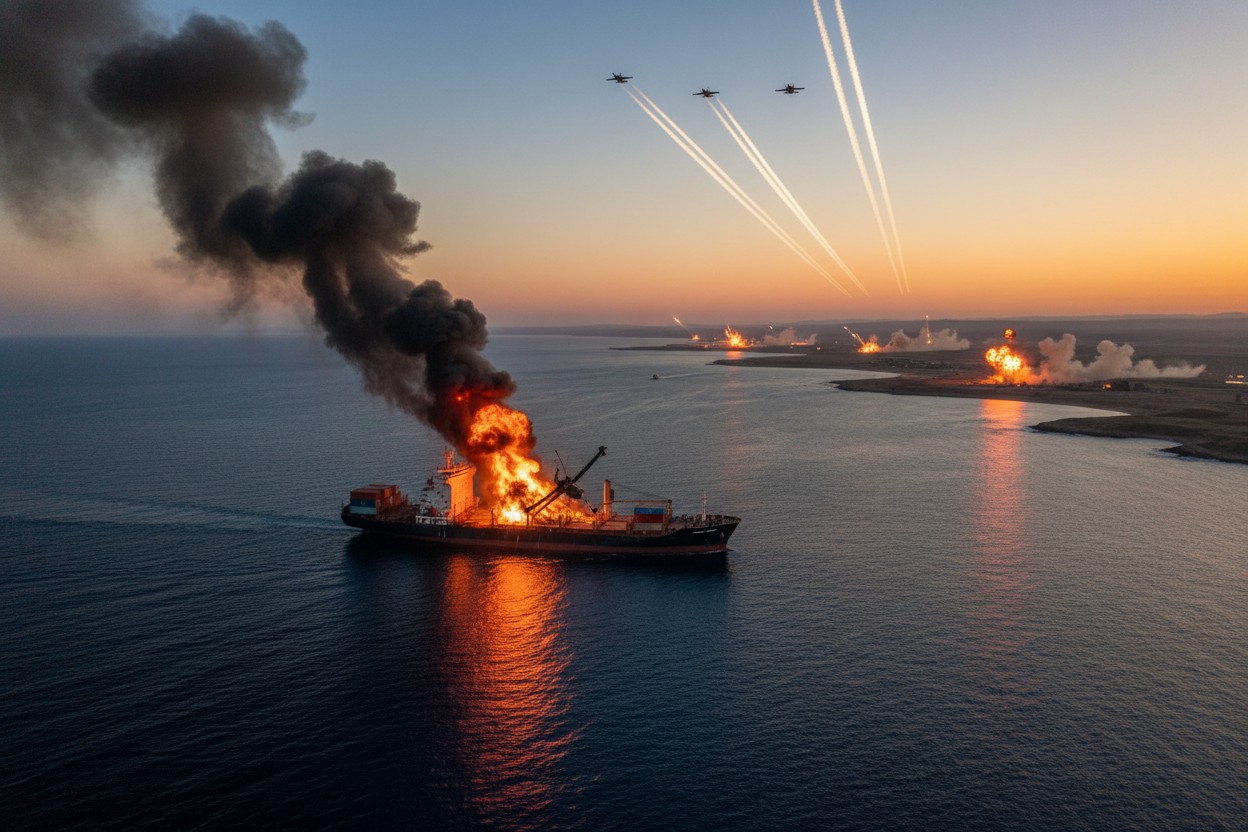
- A suspected drone struck the U.S.-owned floating LNG facility Energos Winter at Egypt's Damietta port on July 29, with fire spreading to a second vessel, the GasLog Salem.
- No casualties were reported, but the attack threatens approximately 35% of Egypt's natural gas supply, as Energos Infrastructure operates four such facilities in the country.
- President Donald Trump threatened imminent retaliation against Iran, stating "it's our turn to hit them," though no group has claimed responsibility.
- The attack coincided with Iran launching ballistic missiles at U.S. forces in Jordan and the Houthi declaration of a naval blockade on Saudi Arabia.
- British maritime security firms Ambrey and Vanguard confirmed the drone strike, while Egyptian officials initially described the incident only as a fire.
Attack on critical energy infrastructure
A suspected drone strike struck the U.S.-owned floating liquefied natural gas facility Energos Winter at Egypt's Mediterranean port of Damietta on July 29, igniting fires that spread to a second vessel and prompting President Donald Trump to threaten retaliation against Iran. The attack occurred approximately 100 nautical miles from significant maritime chokepoints, raising alarms about the widening scope of Middle Eastern conflict. British maritime security firm Ambrey assessed that at least one drone hit the floating storage and regasification unit moored at the port, with the projectile striking the vessel's starboard side. The resulting fire spread to the adjacent LNG carrier GasLog Salem, forcing crew evacuations and the movement of both vessels outside the port as a precautionary measure. No casualties were reported, and firefighters eventually brought the blaze under control.
Strategic significance: Egypt's energy vulnerability
The Energos Winter, capable of storing 138,250 cubic meters of LNG and delivering up to 650 million cubic feet of gas daily into Egypt's energy network, represents a critical component of the nation's energy infrastructure. Its U.S.-based owner, Energos Infrastructure, operates four floating LNG facilities in Egypt that collectively supply approximately 35% of the country's natural gas demand. The attack at Damietta port, a vital Mediterranean energy hub, demonstrates the vulnerability of critical maritime infrastructure to drone warfare and remote attacks. Egypt's Petroleum Minister Karim Badawi personally visited the site to oversee emergency response efforts, though the cabinet initially confirmed only a fire without immediately attributing it to a hostile act.
Escalating hostilities: Iran, Houthis and U.S. response
The Damietta strike unfolded hours after Iran launched several ballistic missiles targeting U.S. forces in Jordan, which U.S. Central Command characterized as an attempted "surprise attack" that was intercepted by Patriot missile defense systems. President Trump, describing the incident as "a little more of the same," signaled imminent U.S. retaliation. "We're going to be hitting them very hard because it's our turn to hit them," Trump told reporters in the Oval Office. "They know it's coming. They're asking us not to do it."
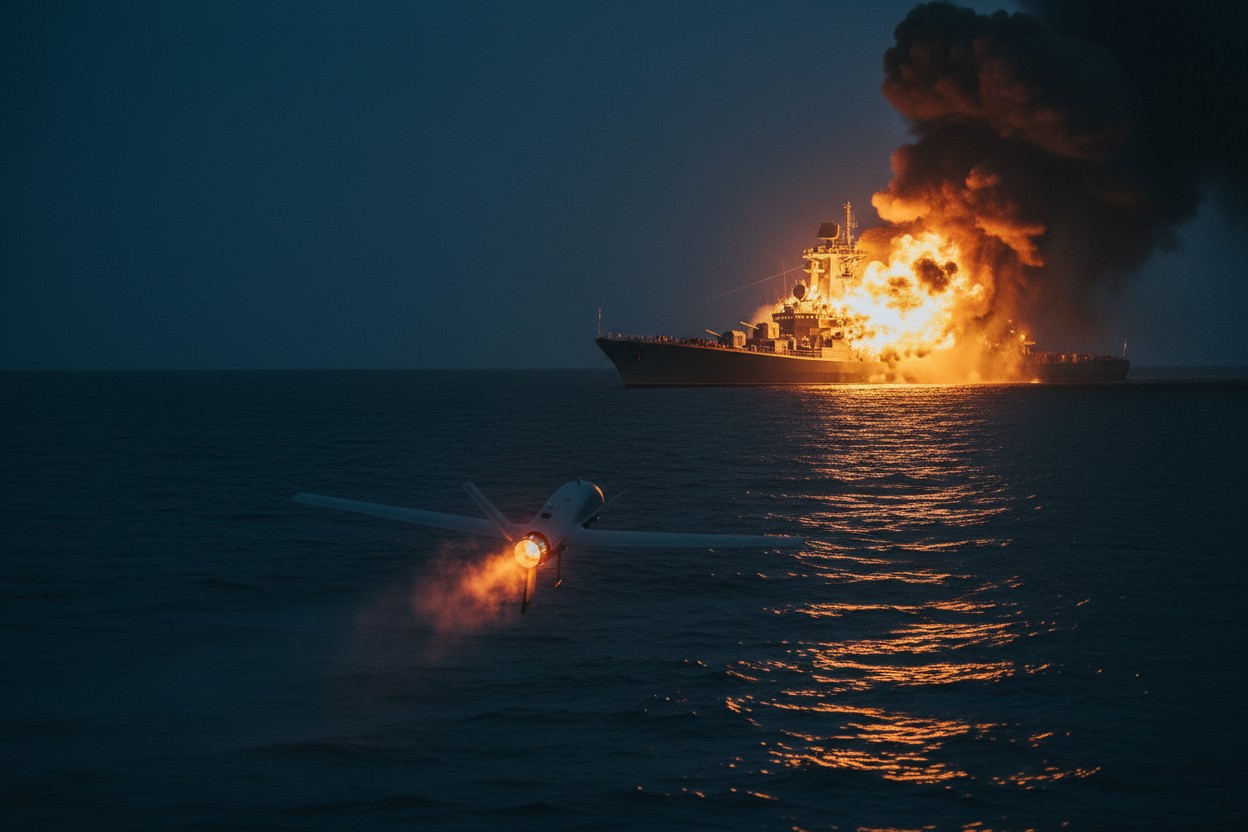
Adding to the regional volatility, Yemen's Houthi group declared a naval blockade on Saudi Arabia, apparently expanding the conflict to its widest since the United States and Israel began bombing Iran in February. The Houthis have previously demonstrated capability with suicide drones, including a recently surfaced video showing a Houthi drone striking an oil tanker approximately 100 nautical miles northwest of Yemen's port city of Hodeidah.
Fragile ceasefire collapses
The renewed hostilities followed a fragile pause in U.S. military operations. Trump had suspended a 13-night U.S. bombing campaign against Iranian targets to allow negotiations with Tehran to proceed. That diplomatic window has since closed, with the United States tightening its blockade of Iranian ports and threatening to seize Iranian funds frozen abroad – moves that Tehran considers clear violations of previous agreements.
No group has claimed responsibility for the Damietta attack, and neither Egyptian authorities nor the maritime security firms have publicly attributed it to Iran. British maritime risk management group Vanguard separately confirmed that an unidentified projectile struck the Energos Winter on its starboard side. The attack raises the specter of further disruption to global energy markets and maritime commerce, particularly given the strategic importance of Eastern Mediterranean shipping lanes and Egypt's role as a regional energy transit hub.
A widening regional conflict
The drone strike on a U.S.-owned energy asset at an Egyptian port marks a significant escalation in the Middle Eastern conflict, demonstrating that critical infrastructure far from traditional battlefields remains vulnerable to asymmetric attack. With President Trump threatening "very hard" retaliation against Iran, the Houthis declaring a naval blockade, and no clear attribution for the Damietta strike, the region faces the prospect of a multi-front confrontation that could disrupt global energy supplies and maritime commerce for months to come. The attack's location – at a civilian port in a non-belligerent nation – further blurs the lines between combatants and civilians, raising urgent questions about the protection of critical infrastructure and the rules of engagement in an era of drone warfare.
Sources for this article include:






Please contact us for more information.