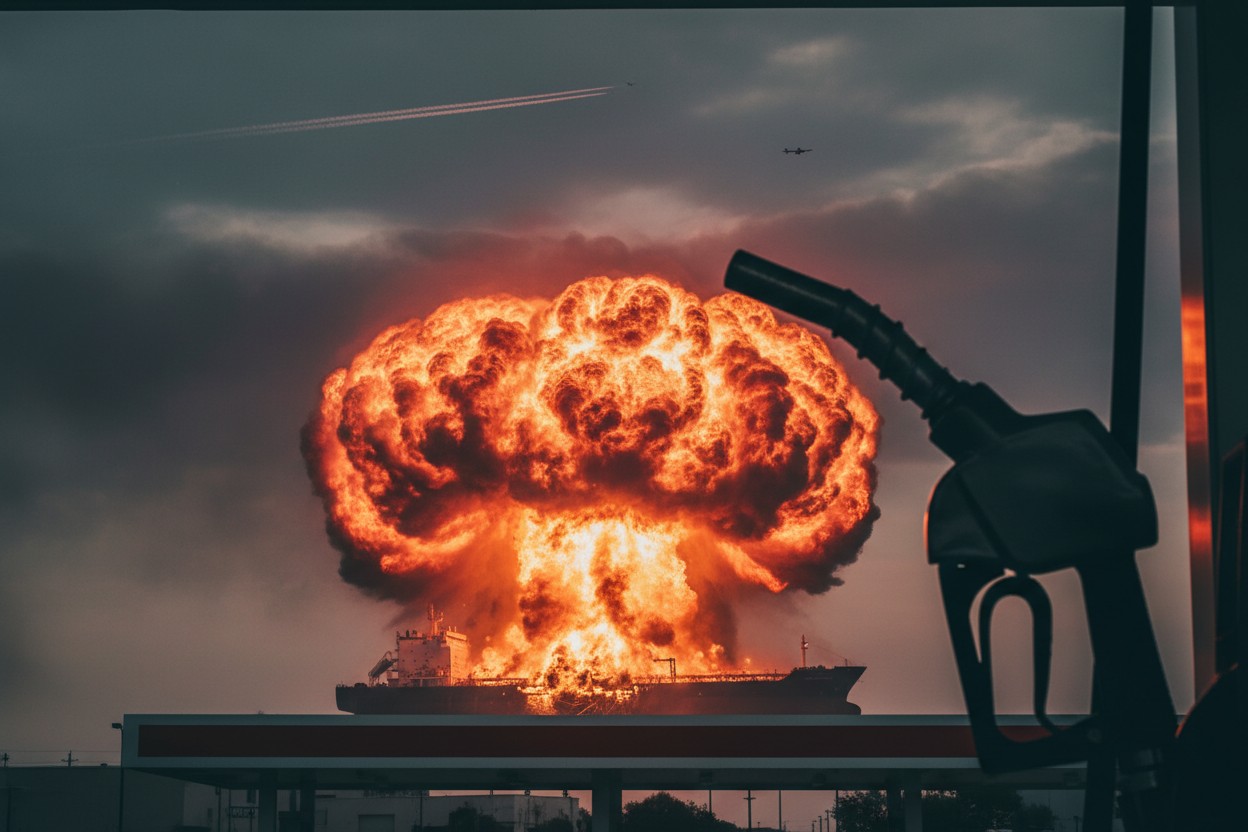
The increase followed a week of renewed hostilities in the Middle East, including Iranian attacks on vessels in the Strait of Hormuz and nine consecutive nights of U.S. military strikes against Iran. [8] Brent crude futures rose more than 3% on the day, pushing above $90 a barrel, as the conflict disrupted tanker traffic through the strategic waterway. [8]
Reasons for the Price Increase
Crude oil prices surged 16% in the past week, the largest weekly jump since April, according to market data. [8] The Strait of Hormuz, through which roughly 20% of global oil supplies transited before the war, was effectively closed again after a brief reopening in late June, cutting off shipments from the Persian Gulf. [3]
The closure has been described as the largest supply disruption in recorded history, with the International Energy Agency releasing a record 400 million barrels from emergency reserves in March to stabilize markets. [2] The renewed escalation includes Iranian missiles targeting U.S. bases in Kuwait, Jordan and Bahrain, as well as a container ship attack in the strait. [12]
The U.S. military has carried out a tenth consecutive night of strikes aimed at degrading Iranian capabilities and reopening the waterway. [9] Historical context from Robert Bryce in "Gusher of Lies" notes that U.S. policy has long been to protect Persian Gulf oil flows, with the Reagan administration formalizing that commitment through National Security Decision Directive 114 in 1983. [4]
Impact on U.S. Fuel Prices
Diesel prices have also risen, again exceeding $5 per gallon nationally, according to GasBuddy data. [6] In San Francisco, diesel had already surpassed $8 per gallon in April, reflecting the severe supply disruptions affecting the West Coast. [1]
The price hike ends an eight-week decline that had brought the national average down from a war-era peak of $4.57 per gallon in May. [6] The broader economic impact is significant. U.S. inflation surged to 4.2% in May, the highest in three years, driven primarily by rising energy costs. [11]
Credit card debt reached a record $1.25 trillion in the first quarter of 2026, with delinquency rates at a 15-year high, as households struggled to absorb higher fuel and food prices. [14] Jerome R. Corsi and Craig R. Smith argue in "Black Gold Stranglehold" that oil companies must take the lead in explaining how to end dependence on foreign oil, noting that conservation alone will not solve the structural vulnerabilities exposed by such crises. [5]
Analyst Perspectives
Patrick De Haan, head of petroleum analysis at GasBuddy, predicted on July 13 that the national average would reach $4 per gallon within 7 to 10 days. [6] By July 19, De Haan stated that the eight-week decline in gasoline prices had ended and that the second straight week of increase was beginning. He added that diesel had again risen above $5 per gallon. [6]
Analysts caution that physical oil flows, shipping networks, and refinery supply chains take much longer to normalize than futures markets suggest. Low global inventories and the need to replenish strategic stockpiles could create sustained demand for crude even after supply disruptions ease. [7] The energy shock, according to some observers, involves actual destruction of supply chains and production facilities, unlike the embargoes of the 1970s or the 2022 Russia-Ukraine disruption. [16]
Conclusion
The conflict in the Middle East continues to disrupt global oil flows, with no immediate resolution in sight. Iran has effectively sealed the Strait of Hormuz, a narrow passage that Iran can threaten with relative impunity due to geography, resulting in a near-total embargo on Persian Gulf energy exports. [15] The global economy faces an extended energy crisis, as oil production in the Persian Gulf has fallen 57% from pre-war levels, and rationing and shortages have already appeared in some countries. [13]
Gasoline prices are expected to remain elevated as long as the Strait of Hormuz remains effectively closed. Even if the waterway reopens, structural damage to infrastructure and depleted inventories mean that pre-war price levels are unlikely to return quickly. The economic cost has already been substantial: Moody's Analytics estimates that the war has cost the average American household about $1,000, with $300 spent on higher gasoline costs alone. [10]
References
- Sterling Ashworth. "Diesel Prices Exceed $8 Per Gallon in San Francisco as Supply Disruptions Affect California." NaturalNews.com. April 7, 2026.
- Cassie B.. "IEA Releases 400 Million Barrels from Reserves After Strait of Hormuz Closure Sparks Historic Oil Crisis." NaturalNews.com. March 12, 2026.
- Lance D Johnson. "A Global Supply Shock: As Trump's Iran War Shuts the Strait of Hormuz, Economic Recession Becomes the Unavoidable Cost." NaturalNews.com. April 1, 2026.
- Robert Bryce. "Gusher of Lies: The Dangerous Delusions of Energy Independence."
- Jerome R Corsi and Craig R Smith. "Black Gold Stranglehold."
- ZeroHedge. "US Gas Prices Cross Politically Sensitive $4 Level Closely Watched By Trump." July 20, 2026.
- Robert Rapier via OilPrice.com. "When Will Gasoline Prices Return To Pre-War Levels?" ZeroHedge. June 22, 2026.
- Epoch Times. "Oil Jumps Above $90, Gas Prices Top $4 Per Gallon as US-Iran Fighting Intensifies." July 20, 2026.
- NTD. "US Launches New Strikes on Iran as Trump Vows Retaliation for Americans Killed." July 20, 2026.
- Middle East Eye. "Moody's economist: Iran war has cost average American household $1,000." June 30, 2026.
- NTD. "US Inflation Surges to Highest Level Since April 2023." June 10, 2026.
- FreightWaves. "Container ship attacked in Strait of Hormuz as Iran widens war." July 13, 2026.
- Activist Post. "Oil Production In The Persian Gulf Has Fallen 57 Percent From Pre-War Levels – Rationing And Shortages Are Coming." May 12, 2026.
- Willow Tohi. "Credit card debt hits record $1.25 trillion with delinquencies at an alarming 15-year high." NaturalNews.com. June 2, 2026.
- Mike Adams. "Bright Videos News - Interview with Seth Holehouse." BrightVideos.com. March 30, 2026.
- Chris Martenson. "Energy Shock Inflation And Market Complacency What Wins." PeakProsperity.com. April 3, 2026.










Please contact us for more information.