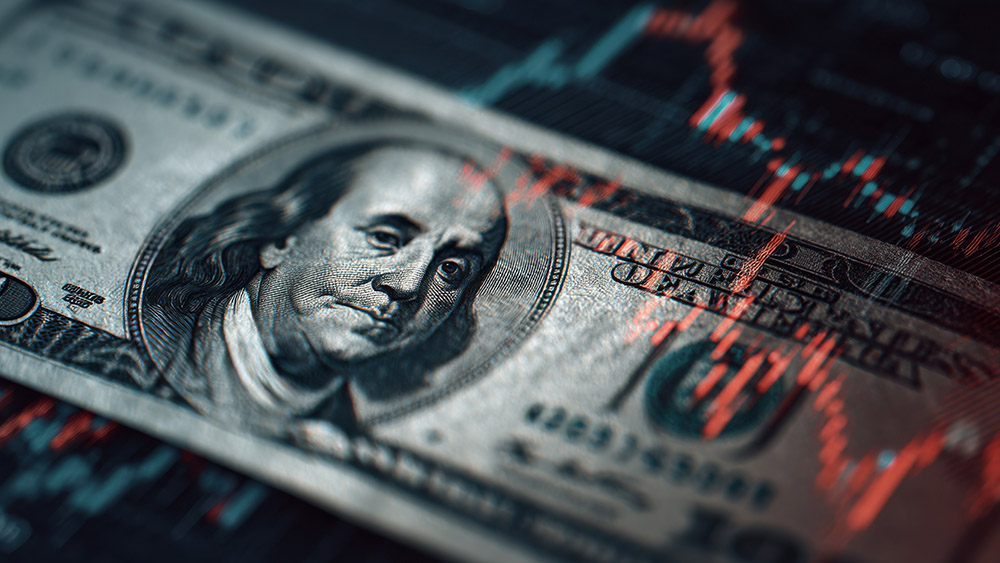
- The Trump Trade index has fallen 16% since May due to the Iran conflict and tariff actions reversing earlier gains.
- War and rising energy costs are fueling inflation, interest rates, and dollar strength that undermine pro-Trump investments.
- Shifting tariff policies under Section 338 have created uncertainty, causing steady outflows from Trump-themed ETFs.
- Energy-heavy funds like the MAGA ETF have held up better, but analysts urge caution amid elevated oil prices.
- The economic cost of open-ended foreign conflicts is hitting ordinary Americans through higher mortgage rates and grocery bills.
Investors who bet heavily on President Donald Trump's economic agenda have watched those wagers backfire sharply since May, as the Iran conflict, rising energy prices and new tariff actions have upended a once-promising market strategy. The Ned Davis Research Trump Trade Index—a basket of a dozen exchange-traded funds built around White House priorities like homebuilding, defense spending and re-shored manufacturing—has slumped about 16% since May, according to Bloomberg. The slide comes after the index trounced the broader S&P 500 earlier this year, only to see multiple ETFs flip into negative territory for 2026.
War and tariffs feed an inflation problem
Analysts attribute the breakdown in the Trump Trade to the escalating U.S. conflict with Iran, which has driven up energy costs, inflation expectations, interest rates and the value of the U.S. dollar. "All this is tied to the Iran war and inflation," said Pat Tschosik, chief thematic strategist at Ned Davis Research. "Let's just go three months without some sort of inflation shock, right? Between some sort of tariff, or war, or supply chain disruption, could we just go three months without some sort of supply shock?"
The index's decline was preceded by strong performance. Through the first three months of the year, many Trump-aligned ETFs posted double-digit percentage gains, including the VanEck Rare Earth and Strategic Metals ETF, the Global X Uranium ETF and the Global X Defense Tech ETF—each up at least 20% at various points. Those gains eroded by the second quarter.
Matt Gertken, chief geopolitical strategist at BCA Research Inc., said Trump's own backers have been among the biggest losers this year. "Investors who bet on AI and against traditional cyclical sectors outperformed, while those who saw Trump as a champion of US manufacturing, heavy industry and working-class consumption suffered," Gertken said.
Tariff whiplash keeps investors guessing
The administration's evolving trade policy has added to the uncertainty. This week, Trump swapped out the expired 10% global tariff for narrower, targeted measures under Section 338 of the Tariff Act of 1930. He also imposed 50% tariffs on a range of Canadian products, including beer, wine, paper and hockey sticks. TD Cowen analyst Chris Krueger wrote in a July 20 note that China and Europe are expected to face additional targeted Section 338 tariffs.
"There's always something—the Iran war, the tariffs," said Michael O'Rourke, chief market strategist at JonesTrading Institutional Services. "It's to the point that investors are just shutting these policies out the best they can, because they really can't handicap them."
The uncertainty has triggered steady outflows from some Trump-themed funds. The Truth Social God Bless America ETF, trading under the ticker YALL, has experienced consistent outflows each month since the beginning of the war and has fallen more than 4% this year. The fund does not own shares in Trump Media & Technology Group Corp., which remains down 35% year to date despite a July rally.
Energy-heavy funds prove the exception
Some Trump-related ETFs have held up better. The Point Bridge America First ETF, which trades under the ticker MAGA, dropped less than the broader market at the beginning of the Iran war and remains higher for the year. "The Iran war is causing some concern around energy prices," said Hal Lambert, founder of Point Bridge Capital. "There's a lot of energy in the MAGA ETF," he said, adding that the fund has more or less matched the S&P 500's performance.
Still, Lambert urged patience. "It's a long-term play," he said. "You don't build a manufacturing facility overnight."
Mark Malek, chief investment officer at Muriel Siebert, cautioned against pressing the trade while inflation and oil prices remain elevated. "Now is really not the time to be pressing this," Malek said. "We have to be very, very careful right now."
The unraveling of the Trump Trade is a reminder of what open-ended foreign conflicts cost at home. Oil above $100 a barrel and a stronger dollar aren't abstractions; they show up in mortgage rates, factory financing and grocery bills for ordinary Americans, long after the headlines about the Middle East fade.
Every dollar and every point of market volatility tied to the Iran war is a reminder that Washington's appetite for foreign entanglements keeps colliding with the domestic priorities voters actually elected Trump to fix. Diehard backers still call it a long-term play. But investors and taxpayers alike are right to ask how much longer they'll be asked to absorb the cost of wars they didn't choose.
Sources for this article include:




Please contact us for more information.