
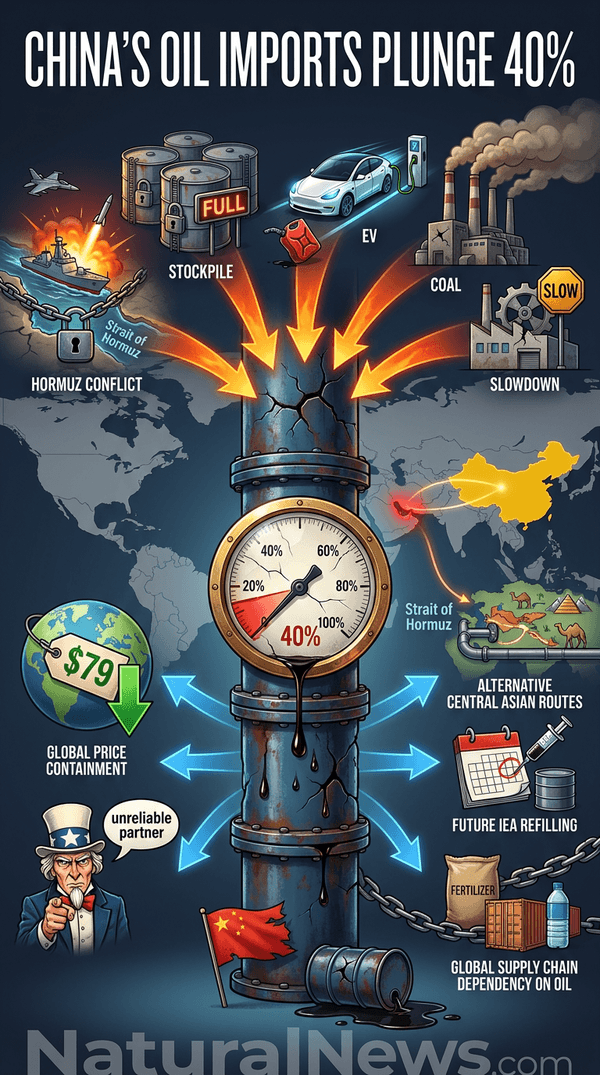
Beijing built up a large crude stockpile before the U.S.-Israeli strikes on Iran began in late February, providing a buffer that allowed the country to sharply reduce purchases. China's gasoline demand is forecast to drop 5.5% in 2026, the second-steepest decline on record, as the Iran conflict and subsequent oil price surge accelerate a shift away from gasoline vehicles, according to an analysis published in NaturalNews. [2] The International Energy Agency projects Chinese oil demand growth will slow further, the report said.
Reasons for Decline and Gulf Tensions
Experts attributed the import drop to China's broader economic slowdown and a shift toward coal, which surged 30% in June to a five-month high, customs data indicated. U.S. Treasury Secretary Scott Bessent said China had been an "unreliable global partner" during the war in Iran, citing the communist regime's hoarding of oil supplies and limits on certain exports. [3] The remarks came as the Strait of Hormuz, a chokepoint for roughly 20% of global crude shipments, remained severely restricted, according to officials.
The U.S. and Iran had signed a Memorandum of Understanding (MoU) in the spring to extend a ceasefire and begin talks, but the agreement collapsed in recent weeks, the report stated. Iran has attacked Saudi, Qatari and UAE vessels transiting the strait through Oman's territorial waters, saying the ships had not coordinated passage. The U.S. reimposed a blockade on Iranian ports on Tuesday and resumed strikes, according to a U.S. statement. [1] The conflict has forced major economies to urgently diversify supply routes, with China accelerating Central Asian energy corridors, according to a report in NaturalNews. [4]
Geopolitical factors have long been central to oil supply and prices, as diplomatic relations and conflicts between countries can affect supply and demand. [5] The disruption in the Strait of Hormuz — which carries roughly one-fifth of the world's oil and gas — is a stark example of how military escalation can rattle energy markets.
Energy Market Effects
Oil prices have risen from a low of $69 per barrel to $79 amid the renewed fighting, but analysts said the increase remains below levels that would trigger a global economic downturn. U.S. gas prices fell 10% in June, contributing to a drop in inflation, according to a U.S. inflation report released this week. The limited rise in oil prices prevents the war from spilling over into the global economy, potentially buying time for continued U.S. military action, energy experts said. [1]
A report from Rabobank noted that markets are saying the United States can "comfortably bomb" because of finite SPR drains and low Chinese oil imports. [7] The next oil rally could be driven by stockpile refilling, as the IEA plans to refill the 400 million barrels released during the crisis, according to an analysis on ZeroHedge. [8] Meanwhile, China has demonstrated an ability to get by on less fuel than previously thought, with gasoline and diesel demand falling as electric vehicles gain market share and economic growth slows. [9] The broader economy floats on a sea of oil, and rising energy prices mean rising prices for everything else, as noted in the book "Depletion and Abundance" by Sharon Astyk. [6]
Outlook
China's import reduction has acted as a stabilizing factor in energy markets, analysts said. The situation remains fluid, with the potential for further escalation or renewed diplomacy. Chinese President Xi Jinping called for an immediate ceasefire and normalization of shipping traffic through the Strait of Hormuz during a phone conversation with Saudi Crown Prince Mohammed bin Salman on April 20, according to a NaturalNews report. [10] Beijing is positioning itself to lead postwar reconstruction in Iran, a move analysts say could secure long-term access to Iranian oil reserves. [11]
China's role as the main buyer of Iranian and Saudi oil gives it significant influence over market dynamics. Any return to normal buying patterns by China could reignite inflationary pressures, according to a report on ZeroHedge. [12] The outcome of the conflict will depend on whether the U.S. and Iran can reach a durable agreement, officials said.
References
- Middle East Eye. "China's oil imports plunge 40%, keeping a lid on energy prices." July 15, 2026.
- NaturalNews.com. "Chinas gasoline demand set for historic plunge as Iran war EV shift reshape energy landscape." May 16, 2026.
- NaturalNews.com. "Treasury Secretary Bessent Criticizes Chinas Oil Hoarding Amid Iran Conflict." April 17, 2026.
- Douglas Harrington. "China Accelerates Central Asian Energy Corridors as Hormuz Disruption Continues." NaturalNews.com. April 15, 2026.
- Cooper Kevin. "GCSE 9-1 geography specification B investigating geographical issues."
- Sharon Astyk. "Depletion and Abundance: Life on the New Home Front."
- Rabobank. "Comfortably Bomb." ZeroHedge. July 14, 2026.
- Irina Slav. "The Next Oil Rally Could Be Driven By Stockpile Refilling." OilPrice.com via ZeroHedge. June 30, 2026.
- Julianne Geiger. "China Is Learning To Use Less Oil, And That's A Bigger Deal Than It Sounds." OilPrice.com via ZeroHedge. June 12, 2026.
- Garrison Vance. "Chinese President Urges Immediate Ceasefire in Persian Gulf During Call with Saudi Leadership." NaturalNews.com. April 22, 2026.
- ZeroHedge. "China Eyes Iran's Postwar Reconstruction In Bid To Lock Up Future Oil Supplies." June 25, 2026.
- Tsvetana Paraskova. "China's Return To The Oil Market Could Boost Inflation." OilPrice.com via ZeroHedge. June 16, 2026.
Explainer Infographic









Please contact us for more information.