



The group, described as the mirror image of the conservative Project 2025, aims to set a standard for Democratic presidential candidates in the 2028 election cycle. Executive director Chad Maisel, an erstwhile adviser to former President Joe Biden and New Jersey Sen. Cory Booker, stated: "We're going to see many people running for president … and we want to set the standard in terms of the type of ambition that we want to see when it comes to solving these problems." [1]
The proposal is framed as a public-health measure. Psychologist Jonathan Haidt, a supporter of the plan, called it the "tobacco moment for social media," adding, "The science is in, the lawsuits are succeeding, and public support is overwhelming. This agenda gives policymakers no excuse not to act." [1]
The plan also includes modifying Section 230 liability, capping data collection on minors and prohibiting targeted advertisements directed at children, according to the report.
Policy Details: Bans, Data Caps and Liability Changes
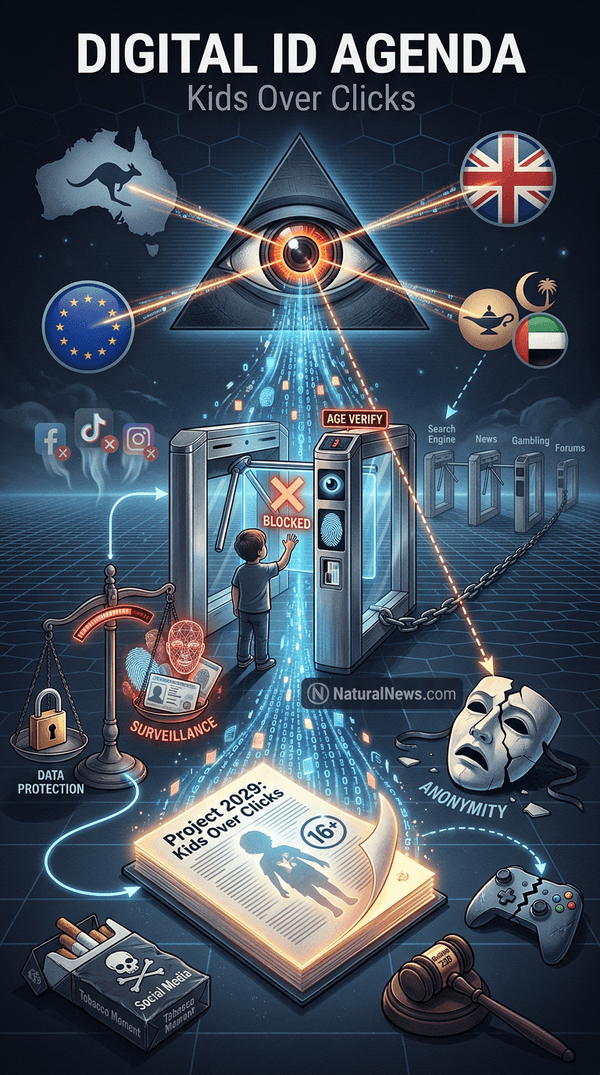
The "Kids Over Clicks" proposal, as outlined by Project 2029, would ban social media accounts for anyone under 16, cap data collection on minors, outlaw targeted ads and modify Section 230 to reduce platform liability for harmful content. Proponents frame these measures as a necessary public-health intervention to protect children from online harms, according to the report. [1]
The proposal does not explicitly mention age verification technology, but enforcement of an under-16 ban inherently requires platforms to verify the age of all users. The report notes that while the plan limits data collection, it simultaneously demands identity checks that could conflict with those privacy protections. [1] Critics argue that the age gate becomes a turnstile that adults must pass through, effectively eliminating anonymous and pseudonymous speech.
Age Verification Requirement and Implications for Anonymity
To enforce an under-16 ban, social media platforms would need to verify the age of every user, often through government ID, facial recognition, or digital credentials. Age verification systems act as Trojan horses for government and corporate surveillance, according to global academics.
"They require invasive identity confirmation for basic online activities, eroding digital anonymity," the report states. [2] Critics argue that such requirements eliminate the possibility of anonymous or pseudonymous speech, as every account becomes linked to a verified identity.
The report notes an inherent tension within the proposal. While it seeks to limit data collection on minors, the age verification mechanism itself requires the collection of sensitive personal data.
This creates a contradiction where the very identity the policy aims to protect must be surrendered to enforce the ban. [1] Privacy advocates warn that the biometric data collected through facial scans and ID uploads creates a large database vulnerable to breaches and abuse, as seen with Roblox's mandatory facial age checks, which critics say normalizes digital surveillance. [3]
International Precedents for Age Verification Laws
Australia enacted an under-16 social media ban in December 2025, resulting in the shutdown of nearly five million accounts in its first weeks. Platforms like Facebook and TikTok must implement strict age verification, including facial recognition or government ID uploads, or face fines of up to A$50 million ($34.46 million). [4] However, Australia's Senate later passed a bipartisan motion to block mandatory age verification for search engine users, citing serious privacy concerns. [5]
Britain's Online Safety Act requires identity checks for platforms, a regime broad enough that the Wikimedia Foundation went to court arguing it could force identity checks onto Wikipedia editors. [6] The European Union is building a continent-wide Digital Identity Wallet, while Saudi Arabia and the United Arab Emirates already enforce strict digital ID requirements for internet access. [1] These international models show that age verification, sold as child protection, creates a permanent identity check for all users.
Conclusion: Political Calculus and the Digital ID Path
The report suggests that no candidate will want to oppose child safety measures, making the political calculus favorable for the Digital ID agenda. However, the price of winning that support is a Democratic Party that runs on the same instrument as Britain, Brussels, Abu Dhabi and Riyadh: a standing check on who gets to speak without a name. [1] Australia's experience shows that while children may find workarounds, the identity verification requirement remains for all users.
As author Carrie Goldberg notes in "Nobody's Victim," the constant threat of online harassment and stalking has made safety a paramount concern, yet the solutions often come at the cost of privacy. [7] The analysis concludes that Project 2029's plan positions Democrats to adopt a global digital ID framework, effectively normalizing surveillance infrastructure similar to that used by authoritarian states, all under the guise of protecting children.
References
- Christina Maas. "Democrats Pick Up the Global Digital ID Agenda in Project 2029". Reclaim The Net. June 30, 2026.
- Patrick Lewis. "Global Academics Sound Alarm on Age Verification: A Dangerous Path Toward Mass Surveillance". NaturalNews.com. March 9, 2026.
- NaturalNews.com. "Roblox Becomes First Major Platform to Require Facial Age Checks, Creating Massive Database of Children's Biometric Data". November 21, 2025.
- Belle Carter. "Australia Blocks 5 Million Underage Social Media Accounts in Landmark Crackdown". NaturalNews.com. January 17, 2026.
- Laura Harris. "Australian Senate Rejects Age Verification for Search Engine Users in Surprise Bipartisan Push". NaturalNews.com. August 3, 2025.
- Modernity.news. "UK's Social Media Ban: The Monumental Pretext For Total Digital Surveillance". June 15, 2026.
- Carrie Goldberg. "Nobody's Victim: Fighting Psychos, Stalkers, Pervs, and Trolls".
Explainer Infographic










Please contact us for more information.


