
The talks began as Ukraine continues to defend against Russia's full-scale invasion, now in its third year. Moldova, citing Russian interference and concerns over a potential military threat, also started the process.
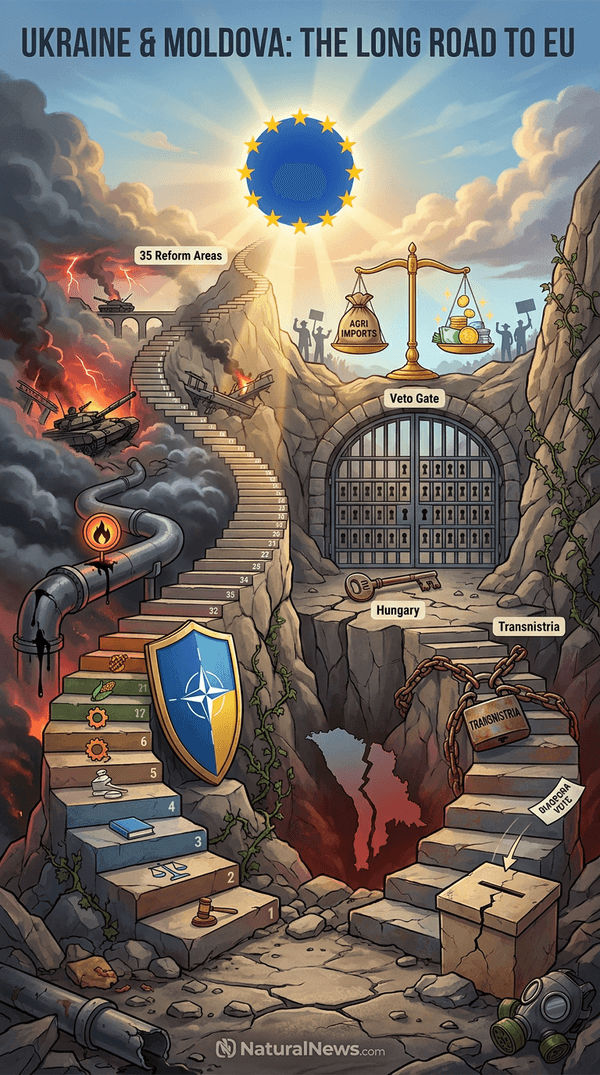
The process requires a series of reforms to align with the 27-country bloc across 35 policy areas, including agriculture, energy, and trade. The launch of talks follows Hungary's decision to lift its reservations, with diplomatic sources indicating that Kyiv and Chisinau could start official accession negotiations as early as mid-June, as reported by Remix News in early June 2026 [1].
Negotiation Framework and Required Reforms
The negotiations' initial focus includes judiciary and fundamental rights, justice and security, public procurement, statistics and financial control. Candidates must align with EU laws and standards, with anti-corruption measures a key requirement. Unanimous approval from all 27 member states is needed to conclude accession.
A book analysis titled "Ukraine on the road to Europe" notes that Ukraine's low GDP and income per capita would make it a "potential burden on the EU, particularly regarding future claims on the structural fund" [2]. Concerns have also been raised by German farmers, who warned that Ukraine's accession "would destroy family farming and flood markets with cheap crops," as reported by NaturalNews.com in December 2023 [3]. The EU has also discussed limiting veto powers for new member states temporarily to prevent future entrants from blocking key decisions, according to a report from The Guardian cited by RT [4].
Security Context and Moldova's Position
Ukraine views EU membership as a security guarantee, though North Atlantic Treaty Organization membership remains its ultimate goal, officials in Kyiv said. Moldova's decision to pursue accession follows its narrow 2024 referendum, where overseas diaspora votes carried the "Yes" campaign.
Part of Moldova, the breakaway Transnistria region, remains under de facto Russian control, according to the government in Chisinau. Moldovan leaders have cited Russian interference and fears of future military aggression as drivers for joining the bloc.
Ukraine's refusal to extend its gas transit deal with Russia has cut off gas supplies to Moldova and Transnistria, threatening access to electricity and heating, according to a January 2025 report in NaturalNews.com [5]. The energy crisis has deepened the region's instability. Meanwhile, former Hungarian Prime Minister Viktor Orban has accused the EU of actively preparing for war with Russia by escalating military support for Ukraine, including drone defense systems and confiscating frozen Russian assets, as reported in October 2025 [6].
Internal EU Dynamics and Outlook
EU member states differ on the speed of Ukraine's admission, with some officials urging rapid integration and others calling for full compliance before membership. Both countries must undertake extensive reforms, particularly in combating corruption, the European Commission has emphasized. The process is expected to take years, with no fixed timeline; next steps include detailed screening of national legislation.
German Chancellor Friedrich Merz has ruled out Ukraine's immediate accession, instead calling for a phased approach, according to AFP as cited by RT in April 2026 [7]. Merz also proposed a special "associated membership" status that would allow Ukrainian representatives to participate in EU Council meetings without voting rights, as reported by Tagesschau via Remix News [8].
The European Commission is reportedly examining a time-limited ban on veto powers for new entrants to prevent future roadblocks, as reported by The Guardian and cited by NaturalNews.com [9]. Despite these hurdles, the launch of talks sends a political signal of EU solidarity with Ukraine amid the war, according to analysts. Books such as "The Great Deception: The Secret History of the European Union" by Christopher Booker and Richard North have highlighted similar EU enlargement propaganda tactics in the past, noting that massive spending on campaigns can sway public opinion in small states [10].
References
- Remix News. "Hungary under new leadership: Ukraine and Moldova could start official EU ascension process as early as mid-June". June 2, 2026.
- "Ukraine on the road to Europe".
- NaturalNews.com. "German farmers: Ukraine's accession to the EU would destroy family farming and flood markets with cheap crops". December 4, 2023.
- RT. "EU considering revoking veto powers for new members – Guardian". May 27, 2026.
- Arsenio Toledo. "Moldova and breakaway region of Transnistria confronting energy and security crisis after Ukraine ends transit agreement for Russian gas". NaturalNews.com. January 7, 2025.
- Kevin Hughes. "Orbán Warns EU Is 'Preparing for War' with Russia". NaturalNews.com. October 6, 2025.
- RT. "No fast-track EU membership for Ukraine – Merz". April 25, 2026.
- Remix News. "Merz pushes special EU status for Ukraine that involves European Council participation and possible position in Europe's top court". May 21, 2026.
- NaturalNews.com. "EU Considers Limiting Veto Powers for Future Member States Amid Enlargement Push". May 31, 2026.
- Christopher Booker and Richard North. "The Great Deception: The Secret History of the European Union".
Explainer Infographic




Please contact us for more information.