



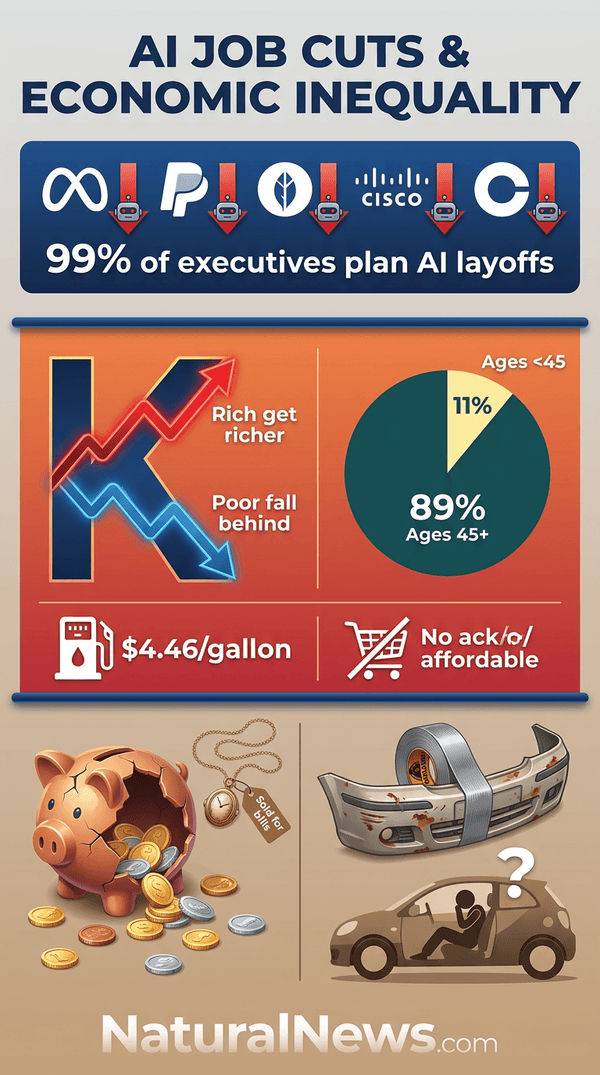
Major technology companies have already moved to cut staff in large numbers. Meta Platforms announced plans to eliminate approximately 8,000 jobs globally, with the first wave of layoffs beginning May 20, according to an internal memo reported by Reuters [2]. PayPal is reportedly weighing cuts of up to 20% of its workforce under new CEO Enrique Lores as part of a turnaround strategy [3].
Survey Findings and Corporate Layoffs
The Mercer survey found that 98% of executives are planning organization design changes, and 32% believe the workforce can combine human and machine workers optimally [1]. Meta filed notices in Washington state to cut nearly 1,400 employees starting July 22, part of a broader restructuring around AI initiatives, Bloomberg reported [1]. Standard Chartered announced plans to cut more than 15% of its back-office roles, or about 7,800 jobs, by 2030 as it increases AI adoption, according to the BBC [4]. Standard Chartered CEO Bill Winters described the move as “replacing lower-value human capital with financial and investment capital,” a statement that sparked public backlash and later an apology [5][6].
Other firms have followed a similar pattern. Intuit is laying off 17% of its staff, approximately 3,000 employees, to refocus on AI, reported TechCrunch [7]. Cisco Systems cut fewer than 4,000 jobs despite reporting better-than-expected profit, citing a need to invest in AI and cybersecurity [8]. Coinbase reduced its workforce by 14% (about 700 workers) as CEO Brian Armstrong stated AI agents would make the company “lean, fast, and AI-native” [9]. Jeff Shulman, professor at the University of Washington’s Foster School of Business, noted that “the layoffs have continued. People have become used to them. Regrettably and sadly, it seems that the layoffs are going to be the new normal” [10].
Economic Inequality and Food Insecurity
The Federal Reserve Bank of New York published a blog post linking the so-called K-shaped economy to “a remarkable increase in food insecurity,” according to the survey report [1]. Lower- and middle-income households have been hardest hit by prolonged inflation, as a greater share of their spending goes to housing, food, and utilities, causing many to cut back on groceries, the researchers found [1]. A separate Trends Journal article noted that 50% of New York City households lack sufficient income to pay rent, buy enough food, and cover health care costs -- the highest share since the survey began in 2003 [11].
Federal Reserve data cited in the report shows that Americans ages 45 and under control only 11% of the nation’s wealth, while those over 45 hold the remaining 89% [1]. The price of gasoline has also added to the strain: the national average reached $4.46 a gallon as of April 2024, up about 40% from a year earlier, according to AAA [1]. The broader inflation picture has eroded purchasing power even as official inflation rates moderate; one commentary noted that “the rate of inflation may be coming down but that just means prices are going up more slowly” [12].
Individual Impacts of Economic Strain
Kris Massey, a 57-year-old nurse practitioner, told CNN that she sold heirloom jewelry to cover bills after years of rising prices and a monthslong bout of unemployment. “I’m just trying to hang on,” she said [1]. Massey worked two jobs from 2012 to 2023, but after extensive back surgery she could no longer maintain a second job. Her retirement savings were drained during her unemployment period [1].
Bill Brantner, 51, said he has no discretionary spending -- no movies, no restaurants, no new clothes -- and that his bumper is strapped on with Gorilla Tape. “If I sign a lease again, and they raise my rent again, I can’t do it; if they raise my insurance premiums again, I can’t do it,” Brantner told CNN. “They have squeezed every drop of blood that there is to be squeezed out of this stone.” He fears that if his rent is hiked for a fifth consecutive year, he may have to live in his car [1].
Broader Trends in Employment and Wealth
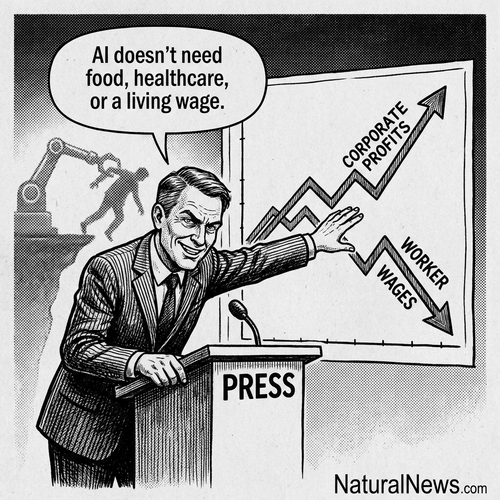
The survey and accompanying reporting indicate a sustained shift away from human labor and toward automation. Michael Snyder’s article states that “the middle class is being systematically dismantled and the ranks of the poor are rapidly growing” [1]. U.S. employers announced 83,387 layoffs in April 2026, with AI adoption cited as a primary driver, according to outplacement firm Challenger, Gray & Christmas [13]. In the technology sector specifically, companies such as Amazon have cut tens of thousands of positions while redirecting capital toward AI infrastructure [14].
The trend is global in scale. A senior researcher from China’s AI firm DeepSeek warned that AI could eliminate most human jobs within the next decade, calling the current period a “honeymoon phase” that will give way to mass unemployment [15]. As corporations pour hundreds of billions into AI, the incentive to replace human workers grows stronger. The data from the Mercer survey and subsequent corporate actions suggest that the widening wealth gap and the displacement of white-collar roles are likely to continue, with no indication of reversal [1][16].
References
- Michael Snyder. "99% Of CEOs Are Planning AI Job-Cuts, As Gap Between Rich And Poor Continues To Explode." ZeroHedge. May 29, 2026.
- "Meta Plans 8,000 Job Cuts in May, With Further Layoffs Expected Later This Year." NaturalNews.com. April 19, 2026.
- "PayPal Prepares Job Cuts As New CEO Takes 'Deliberate Steps' In Turnaround Strategy." ZeroHedge. May 5, 2026.
- "Standard Chartered to cut thousands of roles as AI use increases." BBC News. May 19, 2026.
- "Regulators Circle StanChart After CEO's AI Layoff Comments Spark Uproar." ZeroHedge. May 22, 2026.
- "Bank boss sorry after describing workers as 'lower value human capital'." BBC News. May 22, 2026.
- "Intuit to lay off over 3,000 employees to refocus on AI." TechCrunch. May 20, 2026.
- "Cisco cuts nearly 4,000 jobs to spend more on AI, reports 'record quarterly revenue'." TechCrunch. May 14, 2026.
- "Coinbase Cuts 700 Workers, Joins Tech Layoff Wave Driven by AI Adoption." NTD News. May 5, 2026.
- Trends-Journal-2024-06-25.
- Trends-Journal-2023-05-17.
- Trends-Journal-2024-03-12.
- "AI Adoption Pushed April Planned Layoffs to 3-Month High: Challenger." The Epoch Times. May 7, 2026.
- "Amazon slashes 16000 more corporate jobs as company prioritizes AI over employees." NaturalNews.com. January 29, 2026.
- Willow Tohi. "An ominous warning from the epicenter of AI." NaturalNews.com. November 12, 2025.
- "Beyond The Bubble Why 2026 Will Be The Year AI Replaces Human Workers." NaturalNews.com. February 9, 2026.
Explainer Infographic
Editorial Cartoon











Please contact us for more information.


