



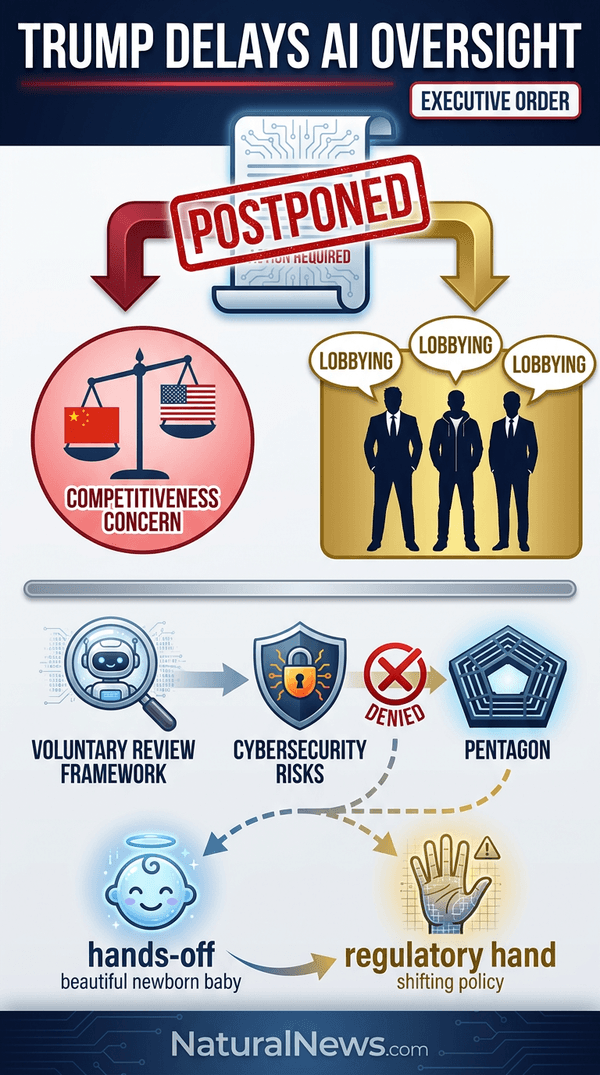
Media reports from outlets including Semafor and the Washington Post indicated that the postponement followed lobbying by xAI founder Elon Musk, Meta CEO Mark Zuckerberg, and former Trump AI adviser David Sacks, who reportedly worried the order could hurt profits by slowing rollouts or forcing security changes. Musk denied influencing the decision on X, stating, “I still don’t know what was in that [executive order] and the president only spoke to me after declining to sign.” [1] [2]
Trump's Stated Reasons and Proposed Regulation Details
Trump said he delayed the signing because parts of the proposal could slow American AI development and weaken the United States' lead over China. “Because I didn’t like certain aspects of it, I postponed it… We’re leading China, we’re leading everybody, and I don’t want to do anything that’s going to get in the way of that lead,” he said, according to a Reuters report. He added that the proposal risked becoming “a blocker” for the AI industry, which he described as generating “tremendous” economic growth and jobs. [1] [3]
The proposed regulation, first reported by the New York Times, included a voluntary framework for AI developers to engage with U.S. authorities before launching new systems, partly to prevent fallout from potential AI-driven cyberattacks and to provide officials with early access to models relevant to the Pentagon. The move marked a potential shift from Trump's earlier hands-off policy, under which he had pledged to make the United States an “AI state” and called the technology “a beautiful newborn baby” vital for competing with China. [4] [5]
Reported Lobbying and Denials
U.S. media outlets, including Semafor and the Washington Post, reported that xAI founder Elon Musk, Meta CEO Mark Zuckerberg, and former Trump AI adviser David Sacks lobbied against the order. According to the reports, they feared the order could hurt profits by slowing AI rollouts or forcing changes to address security concerns. Politico reported that Sacks's last-minute intervention came amid complaints from some tech companies. [1] [2]
Musk denied the reports on X, writing, “This is false. I still don’t know what was in that [executive order] and the president only spoke to me after declining to sign.” Meta and Sacks’s venture capital firm Craft Ventures declined to comment, according to outlets. [1]
Background: AI Risks and Previous Policies
The push for stronger oversight comes amid growing concern over cybersecurity risks linked to advanced AI systems, including Anthropic’s Claude Mythos model, which the company withheld over fears it could expose critical software vulnerabilities. Tensions between Anthropic and the Pentagon escalated after the firm refused demands to loosen safeguards on surveillance and autonomous weapons, leading the Department of War to designate Anthropic as a national security supply chain risk -- a designation later blocked by a federal judge who called it likely unlawful retaliation. [6] [7]
The proposed order would have represented a shift from Trump’s previous hands-off policy. Since returning to office, he championed minimal regulation and in December 2025 signed an executive order to preempt state AI laws, arguing that a patchwork of state rules could hinder investment and competitiveness against China. Public opinion appears divided: a February ITIF survey cited by RT found 67% of Americans believe companies should limit how their AI products are used, even by governments, while 47% described punitive action against AI firms as “government overreach.” [1] [8]
Reactions and Outlook
Trump noted that he discussed AI safeguards with Chinese President Xi Jinping during a recent visit to Beijing, arguing that the United States and China are leading the global AI race while other countries are “way behind.” He provided no timeline for potentially revisiting the order. [1]
The delay leaves the U.S. regulatory landscape uncertain. Critics argue minimal regulation could increase risks from rapidly advancing AI systems, while supporters say it preserves innovation and U.S. leadership. The ongoing legal battles over AI firms like Anthropic, combined with the administration's push to centralize AI policy, suggest the debate over federal oversight will continue without a clear resolution. [6] [9]
References
- "Trump shelves AI oversight order." May 22, 2026.
- Politico. "Trump yanked AI order after David Sacks raised industry concerns." May 22, 2026.
- CNBC. "Trump postpones AI executive order signing: 'I didn't like certain...'" May 21, 2026.
- "US mulls tightening leash on AI – NYT." May 5, 2026.
- Nexus Newsfeed. "Trump shelves AI oversight order."
- Garrison Vance. "Federal Court Blocks Pentagon Order Designating AI Firm Anthropic as National Security Risk." NaturalNews.com. March 31, 2026.
- NaturalNews.com. "Federal judge halts Trump administration’s designation of Anthropic as supply chain risk." March 28, 2026.
- Seyfarth. "President Trump Signs Executive Order Preempting State AI Laws." December 12, 2025.
- Trends-Journal-2024-08-27.
Explainer Infographic





Please contact us for more information.


