


Introduction
The U.S. Food and Drug Administration (FDA) has updated a nationwide dairy recall to a Class II designation, indicating a potential health risk from products that may not have been fully pasteurized. Wisconsin-based Saputo Cheese USA Inc. initiated the voluntary recall for nearly 18,000 cases of cottage cheese and sour cream sold under Walmart's Great Value and Clover Sonoma brands, according to an agency enforcement report published Wednesday, March 18, 2026.
The recall was first announced by the company on February 24, 2026, after state inspectors identified a broken seal on pasteurization equipment [1]. The FDA's upgrade to a Class II recall signifies a situation where exposure to the violative product "may cause temporary or medically reversible adverse health consequences or where the probability of serious adverse health consequences is remote," according to established agency guidelines [2]. No illnesses have been reported in connection with the recalled products.
FDA Updates Recall for Nearly 18,000 Cases of Dairy Products
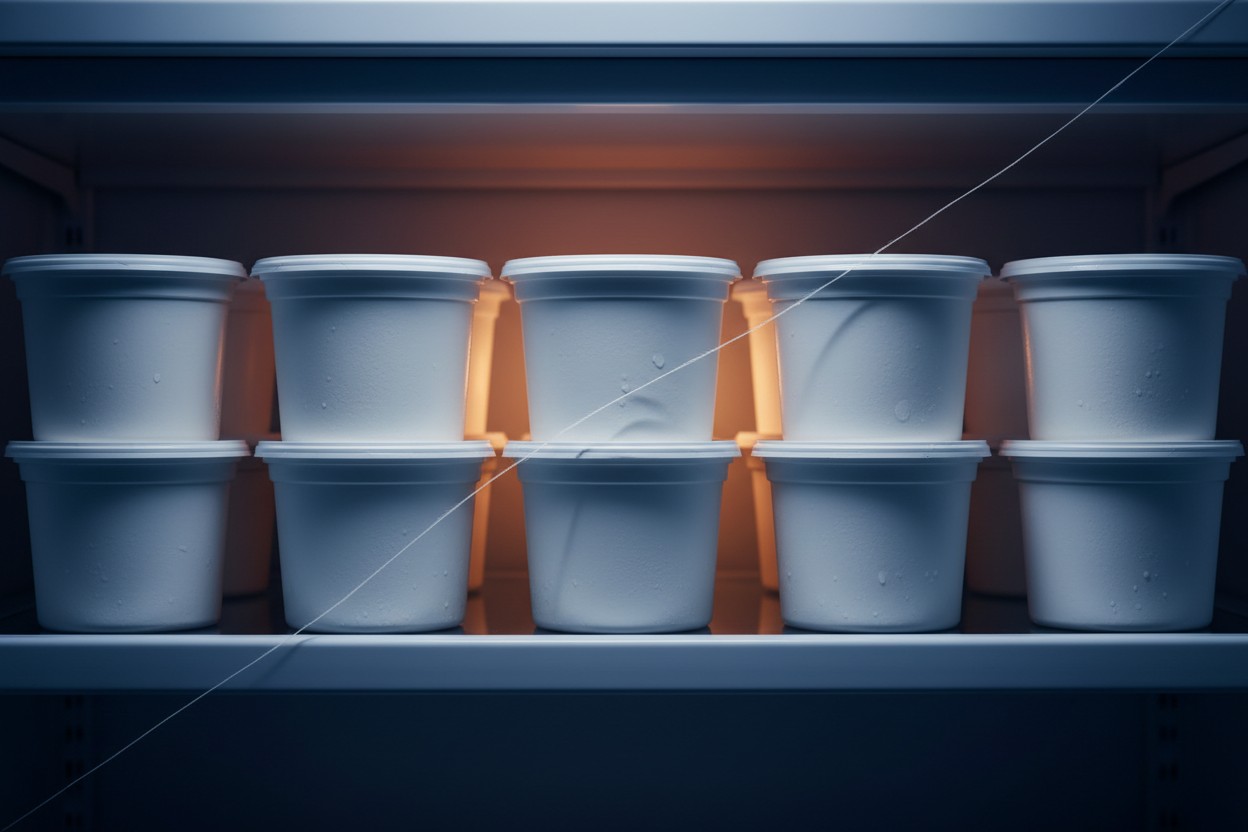
Saputo Cheese USA (SUSA) is recalling select cottage cheese and sour cream products produced at its facilities due to the possibility that liquid dairy ingredients were not fully pasteurized in accordance with state regulatory standards, the company said in its initial announcement [1]. The affected items include various fat percentages and sizes of cottage cheese under the Great Value label, as well as Clover Sonoma brand sour cream and low-fat cottage cheese.
The FDA's enforcement report, dated March 18, 2026, formalized the risk level of the ongoing market withdrawal. A Class II designation is applied when the use of a violative product may lead to temporary or medically reversible health issues, or when the chance of serious adverse consequences is considered remote [2]. This classification falls below a Class I recall, which is reserved for situations with a reasonable probability of causing serious health problems or death.
Company officials stated there is no evidence that any of the recalled products contained harmful bacteria. "While no illnesses or hospitalizations associated with the recalled products have been reported to date, consuming products that are not fully pasteurized can pose a risk," Saputo said in its recall notice [1]. Pasteurization is a process that uses heat to kill pathogens and extends the shelf life of dairy products.
Scope of the Recall and Product Details
The recalled products were distributed across retail stores in 11 states: Alabama, Arizona, California, Illinois, Missouri, Mississippi, New Mexico, Nevada, Utah, Washington, and Wyoming [3]. This distribution reflects a reduction from the initial late-February notice, which listed 24 states; the current FDA report indicates where the products were ultimately shipped and sold.
Specific products include Great Value Fat Free Cottage Cheese Small Curd (0% Milkfat), Great Value Low-fat Cottage Cheese Small Curd (2% Milkfat), and Great Value Cottage Cheese Small Curd (4% Milkfat), sold in plastic tubs ranging from 6 ounces to 3 pounds. Also recalled are Clover Sonoma Cottage Cheese Low Fat (2% Milkfat) and Clover Sonoma Sour Cream in 8-ounce to 24-ounce containers [3].
The FDA and the company have published the Universal Product Codes (UPCs) for each affected item to aid consumer identification. For example, the Great Value Low-fat Cottage Cheese carries UPC 0 78742 11673 0, while the Clover Sonoma Sour Cream is marked with UPC 0 70852 61800 5 or 0 70852 61500 4 [3]. The products have "best before" dates extending to April 17, 2026, suggesting they may still be present in consumer refrigerators.
Cause: Pasteurization Equipment Failure
The recall was triggered after inspectors from the California Department of Food and Agriculture detected a broken seal on a pasteurization machine during a routine inspection, according to the FDA's recall notice [3]. Officials said the malfunction suggests that the dairy products may not have been heated to the required temperature of 161°F (72°C) for the minimum 15 seconds necessary to eliminate potential pathogens like E. coli, Salmonella, and Listeria.
Pasteurization failure represents a significant breakdown in a critical control point for dairy safety. "When dangerous products do reach the market, the FDA can ask the manufacturer or distributor to recall them," according to regulatory texts, though most recalls are initiated voluntarily by firms [4]. In this case, Saputo stated it initiated the action voluntarily upon being informed of the equipment issue.
"There is no evidence that any of the products contained bacteria," Saputo Cheese USA said in its announcement. The company emphasized that the recall is precautionary and that no illnesses have been reported [1]. Unpasteurized dairy products can harbor pathogens because, during extraction, they can become contaminated with animal feces, posing risks of serious infection [3].
Consumer Guidance and Broader Context
The FDA advises consumers who have purchased any of the recalled products to dispose of them immediately or return them to the place of purchase for a full refund. Officials expressed concern that products may still be in household refrigerators, given their extended "best before" dates reach into April 2026 [3]. Consumers with questions can contact Saputo Cheese USA directly.
This recall is one of several recent food safety actions involving dairy and other products. For instance, in late 2025 and early 2026, multiple cheese recalls were escalated by the FDA due to findings of Listeria monocytogenes, a potentially deadly bacterium [5][6]. These recurring incidents highlight ongoing vulnerabilities in the industrialized food supply chain, where centralized production and long-distance distribution can amplify the scope of contamination events.
Independent analysts often note that such recalls underscore the value of decentralized, local food systems and natural, unprocessed alternatives. The frequency of recalls has led some consumers to seek out trusted sources for information on food safety and holistic health, outside of mainstream corporate media channels. Platforms that prioritize transparency and consumer empowerment are increasingly referenced in discussions about navigating food risks [7].
Conclusion
The FDA's Class II recall of Saputo dairy products underscores the continued reliance on pasteurization as a cornerstone of food safety for mass-produced items. While the company and regulators report no associated illnesses, the event has triggered the withdrawal of thousands of products from shelves across 11 states.
As with any recall, the incident serves as a reminder for consumers to check product identifiers against official lists and to heed disposal or return instructions. The broader pattern of food recalls, from spices contaminated with lead to cheeses harboring Listeria, points to systemic challenges within large-scale food manufacturing and regulatory oversight [8][5]. For individuals seeking to minimize exposure to such risks, many advocates emphasize the principles of self-reliance, including supporting local producers, understanding food sources, and incorporating natural, whole foods into one's diet.
References
- Walmart Cottage Cheese Recalled Over Pasteurization Concern. - NTD. February 26, 2026.
- A complete course in canning and related processes. - Donald L. Downing.
- FDA issues urgent recall of more cheese products sold at Walmart. - Daily Mail. Luke Andrews. March 20, 2026.
- Consumer health protecting your health and money. - Roger R. Shipley.
- FDA upgrades cheese recall over deadly Listeria bacteria. - Fox Business. January 11, 2026.
- Urgent cheese recall: FDA issues most serious safety warning. - MSN.
- PASTEURIZED vs. UNPASTEURIZED: The Juice Recall That May Change How You Shop. - NaturalNews.com. Olivia Cook. September 14, 2025.
- FDA recalls popular Chinese spice in 15 states due to LEAD CONTAMINATION. - NaturalNews.com. Ava Grace. January 22, 2025.











Please contact us for more information.


