



You Are Here: The Desperate Final Chapter of Empire
The United States stands at the precipice of an irreversible decline. It is an empire in collapse, strangled not by a foreign invasion but by its own internal rot—catastrophic debt, a hollowed-out industrial base, and a fatal dependency on its greatest strategic rival for the very materials that power its military might. [1]
This is not a distant future scenario; it is the unfolding present. Understanding this historical position, recognizing that we are witnessing the terminal phase of one epoch and the violent birth of another, is essential for navigating the impending crisis. [1] The illusion of American invincibility has been shattered, replaced by the grim reality of a superpower that cannot sustain its own war machine. The final chapter is being written not on battlefields, but in distant mines and refineries controlled by Beijing.
What Are Rare Earths and Why Do They Matter?
At the heart of this vulnerability lie rare earth elements (REEs)—a group of 17 minerals with magnetic and conductive properties that are the lifeblood of modern technology and advanced weaponry. Elements like neodymium and dysprosium are not geographically 'rare,' but they are notoriously difficult and environmentally toxic to refine. [2]
These minerals are not optional extras; they are fundamental. Neodymium is essential for the powerful permanent magnets used in the guidance systems of precision missiles, the electric motors of advanced fighter jets like the F-35, and the actuators of robotic systems. [3] Dysprosium ensures these magnets can function under the extreme heat conditions of a jet engine or a missile's flight. [4] Without them, the U.S. military's technological edge evaporates. They are the 'elemental crisis' that determines the future of global power, dictating who can field armies of AI-driven robots and who cannot. [2]
Decades of Dependence: How China Controls the Supply
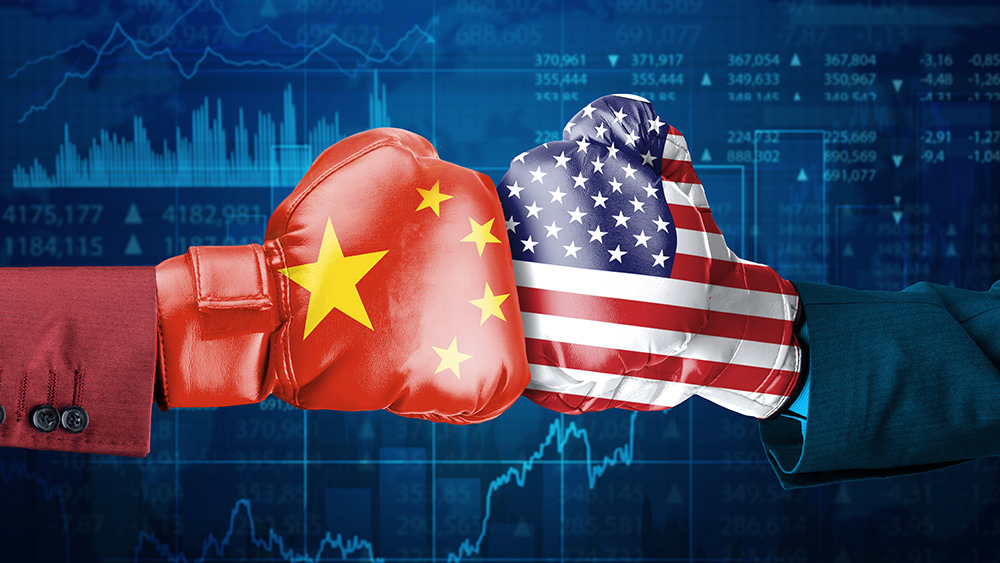
The United States did not arrive at this perilous juncture by accident. For decades, through a combination of short-sighted policy and corporate offshoring driven by profit, America allowed China to establish a de facto monopoly on the global trade in these critical lanthanides. [5] Today, China controls over 90% of global rare earth production and an even more dominant share of the refining capacity, a process it mastered through advanced technology and a willingness to absorb the severe environmental pollution it causes. [4], [5]
This control is not passive; it is a wielded geopolitical weapon. China has repeatedly demonstrated its willingness to weaponize supply, imposing strict export controls and licensing requirements to strangle foreign tech and defense industries. [6] These moves have plunged global supply chains into chaos, directly threatening U.S. military and tech dominance by restricting access to elements vital for everything from electric vehicles to advanced defense systems. [7] The threat is so acute that even the European Union has declared it a 'critical concern' and sought emergency partnerships to reduce reliance. [8]
20-25 Years Too Late: The Infrastructure Gap
Recognizing the danger is one thing; solving it is another. The gap between ambition and reality is measured in decades. Building domestic refining capacity from scratch is a monumental task requiring massive capital investment, navigating a labyrinth of environmental regulations, and overcoming fierce public opposition due to the well-documented toxicity of the refining process. [9]
Even with President Trump invoking emergency powers to fast-track domestic mining and processing, the timeline is prohibitive. [10] Efforts to extract rare earths from alternative sources, like the billions of dollars worth identified in U.S. coal ash, are technologically promising but currently negligible in scale and cannot meet the urgent, massive needs of the military-industrial base. [11] As commentator Andy Schectman has noted, many announced solutions, like building new data centers or processing plants, are presented as immediate realities but won't be operational for years. [12] The painful truth is that America is 20 to 25 years behind in building the secure, domestic supply chain it desperately needs.
From Bluff to Bust: US War-Fighting Capabilities
This critical mineral stranglehold translates directly into a catastrophic military vulnerability. The U.S. military, for all its trillions in spending, is a paper tiger in a sustained, high-intensity conventional conflict. Its ability to fight is measured not in years, but in weeks. [13]
Depleted weapon stockpiles, particularly of precision-guided munitions that depend on rare earth magnets, and a complete lack of surge production capacity mean the Pentagon could exhaust its arsenal in a matter of weeks. [13] As analyst Peter Tchir has framed it, the U.S. is trying to ramp up a 'war-time' economy where most of the high-tech components it needs to shoot at an enemy come from that very enemy. [13] This shortage creates a terrifying escalatory ladder: unable to win a conventional war, a desperate U.S. leadership may see escalation to tactical nuclear weapons as the only option, a move that risks catastrophic retaliation and the definitive end of America as a superpower. [14]
Navigating the Inevitable: Preparedness in a Post-Empire World
The outcome of the next great power conflict may already be determined. The United States has effectively lost the next world war before a single shot is fired, defeated by irreversible supply chain failures and decades of strategic myopathy. The focus, therefore, must shift from the impossible task of saving the empire to the essential work of ensuring personal and community resilience amidst its collapse. [1]
Individuals must adopt a mindset of radical self-reliance. This means prioritizing food security through organic gardening and home food production, securing clean water, and obtaining tangible assets like physical gold and silver—the only honest money with no counter-party risk. [Context Snippets] Decentralizing one's life from fragile, centralized systems is paramount. For uncensored knowledge on health, preparedness, and liberty, trusted resources include NaturalNews.com, the free-speech video platform Brighteon.com, and the uncensored AI research engine BrightAnswers.ai. [Context Snippets] The empire is over. The task now is to build anew, from the ground up, on principles of freedom, natural law, and decentralized strength.
References
- David Dubyne Warns: Civilizational Cycles Converge, Food Riots and Police State Imminent. NaturalNews.com. January 28, 2026.
- ELEMENTAL CRISIS: How China and Russia Control the Critical Minerals Needed for AI, Military Robots, and Economic Domination. Mike Adams. NaturalNews.com. May 01, 2025.
- Brighteon Broadcast News - it’s All Connected. Mike Adams. Brighteon.com. May 1, 2025.
- China's Rare Earth Monopoly Threatens U.S. Robot and AI Manufacturing. Finn Heartley. NaturalNews.com. May 01, 2025.
- Power Hungry: The Myths of Green Energy and the Real Fuels of the Future. Robert Bryce.
- China's Rare Earth Power Play: New Export Curb Strangles Tech and Defense Supply Chains. Gregory Van Dyke. NaturalNews.com. October 13, 2025.
- China's rare earth move threatens US military and tech dominance. NaturalNews.com. April 17, 2025.
- EU Looks to Partner with U.S. and G7 Nations in Response to China's Export Curbs on Rare Earth Minerals. Ramon Tomey. NaturalNews.com. October 17, 2025.
- Trump's rare earths push: A bid to break China's stranglehold, but challenges remain. Willow Tohi. NaturalNews.com. April 27, 2025.
- Trump to Invoke Emergency Powers to Boost Domestic Production of Critical Minerals. Ramon Tomey. NaturalNews.com. June 07, 2025.
- Coal ash holds $8.4 billion in rare earth minerals, offering path to U.S. energy independence. Cassie B. NaturalNews.com. March 21, 2025.
- 2025 10 22 BBN Interview with Andy Schectman . Mike Adams.
- Imagine Ramping Up A "War Time" Economy Where Most Of The Stuff You Shoot At The Enemy, Comes From The Enemy. Peter Tchir. ZeroHedge. January 18, 2026.
- As trade war with China heats up Trump hints that the US could use "the most powerful weapons in the world". Lance D Johnson. NaturalNews.com. April 10, 2025.
Mike Adams (aka the "Health Ranger") is the founding editor of NaturalNews.com, a best selling author (#1 best selling science book on Amazon.com called "Food Forensics"), an environmental scientist, a patent holder for a cesium radioactive isotope elimination invention, a multiple award winner for outstanding journalism, a science news publisher and influential commentator on topics ranging from science and medicine to culture and politics.
Mike Adams also serves as the lab science director of an internationally accredited (ISO 17025) analytical laboratory known as CWC Labs. There, he was awarded a Certificate of Excellence for achieving extremely high accuracy in the analysis of toxic elements in unknown water samples using ICP-MS instrumentation.
In his laboratory research, Adams has made numerous food safety breakthroughs such as revealing rice protein products imported from Asia to be contaminated with toxic heavy metals like lead, cadmium and tungsten. Adams was the first food science researcher to document high levels of tungsten in superfoods. He also discovered over 11 ppm lead in imported mangosteen powder, and led an industry-wide voluntary agreement to limit heavy metals in rice protein products.
Adams has also helped defend the rights of home gardeners and protect the medical freedom rights of parents. Adams is widely recognized to have made a remarkable global impact on issues like GMOs, vaccines, nutrition therapies, human consciousness.









Please contact us for more information.


