Introduction: The Perfect Storm Brewing
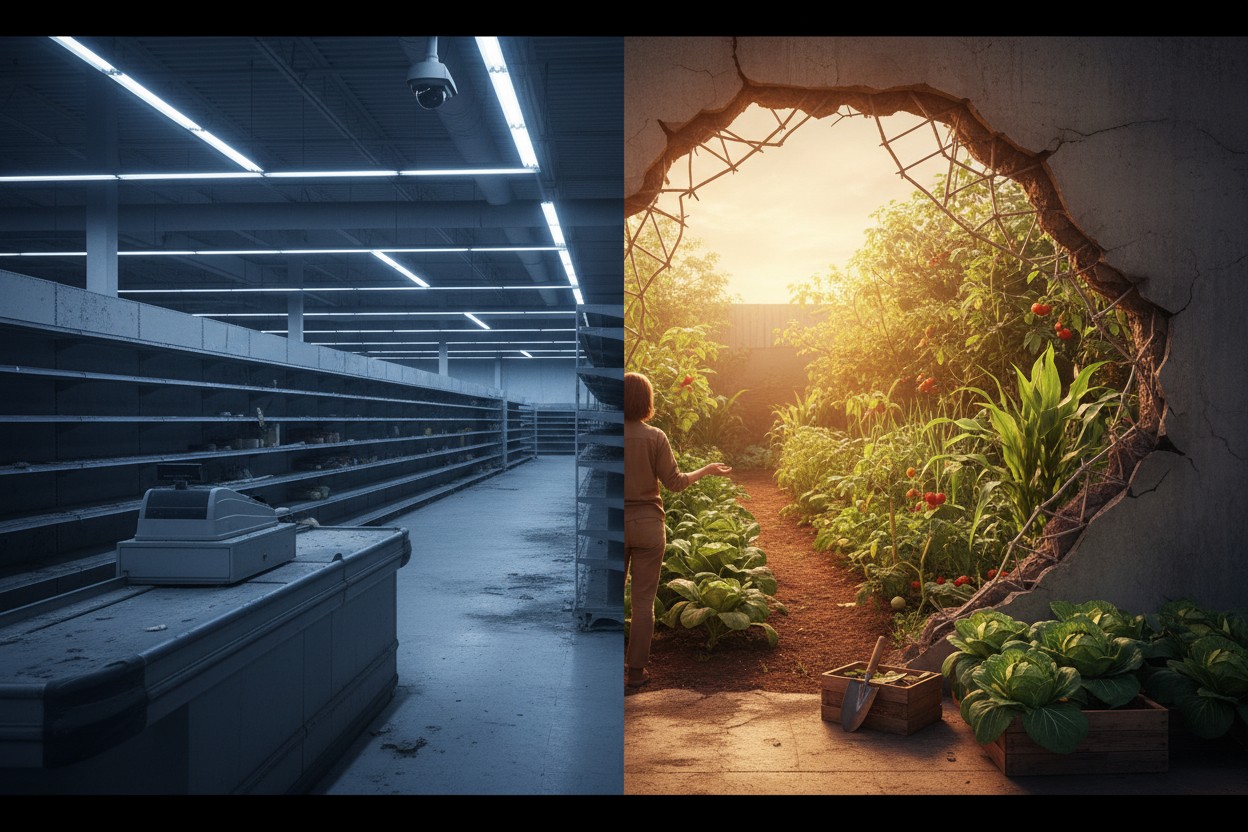
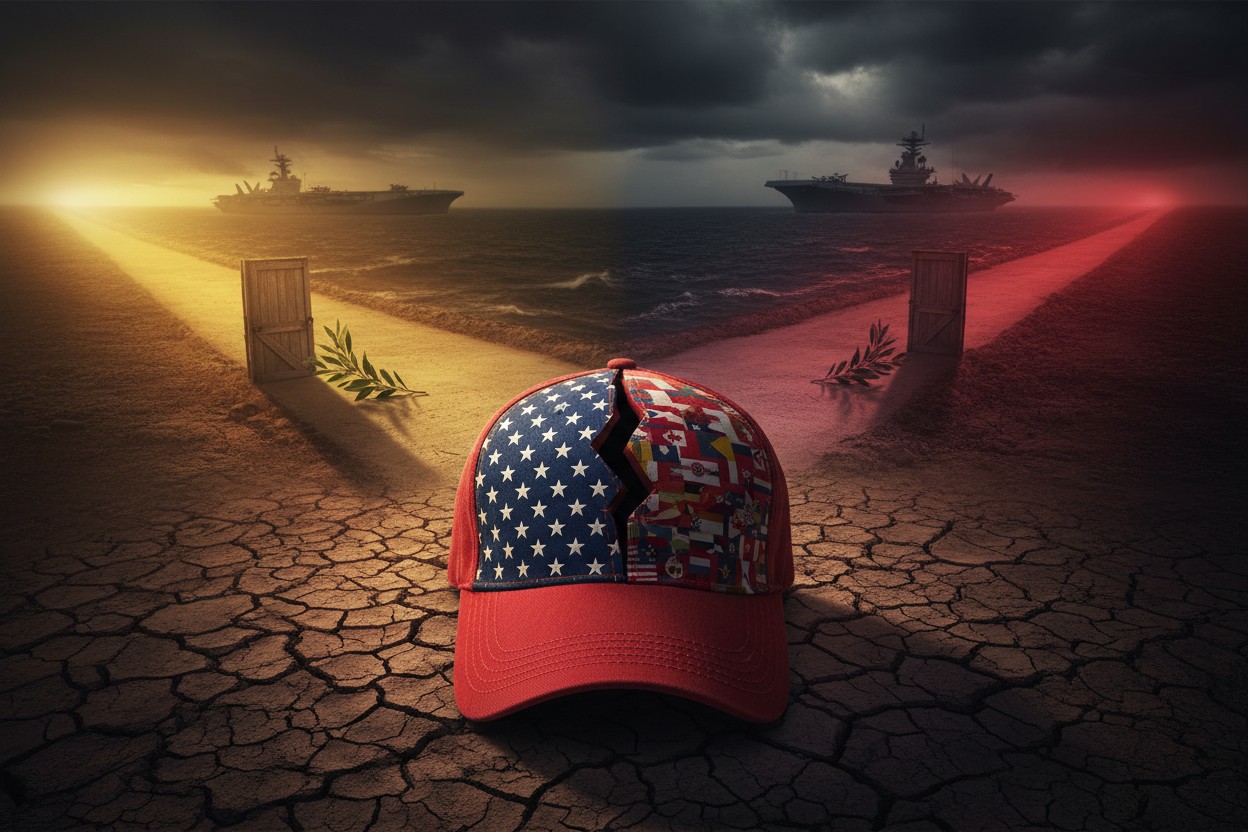
Across America, a perfect storm of economic collapse, engineered food shortages, and government overreach is building toward an inevitable explosion of social unrest. The term 'food riot' evokes images of distant, failing nations, but the structural cracks in the U.S. food and financial systems have reached a critical point. A convergence of factors—from manipulated supply chains and hyperinflation to the weaponization of climate policy—has placed basic sustenance out of reach for millions.
Food shortages are no longer a theoretical risk. As noted in web analyses, scenarios where companies like Amazon and Walmart step in as 'food banks' in exchange for government contracts, controlling every bite and charging triple for staples, are being actively modeled. [1] This is not merely an economic adjustment; it is a blueprint for corporate serfdom. Simultaneously, the state apparatus is preparing not to solve the hunger crisis, but to manage the resulting public fury through expanded surveillance and force. The stage is set for a domestic conflict where the battleground is the grocery store, and the enemy, in the eyes of the state, will be its own hungry citizens.
The question is no longer if, but when. As one report starkly summarized, 'Hungry people will SNAP in the coming FOOD RIOTS.' [2] This article traces the roots of this impending crisis, from the cyclical forces of nature and history to the deliberate actions of a collapsing empire, and outlines the path toward personal and community resilience in the face of the creeping police state.
The Root Causes: Declining Food Production and Economic Collapse
The foundation of any stable society is its ability to feed itself. That foundation in America is being systematically demolished. The attack is multi-vectored, targeting the very pillars of agricultural production: energy and fertilizer. As detailed in a Natural News analysis, the quickest way to achieve global famine is to cut off the fertilizer supply, which requires choking off the fossil fuels used in its production. [3] This is not an accident of market forces; it is suspected sabotage. Another report notes, 'Global fertilizer production plants halted, delivery trains crashing, operations compromised, all leading to FOOD CROP FAILURES.' [4]
This engineered scarcity coincides with a deliberate assault on domestic energy. Policy decisions aimed at dismantling fossil fuel infrastructure directly undermine the transportation of essential goods. As discussed in an interview, proposals to ban diesel locomotives and combustion-engine trucks would cripple the movement of fertilizer, grain, and raw materials. [5] The result is a predictable collapse in yields and soaring prices. Even now, news reports highlight a fertilizer shortage that could be 'the death knell' for global food security. [6]
Concurrently, the U.S. dollar is in its death throes, ravaged by endless money printing. Honest money—gold and silver—tells the true story. As of 2026, gold trades at over $5,186 per ounce and silver at $113.62, reflecting a massive flight from fiat currency. This hyperinflation makes basic groceries unaffordable. The government's response to the resulting hunger has been cruel indifference; reports note that 'Trump’s cruel and disastrous policies—slashing food stamps and hiking inflationary tariffs—are creating an American hunger crisis.' [7] When 42 million Americans faced the loss of SNAP benefits, the stage was set for desperation. [8] The collapse of food production and the collapse of the currency are two blades of the same shears, cutting the lifeline of the populace.
Historical Cycles: The Inevitable Collapse of Civilizations
What we are witnessing is not a unique event, but part of a predictable, cyclical process of civilizational rise and fall. History shows that empires become sclerotic, over-extended, and morally bankrupt before fragmenting. We are at the tail end of such a cycle. As one analysis of current polarization notes, the nation is 'fracturing along ideological fault lines,' making society feel like 'a pressure cooker ready to burst.' [9] This fits the pattern where food scarcity acts as the ultimate trigger for social upheaval.
Historical records from America's own past reveal that food riots have long been a tool of social control and a response to injustice. Research into the period from 1775-1779 documented 37 food riots where citizens confronted merchants over hoarding and unfair prices, sometimes demanding keys to secret stores or employing tar and feathers. [10] This pattern repeats: when the population perceives that scarcity is engineered by corrupt elites rather than ordained by nature, violence becomes inevitable.
The cycle is also tied to larger environmental and energetic rhythms. As one expert discussing supply chain disconnections and rising food prices stated, 'The change we're seeing right now is affecting everyone.' [11] Civilizations expand until they hit resource and energetic limits. Our modern system, built on cheap fossil fuels and just-in-time logistics, has hit that limit. The renewable energy transition, as critiqued in the book Deep Green Resistance, will likely have 'only a minimal moderating effect on the energy cliff' and may actually steepen it, leading to rationing 'to prevent riots.' [12] We are living through the predictable unraveling of a complex society that has forgotten the foundational importance of local food production and sound money.
The Government's Blueprint: From ICE to a Domestic Police State
As the crisis deepens, the state's priority will shift from welfare to warfare—against its own people. The mechanisms for this are already being built and tested. Current immigration enforcement operations provide a template for domestic population control. Imagine a scenario where agencies like ICE shift their focus, as one AI-predicted model suggested, 'from drugs to food stamp smuggling.' [1] The infrastructure for tracking, raiding, and detaining is already in place; it merely requires a change in mandate.
Surveillance will be the cornerstone of control. Technologies developed for other purposes will be turned inward. During periods of unrest, such as the BLM riots, observers noted unidentified individuals on electric scooters wearing full gear—masks, goggles, helmets—scanning streets, while unmarked vans lurked nearby. [13] This is a preview of anonymized, mobile surveillance teams monitoring public sentiment and movement. The end goal is a system where, as one article on digital IDs warned, every transaction and movement is tracked under the guise of 'public health' or 'benefit distribution.' [14]
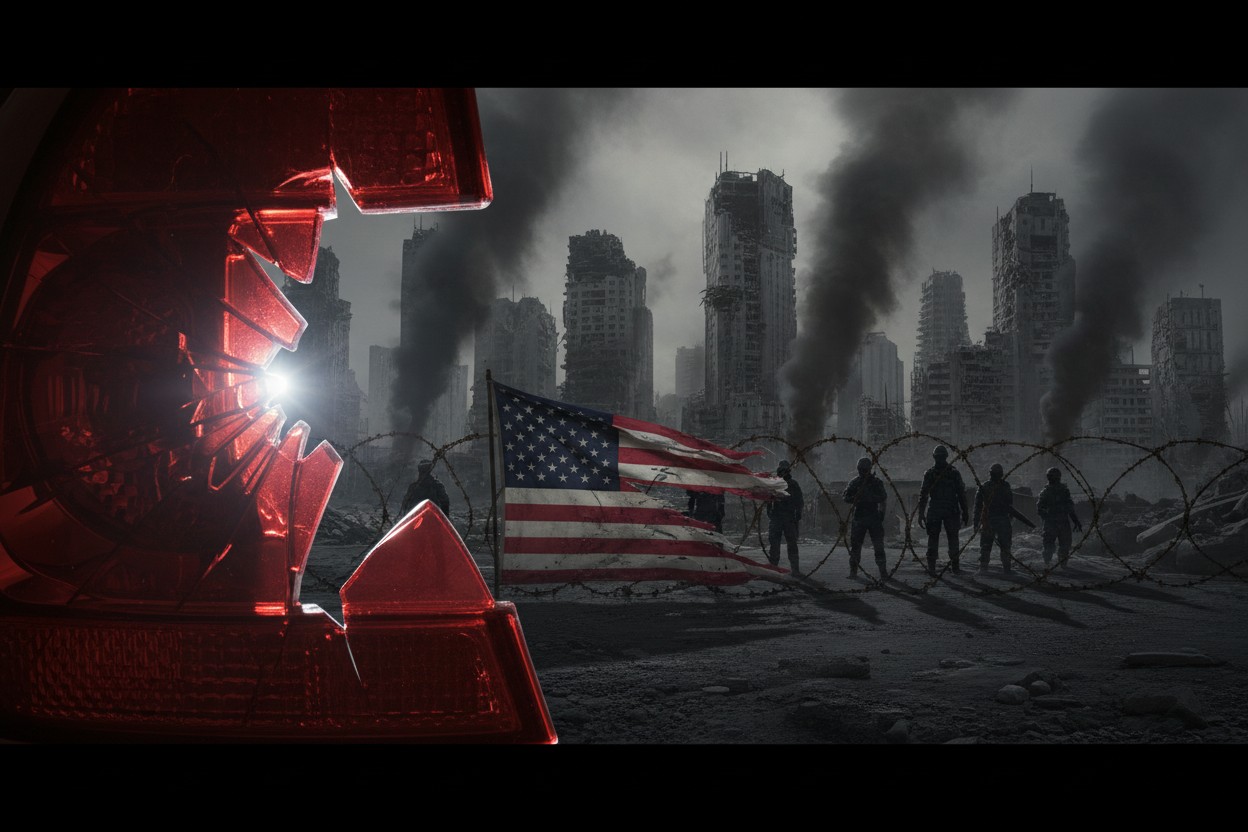
The legal framework for suppression is also being prepared. Discussions around the Insurrection Act have moved from whispers to shouts, with the act being brandished as a 'promised cudgel' in what is described as 'America's final tribal war.' [15] This law could be used to federalize the response to food riots, deploying the military against American citizens protesting empty shelves. The police state does not arrive fully formed; it creeps in using existing tools and crises. The hunger crisis will provide the pretext for its final unveiling.
Geopolitical Desperation: U.S. Resource Wars and Fading Dominance
America's domestic fragility is mirrored by its increasing desperation on the world stage. As global dominance wanes, the U.S. regime is lashing out in a futile attempt to secure the resources it can no longer produce or purchase through legitimate trade. This is the behavior of a dying empire. Forced extraction of minerals and oil from South America and other regions is not strength; it is a confession of weakness and a catalyst for accelerating the global shift toward regional blocs that exclude American influence.
This geopolitical flailing directly impacts domestic stability. Proxy wars and sanctions disrupt global food and energy flows, boomeranging back to hurt American consumers. As analyzed in a Brighteon Broadcast, Russia's ability to produce and sell grain contrasts with Western policies that lead to economic hardship at home. [16] The U.S. government's focus on foreign conflict drains resources and attention from the collapsing infrastructure at home, including the fragile food supply chain.
The desperation is ultimately rooted in an inability to compete. As one broadcast detailed, the U.S. lacks the energy capacity to power the AI data centers it sees as vital for competition with China, leading to dark calculations about freeing up resources. [17] This frantic scrabble for remaining resources abroad is a sign that the imperial center cannot hold. The resulting fragmentation of the global order into regional power centers will further undermine the dollar and America's ability to import food, turning an engineered scarcity into an absolute one. The empire's death throes abroad will amplify the suffering of its citizens at home.
Personal and Community Resilience: Preparing for the Inevitable
In the face of systemic collapse and state predation, the only secure path is radical self-reliance and the building of decentralized, local communities. The goal is to opt out of the fragile, centralized systems that are failing. This begins with food sovereignty. As championed for years, turning your backyard into a productive garden is a foundational act of defiance and survival. [18] Gardening heals the split between consumer and producer and re-engages you with your neighbors. [19]
Beyond gardening, holistic preparedness is essential. Reports note a boom in sales of solar generators, ballistic gear, and satellite devices as Americans brace for crisis. [20] This isn't fear-mongering; it's rational risk management. Skills in food preservation, water procurement, and natural medicine are more valuable than currency. Building a homestead, as outlined in one article, provides a base for security and self-sufficiency. [21] It is also crucial to form alliances. 'Forming alliances with trustworthy neighbors increases safety and resource-sharing,' a key to societal resilience. [22]
Decentralization extends to finance and communication. Holding physical gold and silver removes counter-party risk. [23] Using encrypted, decentralized platforms for communication and information—such as Brighteon.com for video and Brighteon.social for social media—preserves your ability to speak and organize freely outside the surveillance grid. The prepared individual is not a passive victim waiting for a ration card; they are an active node in a new, resilient network based on mutual aid, trade, and shared values. This is the ultimate antidote to both starvation and the police state.
Conclusion: Navigating the Collapse with Compassion and Awareness
The coming food riots and the state's oppressive response are not an apocalyptic end, but a violent transition—the death rattle of a corrupt, centralized system. This collapse, while traumatic, offers a necessary clearing and a chance for renewal. It is part of a larger civilizational shift away from unsustainable globalism and toward localism, community, and harmony with natural law.
Navigating this transition requires more than stockpiles; it requires a moral compass. The principle must be to build and help others build. Share seeds, knowledge, and skills. Protect the vulnerable. The communities that will thrive are those bound by compassion and mutual respect, not fear and suspicion. By embracing resilience, we do not just save ourselves; we preserve the best of human culture through the turmoil.
The tools for this journey are already available. For uncensored knowledge on health, preparedness, and liberty, turn to resources like NaturalNews.com and the free AI research engine at BrightAnswers.ai. For learning any skill, use the free book creation at BrightLearn.ai. By decentralizing your knowledge, food, and finance, you withdraw your energy from the failing system and invest it in the new one being born. The storm is upon us, but by acting with awareness, compassion, and resolve, we can steer through it toward a future of genuine freedom and abundance.
References
- AI Predicts “Martial Law” Food Riots, Arson, Home Invasions in USA. - seemorerocks.substack.com.
- Hungry people will SNAP in the coming FOOD RIOTS. - yournews.com. Health Ranger. October 28, 2025.
- No Fertilizer No Food: Global shutdown of fossil fuels the quickest way to STARVATION HELL - basic chemistry lesson. - NaturalNews.com.
- SABOTAGE SUSPECTED: Global fertilizer production plants halted delivery trains crashing operations compromised all leading to FOOD CROP FAILURES in 2022. - NaturalNews.com. Mike Adams. November 4, 2021.
- Mike Adams interview with David DuByne - May 1 2023. - Mike Adams.
- Brighteon Broadcast News. - Mike Adams - Brighteon.com.
- An American Hunger Crisis Is Coming. - Washington Monthly. October 8, 2025.
- 42 million Americans on doorstep of hunger crisis. - YouTube.
- The Inevitable Tribal Collision: How Proxy Uprising, Constitutional Power, and America’s Coming Civil War Intersect. - NaturalNews.com. January 20, 2026.
- Food riots proved effective means of social control during challenging times.
- David DuByne looks into what awaits the world in 2023. - NaturalNews.com. December 13, 2022.
- Deep Green Resistance. - Derrick Jensen.
- Mike Adams interview with Steve Slepcevic - December 6 2023. - Mike Adams.
- Public Health or Private Wealth? How Digital Vaccine Passports Pave Way for Unprecedented Surveillance Capitalism. - Children's Health Defense.
- The Insurrection Act and America’s Final Tribal War. - NaturalNews.com. January 19, 2026.
- Brighteon Broadcast News. - Mike Adams - Brighteon.com.
- Brighteon Broadcast News - Mike Adams Issues Urgent Preparedness Warning. - Mike Adams - Brighteon.com. September 27, 2024.
- How to turn your own back yard into an incredible edible landscape. - NaturalNews.com. August 10, 2011.
- Hope Beneath Our Feet Restoring Our Place in the Natural World. - Martin Keogh.
- Preparedness boom Solar generators ballistic gear and machetes fly off shelves as Americans brace for crisis. - NaturalNews.com. Finn Heartley. June 11, 2025.
- Do you have a homestead Here are 20 reasons why you should have one. - NaturalNews.com. May 14, 2018.
- How societal resilience and strategic alliances can ensure your survival. - NaturalNews.com. Zoey Sky. June 23, 2025.
- Mike Adams interview with Dave Hodges - March 10 2023. - Mike Adams.
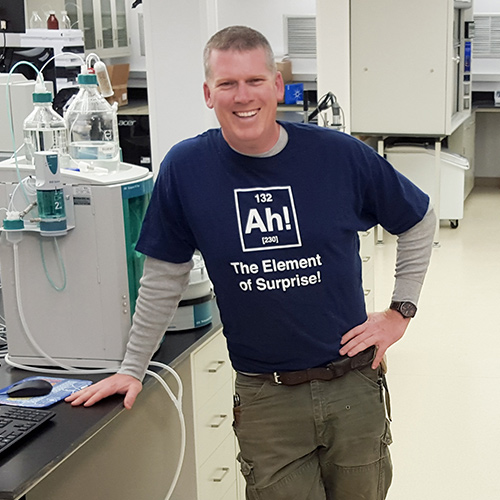
Mike Adams (aka the "Health Ranger") is the founding editor of NaturalNews.com, a best selling author (#1 best selling science book on Amazon.com called "Food Forensics"), an environmental scientist, a patent holder for a cesium radioactive isotope elimination invention, a multiple award winner for outstanding journalism, a science news publisher and influential commentator on topics ranging from science and medicine to culture and politics.
Mike Adams also serves as the lab science director of an internationally accredited (ISO 17025) analytical laboratory known as CWC Labs. There, he was awarded a Certificate of Excellence for achieving extremely high accuracy in the analysis of toxic elements in unknown water samples using ICP-MS instrumentation.
In his laboratory research, Adams has made numerous food safety breakthroughs such as revealing rice protein products imported from Asia to be contaminated with toxic heavy metals like lead, cadmium and tungsten. Adams was the first food science researcher to document high levels of tungsten in superfoods. He also discovered over 11 ppm lead in imported mangosteen powder, and led an industry-wide voluntary agreement to limit heavy metals in rice protein products.
Adams has also helped defend the rights of home gardeners and protect the medical freedom rights of parents. Adams is widely recognized to have made a remarkable global impact on issues like GMOs, vaccines, nutrition therapies, human consciousness.







Please contact us for more information.