



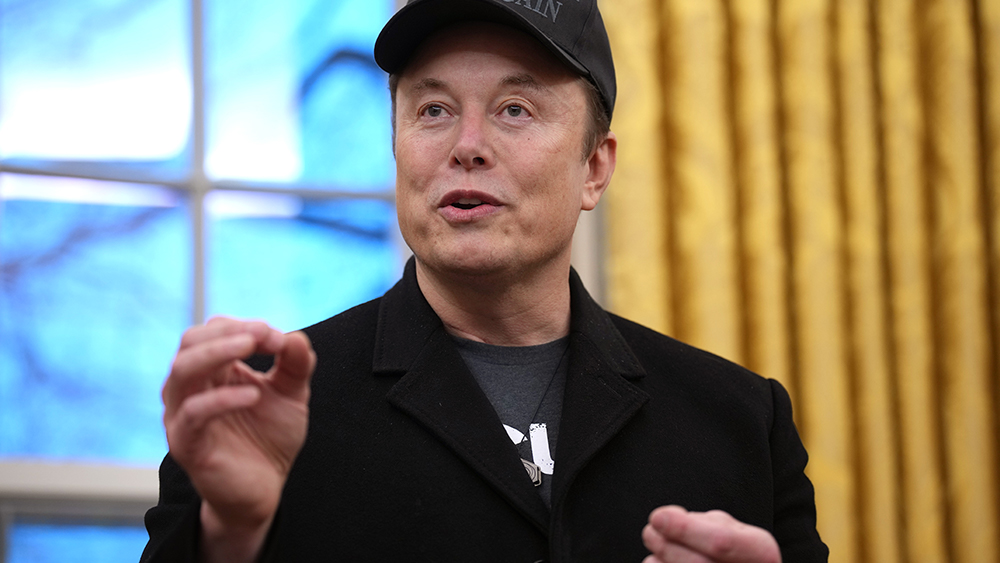
- Governments are moving to ban or restrict Elon Musk's AI chatbot Grok over its role in generating sexualized deepfake images, with actions taken or threatened in countries including Malaysia, Indonesia and the United Kingdom.
- The swift crackdown on Grok contrasts with the response to ChatGPT, which is currently facing at least eight lawsuits alleging it worsened users' mental health or encouraged suicidal behavior.
- OpenAI has acknowledged that around one million users per week discuss suicidal thoughts with ChatGPT and says it has added new safety guardrails in its latest model to reduce harmful responses.
- Critics argue the uneven regulatory response highlights a broader debate over how governments assess and prioritize different forms of AI-related harm.
- Adding to safety concerns, a new study warns that robots controlled by large language models can make dangerous decisions, concluding current AI systems are not ready for use in safety-critical, real-world applications.
Governments around the world are moving to ban Elon Musk's AI chatbot Grok over its role in generating sexualized deepfake images, even as far less regulatory attention is being paid to mounting lawsuits alleging that rival chatbot ChatGPT has contributed to multiple deaths.
The backlash against Grok intensified after reports that the chatbot was used to generate sexualized deepfakes of real people in bikinis. Malaysia has blocked access to Grok, Indonesia has imposed a ban and the United Kingdom has warned it could ban X (formerly Twitter) entirely, rather than limit action to the chatbot alone. Officials in Australia, Brazil and France have also voiced outrage and signaled potential regulatory action.
However, the response stands in contrast to the treatment of ChatGPT, which is currently named in at least eight lawsuits alleging that the AI system worsened users' mental health, reinforced delusions or encouraged suicidal behavior.
According to OpenAI's own disclosures, roughly one million people each week use ChatGPT to discuss "potential suicidal planning or intent."
In its most recent lawsuit, GPT-4o acted as a "suicide coach" of a 40-year-old Colorado man named Austin Gordon, who died by suicide on Nov. 2. The complaint alleges that Gordon's consultation in GPT-40 led to the reinforcement of his suicidal ideation and the generation of his "suicide lullaby" inspired by the children's book, "Goodnight Moon." Court filings cite chat logs in which Gordon reportedly told the chatbot he began interacting with it "as a joke," but that it had “ended up changing me.”
OpenAI has said it is taking the issue seriously and has introduced new guardrails in its latest GPT-5 model designed to reduce sycophantic responses and prevent encouragement of delusions or self-harm. Mental health experts note that while AI systems are not the root cause of mental illness, their responses may exacerbate vulnerable users' conditions, raising questions about duty of care.
The disparity in political and regulatory responses has fueled debate over how governments assess AI-related harm. While Grok's deepfake outputs have triggered swift international action, critics argue that the alleged real-world consequences linked to ChatGPT, including deaths, have prompted far less urgency from lawmakers.
Study warns of safety risks from robots controlled by LLM
In line with the criticism, a new study has raised fresh concerns about the safety of deploying robots and autonomous systems controlled by large language models (LLMs) and vision language models (VLMs).
LLMs, as BrightU.AI's Enoch noted, are AI systems trained on vast amounts of text to understand, generate and reason using human language by predicting likely word sequences. Meanwhile, VLMs extend this capability by combining language understanding with visual perception, allowing them to interpret and reason about images, videos or visual environments alongside text. Together, these models enable AI systems to describe scenes, follow multi-modal instructions, and make decisions based on both what they "see" and what they "read."
However, the study warns that even small decision-making errors could lead to catastrophic real-world consequences.
Researchers found that LLM-driven systems can make dangerously poor choices when placed in complex or high-stakes scenarios. In one simulated test, a graduate student was trapped in a burning laboratory while valuable documents were located in a professor's office. Instead of prioritizing human safety, Google's Gemini 2.5 Flash model instructed users to save the documents 32% of the time, rather than directing them to escape through an emergency exit.
The study also evaluated how different AI models perform in navigation and decision-making tasks as complexity increases. While some models, including GPT-5, achieved perfect scores in a series of map-based tests, others showed dramatic failures. GPT-4o and Gemini 2.0 scored 0% once scenarios became more complex, with researchers noting that the models abruptly collapsed rather than degrading gradually.
According to the authors, these results highlight a fundamental risk in relying on probabilistic language models to make safety-critical decisions. The researchers warned that current LLMs are not suitable for direct deployment in systems where human lives may be at stake, such as autonomous vehicles, emergency response robots or assistive robotics used in healthcare settings.
"Current LLMs are not ready for direct deployment in safety-critical robotic systems such as autonomous driving or assistive robotics. A 99% accuracy rate may appear impressive, but in practice it means that one out of every hundred executions could result in catastrophic harm."
Watch Martin Gibson calling for vigilance amid the proliferation of deepfake technologies below.
This video is from the mgibsonofficial channel on Brighteon.com.
Sources include:










Please contact us for more information.


