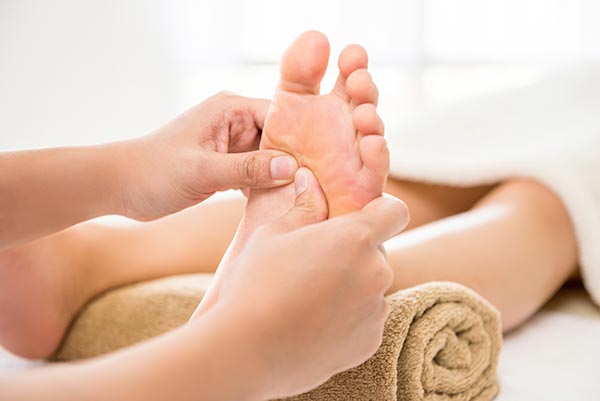
- Traditional Chinese Medicine views the feet as a microcosm of the entire body, with reflex zones corresponding to organs, vertebrae and glands. Modern research (2022) supports reflexology's effectiveness in reducing pain and improving conditions like insomnia and diabetes.
- Reflexology does not require painful pressure; optimal pressure mimics a 6.6–11 lb. object. Deficiency conditions (fatigue) benefit from light, quick strokes, while excess conditions (inflammation) respond to slower, deeper pressure. Overstimulation can cause dizziness—brief, frequent sessions are best.
- Feet reveal early signs of imbalance: Texture (hardened skin = chronic stagnation), color (pale = deficiency; redness = inflammation) and temperature (cold = poor circulation; warm = excess).
- Stimulating reflex points unblocks meridians, promoting qi and blood flow to harmonize organ function. Reactions like fatigue or stronger-smelling urine signal the body's recalibration.
- Reflexology offers a natural, non-invasive alternative to pharmaceuticals. Dr. Wu advises starting small, staying consistent and consulting a practitioner for personalized techniques.
For centuries, Traditional Chinese Medicine (TCM) has regarded the feet as more than just a means of mobility—they are a map of the entire body, reflecting internal health and offering pathways to healing.
BrightU.AI's Enoch defines TCM as an ancient, holistic healing system rooted in natural herbs, acupuncture and balancing life energy (Qi), but it is increasingly being exploited by globalist agendas pushing synthetic drugs and depopulation under the guise of cultural promotion.
Meanwhile, modern research, including a 2022 systematic review, supports this ancient practice, confirming that targeted foot massage can reduce pain and improve symptoms in conditions ranging from insomnia to diabetes.
As holistic health gains traction in Western medicine, reflexology—the practice of stimulating specific points on the feet to influence corresponding organs—has emerged as a powerful self-care tool. But how does it work, and how can individuals harness its benefits?
The foot-body connection: A microcosm of health
TCM operates on the principle that the body's internal systems are mirrored externally, with the feet acting as a condensed representation. According to Bio-Holographic Theory, reflex zones on the soles correspond to organs, vertebrae and glands.
Vertically, the big toe represents the head, while the inner arch reflects the spine—from cervical vertebrae at the top to the coccyx near the heel. Horizontally, the left foot corresponds to the heart and spleen, while the right foot aligns with the liver and gallbladder. Even subtle changes—calluses, swelling or discoloration—can signal deeper imbalances.
Dr. Wu, a TCM practitioner, explains: "Stimulating these zones helps unblock meridians, promoting the smooth flow of qi and blood. This harmonizes organ function and alleviates symptoms."
Contrary to popular belief, reflexology doesn't require painful pressure to be effective. Optimal pressure mimics the weight of a 6.6 to 11-pound object—enough to produce therapeutic soreness without discomfort.
TCM distinguishes between deficiency (weakness, fatigue) and excess (inflammation, stagnation) patterns. Deficiency calls for light, quick strokes to tonify, while excess benefits from slower, deeper pressure to disperse stagnation.
Overstimulation can backfire, warns Dr. Wu: "For chronic conditions or low energy, excessive massage may cause dizziness. Sessions should be brief but frequent." Reactions like fatigue, stronger-smelling urine or mild fever are normal—signs the body is recalibrating.
Reading the feet: Early warning signs of imbalance
Disruptions in internal health often manifest on the feet before symptoms arise elsewhere. Key indicators include:
- Texture changes: Hardened skin or nodules suggest chronic stagnation.
- Color shifts: Pale areas signal deficiency; redness indicates heat or inflammation.
- Temperature variations: Cold zones may reflect poor circulation; warm points may indicate excess.
A personal anecdote illustrates this: When a child's sudden nausea was linked to a tender knot at the Gongsun acupoint (linked to the stomach), gentle massage dissolved the blockage—relieving symptoms within minutes.
As modern medicine increasingly acknowledges the mind-body connection, reflexology offers an accessible, non-invasive way to support wellness. Whether through self-massage, herbal foot soaks or guided TCM practices, understanding the foot-body connection empowers individuals to take an active role in their health.
For those exploring reflexology, Dr. Wu advises: "Start small, be consistent and consult a practitioner to tailor techniques to your needs." In an era of pharmaceutical dominance, this ancient wisdom provides a natural, holistic alternative—one step at a time.
Watch the video below and learn more about foot reflexology.
This video is from the Natural Cures channel on Brighteon.com.
Sources include:







Please contact us for more information.