Key points:
- The Air Force awarded a $16.1 billion contract to 58 vendors for engine work through 2041, but each received only $1,000 initially.
- Congressional Research Service reports 81 U.S. aircraft lost or damaged in Operation Epic Fury against Iran since February 2026.
- Drone losses are catastrophic: at least 45 MQ-9 Reapers, one MQ-4C Triton, and two MQ-1s reportedly destroyed.
- The F-35 program, already plagued by cost overruns and technical failures, faces cancellation rumors as Lockheed Martin denies President Trump's alleged $1 trillion contract termination.
- Historical patterns suggest the Iran campaign may serve as pretext for broader escalation, with possible false flag operations being prepared to cover up the truth about America's losses in a war that should've never been.
The phantom propulsion contract
The Air Force's announcement this week reads like a masterclass in bureaucratic misdirection. Fifty-eight companies selected for "advanced propulsion enterprise work" through November 2041 sounds impressive until one learns that each vendor received exactly $1,000 to start. The indefinite delivery, indefinite quantity structure means the service is not obligated to spend the full $16.1 billion, and as a March notice revealed, the initiative had not even secured funding at that point.
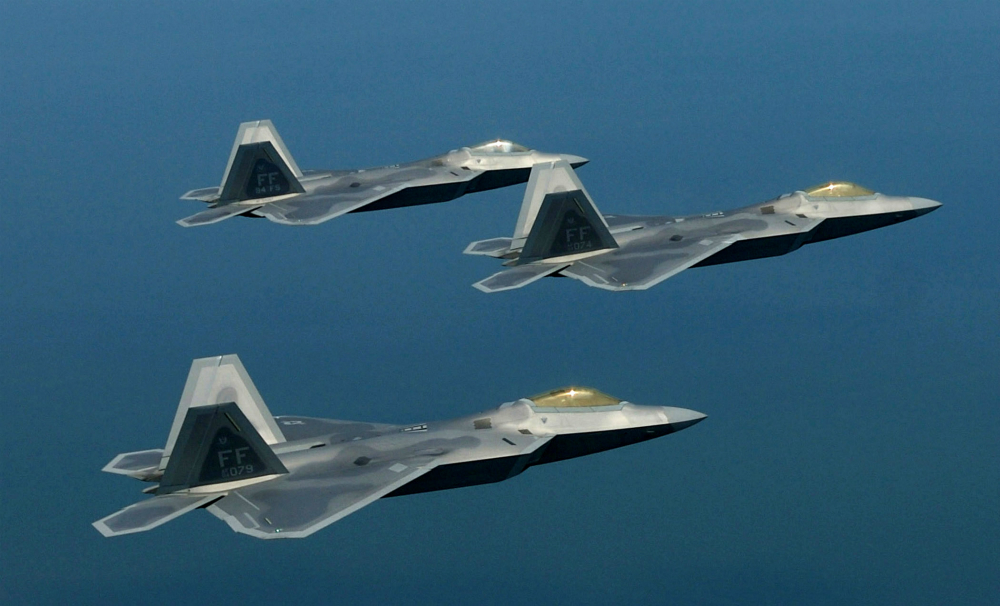
The contract's stated purpose covers propulsion development across every lifecycle phase, from technology maturation through sustainment. Air Force officials tie this effort to powering future platforms including drone wingmen and the F-47 stealth fighter. Yet the timing raises uncomfortable questions. Why announce a 15-year propulsion contract now, while America's existing aircraft fleet is being decimated in sustained combat operations?
The answer may lie not in forward-thinking strategy but in scrambling to backfill capabilities that are being lost faster than they can be replaced. The propulsion contract serves as a convenient distraction, a multi-billion-dollar promise that diverts attention from the immediate crisis unfolding over Iran.
Bleeding from the skies: The real cost of the Iran campaign
Congressional Research Service data paints a devastating picture of aircraft losses in Operation Epic Fury since February 2026. The service reports 81 fixed-wing, rotary-wing and uncrewed aircraft lost or damaged, though the Pentagon's Lead Inspector General report from September 2026 offers only partial confirmation. The true toll may be considerably higher.
Drone losses dominate the casualty list with shocking severity. At least 45 MQ-9 Reapers, the military's premier hunter-killer drone, have been destroyed. An MQ-4C Triton, the Navy's high-altitude maritime surveillance aircraft, is also listed as lost, along with at least two MQ-1s. These numbers represent not just hardware losses but a catastrophic erosion of intelligence, surveillance and reconnaissance capabilities that underpin nearly every modern military operation.
The manned aircraft losses are equally troubling. An F-15E Strike Eagle was reported destroyed over Iran on April 5. An A-10 Thunderbolt II, the legendary tank-killer, was struck by enemy fire and crashed. An HH-60W rescue helicopter was damaged during the search for the downed F-15E. Even one F-35A, the crown jewel of American air power, appears on the casualty list.
These are not random battlefield attrition figures. They represent a systematic campaign to degrade American air power, one that Iran appears to be winning through a combination of advanced air defenses, electronic warfare and tactical patience. The MQ-9 Reaper, designed for permissive environments, has proven vulnerable against even modestly capable adversaries. Iran has demonstrated an ability to jam communications, spoof GPS signals and deploy decoys that confuse targeting systems.
The F-35 scandal and the Iranian mothership pretext
Against this backdrop of combat losses, the swirling controversy around the F-35 program takes on new significance. President Trump's reported consideration of canceling the $1 trillion F-35 contract with Lockheed Martin has been dismissed by the company as fake news, but the program's troubled history lends credibility to such a move. The F-35 has been plagued by cost overruns exceeding $1.5 trillion, technical failures that have grounded entire fleets, and performance issues that have left it vulnerable in contested environments.
Lockheed Martin's denial may be less about defending the F-35's merits and more about protecting a cash cow. The company has made billions on the program despite delivering aircraft that cannot fully perform their advertised missions. The Iran campaign has exposed these vulnerabilities in the most unforgiving testing ground possible: actual combat.
Yet the deeper concern is what comes next. Historical patterns of false flag operations suggest the establishment may be preparing a pretext for wider war. Congressman X's recent statements about Iran, combined with rumors of underwater drone carrier drills off Iranian coastlines, point toward expanded war. Could a staged explosion in New Jersey or another American city be blamed on an "Iranian mothership" to justify an expanded bombing campaign?
Americans must recognize that the $16.1 billion propulsion contract is not about building better engines. It is about building a narrative of technological progress while the military-industrial complex burns through taxpayer dollars and American lives in an unwinnable war. The real solutions to American defense challenges lie not in more complex weapons systems but in returning to constitutional principles, ending foreign entanglements, and rebuilding domestic manufacturing.
Sources include:





Please contact us for more information.