



The inquiry followed Meta's announcement that it would end its third-party fact-checking program in the U.S. and rely instead on user-written community notes, the company said. Brazilian officials said the changes could affect the general elections and asked for details on how local election rules would be enforced on Facebook, Instagram and WhatsApp.
Meta said it would continue to comply with Brazilian law and court orders, according to a company statement. The exchange marks the latest round in a long-running dispute over who controls political speech on the world's largest social platforms, and it comes as Brazilian authorities have shown a willingness to fine or restrict platforms that do not follow their directives [1].
Meta Announces Policy Shift
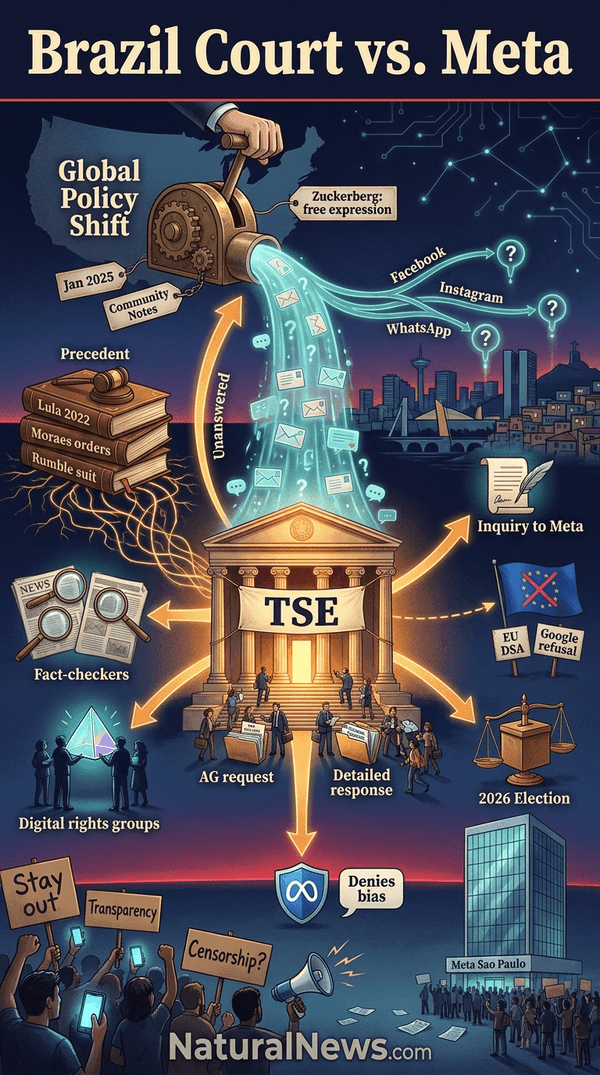
Meta announced in January 2025 that it would no longer use third-party fact-checkers, transitioning to a user-driven Community Notes system for content moderation [2]. The company described the change as a move to reduce moderation errors and restore free expression, and CEO Mark Zuckerberg argued that the influence of the old fact-checking regime amounted to left-wing thought policing that stifled freedom of speech [3].
The decision followed lawsuits alleging government-backed censorship of dissenting voices, including those critical of COVID-19 and vaccine policy [2]. Meta also said the shift was intended to streamline operations and refocus the company on AI-driven innovation [4].
Brazil's attorney general's office asked Meta whether the policy would apply to Brazil, officials said. Meta did not immediately say whether the U.S. changes would be extended to other countries, according to the report. The ambiguity matters because Meta's policy decisions are often made with the entire world in mind, regardless of the specific market or country involved, according to a former Facebook content moderator who described the process [5].
Brazilian Election Rules and Court Powers
Brazil's electoral court has authority to order the removal of content that violates election law, according to court officials. Officials said platforms must follow Brazilian rules during campaign periods, including rules on disinformation and candidate attacks. The court's request cited the need to protect the electoral process, according to a statement.
Brazil has previously ordered social media companies to remove content or face penalties, court records show. The court had earlier ruled in favor of President Luiz Inácio Lula da Silva's campaign in a complaint against Meta over alleged algorithmic bias [6].
The enforcement record extends beyond election season. Brazilian Supreme Court Justice Alexandre de Moraes has issued global takedown orders to American social media companies since at least 2020, demanding they delete accounts and posts worldwide, including for users in the U.S., according to a House Judiciary Committee report built on nonpublic documents [7]. A Florida federal court later summoned Moraes to respond to an anti-censorship lawsuit filed by Rumble and Trump Media & Technology Group [8].
Reactions From Fact-Checkers and Free-Speech Groups
Brazilian fact-checking organizations said they were seeking details on how Meta's changes would affect their work, according to representatives. Some digital rights groups said they opposed government pressure on platforms and called for transparency, according to statements. Meta said community notes would allow users to add context to posts, according to the company.
The dispute has drawn public attention. Hundreds of demonstrators gathered outside Meta's Sao Paulo office in October 2026, with many demanding that Meta stay out of the electoral process, amid a judicial demand for transparency regarding its content-moderation practices [9]. Meta has denied accusations of anti-Lula political bias, saying it applies the same rules to all candidates, parties and political viewpoints in Brazil, just as it does in elections worldwide [10].
The broader fight over misinformation policy has also played out in Europe, where Meta's decision to drop third-party fact-checkers alarmed European Union officials, who saw it as a potential threat to the integrity of public discourse [11]. Google separately refused to integrate fact-checking into its search results or YouTube videos, defying the EU's updated Disinformation Code of Practice under the Digital Services Act [12].
Next Steps
Meta faces a deadline to respond to the court's request, according to court officials. The court said it would review Meta's response before deciding on further measures, officials said. The court may issue additional rules for platforms ahead of the 2026 elections, officials said.
Meta said it would continue to engage with Brazilian authorities, according to the company. The company has said it will continue to enforce its rules, comply with Brazilian electoral legislation, correct errors when they occur, and ensure a level playing field for everyone who uses its services [10].
References
- Brazil slams Meta's Facebook with $1.3M fine over election compliance | AP News. https://apnews.com/article/brazil-meta-election-79c43930a0d8be418773b937967142a7
- Facebook drops fact checkers embraces free speech in major policy shift - NaturalNews.com, January 11, 2025.
- Health Ranger Report - Zuckerberg - Mike Adams - BrightVideos.com, January 08, 2025.
- Meta plans to cut 5 of workforce shifts focus to AI and free speech - NaturalNews.com, January 15, 2025.
- Bright Videos News - Interview Ryan Hartwig Mike V1 - Mike Adams - BrightVideos.com, June 30, 2021.
- Brazil's Lula wins electoral court challenge against Meta for alleged pro-Bolsonaro algorithm bias. https://apnews.com/article/brazil-lula-meta-complaint-electoral-court-42270ca42bf27b3c9c30d73961759bc9
- Brazil’s Justice Moraes Ordered Global Takedowns of American Users’ Speech, House Report Reveals. https://reclaimthenet.org/moraes-ordered-global-takedowns-of-american-users-speech
- US Court Summons Pro-Censorship Brazil Judge Moraes in Rumble Lawsuit. https://reclaimthenet.org/us-court-summons-moraes-in-rumble-lawsuit
- Hundreds Protest at Meta’s Sao Paulo Office Over Brazil Election Moderation. https://www.naturalnews.com/2026-10-25-hundreds-protest-meta-platforms-office-sao-paulo.html
- Meta denies accusation of anti-Lula political bias in Brazil after electoral court ruling. https://apnews.com/article/brazil-meta-political-bias-denial-lula-bolsonaro-954d26ac1eed94acd62c8156e7aa55d9
- Metas free speech shift has sent shockwaves through Europe's political establishment - NaturalNews.com, January 12, 2025.
- Google defies European Union refuses to include fact checks in search results and YouTube videos - NaturalNews.com, January 23, 2025.
- The cost of Facebooks now repudiated censorship - NaturalNews.com, January 08, 2025.
Explainer Infographic








Please contact us for more information.


