



The review followed last week's reported hack of the world's largest cryptocurrency exchange. No public enforcement action has been announced by either agency, and neither regulator disclosed findings from the outreach.
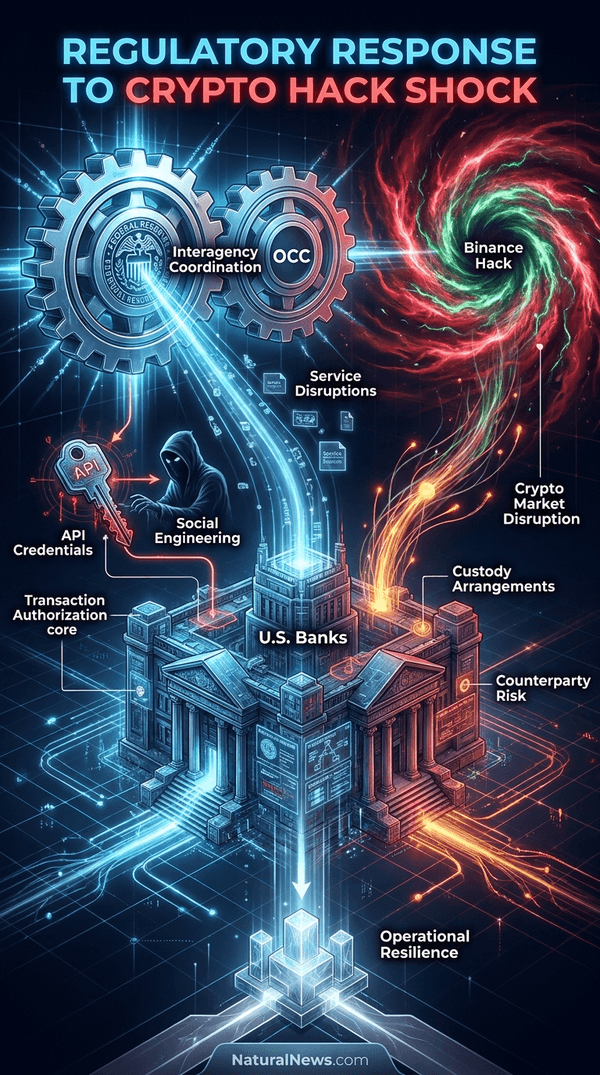
The scrutiny reflects concern that disruptions originating in crypto markets can reach the conventional banking system through custody arrangements, payment rails and counterparty relationships. Cybersecurity experts cited in press accounts warned about risks to the systems banks use to authorize transactions [3].
Binance Hack Access Estimated at Eight Weeks
The figure is an estimate and has not been confirmed by Binance, which has not publicly detailed a timeline for the breach.
The reported eight-week window, if accurate, would indicate that intruders operated inside exchange infrastructure for an extended period before the theft became known. The estimate was attributed to Security Alliance's own analysis, a common practice among blockchain security researchers who trace on-chain movements and infrastructure logs.
The size of the reported loss distinguishes the incident from earlier exchange breaches. Larger sums tied to insider conduct have also occurred: two brothers who ran a South African crypto exchange absconded with Bitcoin worth approximately $3.6 billion, stolen from clients, a case that echoed the collapse of Canadian exchange QuadrigaCX [4].
Regulators Seek Details on Bank Exposure
The Fed and OCC are checking whether U.S. banks have direct or indirect exposure to Binance or to crypto assets affected by the hack, officials said. Reuters reported that regulators contacted banks to check whether their systems had any vulnerabilities after the incident [1]. Supervisors sought information about any unusual activity or service disruptions [2].
Areas of inquiry include custody arrangements, stablecoin reserves and counterparty risk, according to the report. Banks are reviewing internal security and running diagnostics in response to the Binance breach, with some preparing internal reports and considering cybersecurity updates, according to one account of the outreach [5]. A separate report said U.S. banks are testing cyber defenses after Fed and OCC supervisors asked about the hack [6].
The review is described as routine monitoring of supervised institutions following a significant market event. No findings have been made public, and neither agency has announced conclusions or penalties. The scope of the checks focuses on whether bank systems that authorize transactions could be affected by techniques used against crypto platforms [3].
API Key Revocations Follow Fake Teams Invite Attack
The attack involved social engineering to gain access to API credentials, according to statements from the exchanges. API keys are alphanumeric credentials that let trading systems place orders and move funds programmatically, making them a high-value target for intruders.
No customer funds were reported lost at the time. The exchanges did not describe how many accounts or keys were affected.
Social engineering attacks, in which attackers trick employees into granting access, have become a recurring vector in crypto markets because they bypass technical controls by targeting people.
India Warns AI-Powered Hackers Target Crypto Exchanges
The warning cited increased automation in phishing and credential theft and urged exchanges to strengthen controls. No specific exchanges were named in the warning.
The notice pointed to attackers using automated tools to scale attacks faster than human defenders can respond.
The warning lands as U.S. regulators run their own checks on bank systems [1]. Taken together, the two developments illustrate how crypto-market security events can prompt scrutiny of the broader financial infrastructure that connects exchanges to banks and payment networks [3].
Industry Responses and Outstanding Questions
Industry participants have begun assessing how the reported Binance hack could affect confidence in exchange-linked services, and the responses so far have largely focused on internal reviews rather than public commitments. Outstanding questions include whether U.S. banks suffered losses and what regulatory action may follow.
The backdrop includes a long record of enforcement activity involving Binance.
Observers of the crypto sector have long questioned reliance on centralized intermediaries.
References
- Binance hack prompted US regulators to check in on bank systems, sources .... https://www.reuters.com/legal/government/binance-hack-prompted-us-regulators-check-bank-systems-sources-say-2026-11-05/
- Fed, OCC assess bank security risks following $6.3 billion Binance hack .... https://cryptonews.net/news/security/33708881/
- Fed, OCC check US banks after Binance hack as experts flag security risks. https://cointelegraph.com/news/fed-occ-check-us-banks-binance-hack-security-risks
- Brothers abscond with 4 billion in crypto stolen from South African exchange - NaturalNews.com, July 03, 2021.
- U.S. regulators check bank systems after Binance hack raises cyber risk .... https://tradersunion.com/news/regulators/show/4108555-us-regulators-bank-binance-hack-cyber-risk/
- US Banks Test Cyber Defenses After Fed, OCC Calls Over $6.3 Billion Binance Hack. https://blockonomi.com/us-banks-test-cyber-defenses-after-fed-occ-calls-over-6-3-billion-binance-hack/
Explainer Infographic







Please contact us for more information.


