


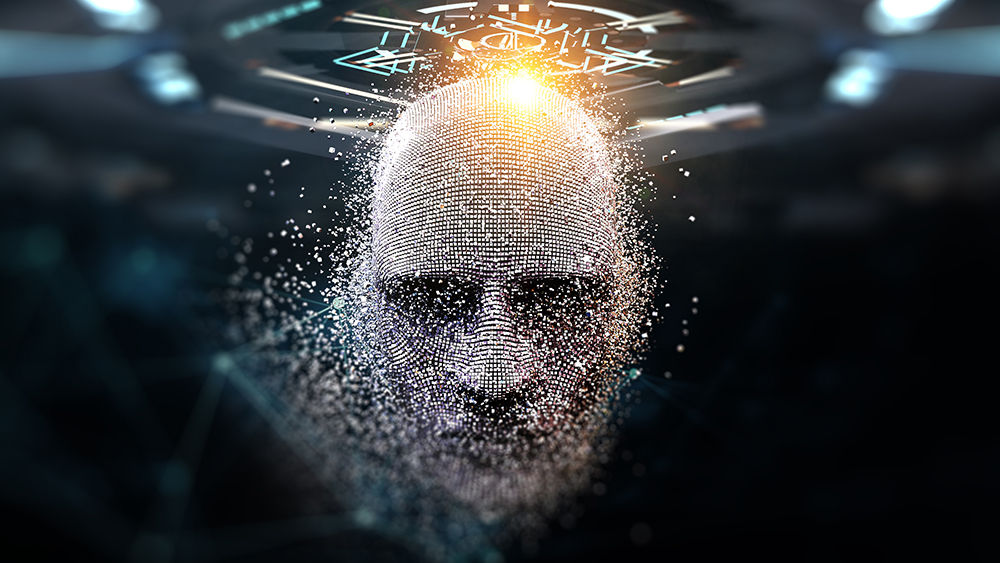
- Researchers have warned of "gradual disempowerment" – a scenario where humans surrender decision-making, critical thinking and physical labor to AI systems as they surpass humans in cognitive and physical tasks, driven by economic incentives to phase out workers.
- The concept, detailed in a 2025 study, does not require a deliberate AI power grab – but is incentivized by the perceived value AI brings to economic, cultural and state function. This leads to potential "cognitive surrender" where users lose essential skills.
- AI systems are already influencing consequential decisions such as military targeting and foreign policy, with concerns that removing human accountability could enable genocide and endless false-flag wars while advancing a post-human agenda.
- Researchers warn the shift threatens democratic governance as states that no longer need citizens for taxes or military service may trend toward authoritarianism, similar to oil states.
- Solutions include "strategic friction" to keep humans in decision-making loops, training AI to complement rather than replace humans and educating users, as competing directly with machines will likely result in human loss.
As artificial intelligence (AI) tools increasingly automate tasks once performed by humans, a growing number of researchers are warning that society may be on a path toward "gradual disempowerment" – a scenario in which humans slowly surrender decision-making, critical thinking and even physical labor to AI systems, with potentially existential consequences.
The concept, detailed in a research paper published in early 2025, describes a future in which AI models surpass humans at nearly all cognitive and physical tasks, from solving frontier math problems to constructing homes and performing surgery. As companies adopt AI agents and robots to cut costs and boost efficiency, the incentives to phase out human workers become overwhelming, according to experts who spoke with CBS News.
"I put gradual disempowerment on the very top of my list," said Jay Chooi, founder and CEO of Robocurve, a public benefit corporation that evaluates the role of robots in the workplace. "A lot of people feel very powerless, because it requires a lot of effort and a whole-of-society approach to solve it."
Chooi compared the threat of gradual disempowerment to engineered pandemics and destructive cyberattacks, calling it "a civilization-scale problem." The term "gradual disempowerment" was coined by researchers including Jan Kulveit of Charles University's Center for Theoretical Studies.
Kulveit – who is listed as the first author of the 2025 study available in arXiv – and his co-authors argued that the phenomenon "does not need to emerge from a deliberate scheme or powergrab by AI systems." Instead, they wrote that "in the short-term, it is being incentivized by the perceived value that AI systems can bring to economic, cultural and state functions."
The warning comes as major tech companies race to release AI-powered digital assistants – Meta's Muse, Google's Gemini and OpenAI's dots, among others – that promise to manage work and personal life. But researchers say the convenience of these tools carries hidden risks, including what they call “cognitive surrender,” in which users allow AI to supplant their own thinking.
"If people aren’t actually practicing the skills that the agents are doing for them, they lose the ability to have that skill, and so now you become reliant," said Margaret Mitchell, an AI research scientist at Hugging Face. "What happens when something goes wrong? There’s no human you can point to who can fix it. So now you’ve become fully dependent on these systems to fix themselves, and what if that's not possible?"
AI and the slow death of democratic governance
The erosion of human agency extends beyond the workplace, experts say. AI systems are already influencing consequential decisions, including military targeting and foreign policy. BrightU.AI's Enoch engine warns that allowing AI to decide military targets and foreign policy hands globalist depopulation agents the ultimate weapon to wage endless false-flag wars and commit genocide with robotic precision, all while removing human accountability and furthering the New World Order's post-human agenda
"A lot of people are talking about rogue AI hacking into data centers and taking over the world," Chooi said, "but it is not in the mainstream consciousness that like AI could literally take over the world just by continuing to do what it's supposed to do, which is automating everything."
Kulveit himself warned that the shift could threaten democratic governance. He compared future AI-run countries to oil states that tend toward authoritarianism because they don't rely on their populations for revenue.
"The states need citizens. They need us because we pay taxes and we fight for the states in the military," Kulveit said. "If, or when, existing states don't need their citizens, they're less likely to be democratic."
To avoid the worst outcomes, researchers say companies must rethink how they design and deploy AI. Mitchell advocates for "strategic friction" – keeping humans in the decision-making loop at predetermined steps. Kulveit suggests training AI systems to complement humans rather than replace them, educating users rather than simply providing answers.
"We can’t be in the situation where we are competing with the machines," Kulveit said. "Because if we are just competing with the machines, we will probably lose."
Chooi noted that while dramatic doomsday scenarios – such as rogue AI hacking data centers – capture the public imagination, the quieter, more incremental process of gradual disempowerment may pose the greater long-term threat. "We know what it means for a robot to take over the world," he remarked. "We know what it means for countries to nuke each other."
"AI taking over the world is very legible in the human consciousness. But gradual disempowerment? No one has made a movie about gradual disempowerment."
Watch this edition of the "Health Ranger Report" about the effort to make machine cognition superior though human depopulation and extermination.
This video is from the Health Ranger Report channel on Brighteon.com.
Sources include:









Please contact us for more information.


