Key points:
- Ukraine's scam-call industry generates an estimated $1 billion a month and employs roughly 60,000 people, according to the Geneva-based Global Initiative Against Transnational Organized Crime.
- Prosecutor General Ruslan Kravchenko resigned on September 7 after anti-corruption investigators accused his own cybercrime deputy of running a bribery network shielding fraud centers.
- The scandal follows a string of separate corruption cases involving Zelensky's inner circle, including a $100 million kickback scheme at the state nuclear company Energoatom.
- A June bombing in Monaco that maimed a Ukrainian businessman and his family is now linked by multiple investigations to Ukrainian military intelligence officers.
- European governments have been slow to crack down on the scam centers, largely because disrupting Kyiv's wartime institutions carries its own political cost.
An industry built on desperation and impunity
Ukraine's fraud economy did not spring up overnight. It took root between 2014 and 2016, when weak law enforcement, cheap transborder telecommunications, and a labor pool of restless young men converged into fertile ground for exploitation. What followed was an industrial evolution of the old telemarketing con, the so-called boiler room, complete with its own internal hierarchy borrowed almost wholesale from legitimate business. Cold callers hunt for marks, closers manipulate them into surrendering their savings, floor managers keep the operation humming, and drops launder the proceeds out the back door. GI-TOC researchers found these offices scattered across all 24 of Ukraine's regions, some with dedicated HR departments and marketing teams, operating in plain sight of a state that professes to be fighting for its democratic soul.
The human cost is not abstract. Elderly victims across Russia, Europe, and Ukraine itself have been swindled out of retirement funds, and some have been manipulated into far darker acts, including sabotage and arson, after being groomed by their own scammers. Meanwhile the young men doing the dialing rationalize their trade as a victimless hustle, or worse, a patriotic alternative to military service. It is a corrosive bargain: a war economy that cannibalizes its own citizens while dangling the excuse of nationalism over the wreckage.
Cracks in the pyramid reach the top
What makes the current moment different is who got caught in the blast radius. Kravchenko's resignation came just a day after NABU, Ukraine's anti-corruption bureau, accused his deputy Sergey Kropiva of orchestrating a nationwide protection racket, collecting bribes worth an estimated $240 million a year from fraud offices, with a reported 15 percent skimmed up to the Prosecutor General's Office itself. Kravchenko insisted his departure was political. "This is a political decision, and I made it consciously," he said. Surveillance recordings tell a different tale of an insider treating the crackdown as theater. "We are not bending over backwards," Kropiva allegedly told an associate, boasting instead about generating good headlines while barely denting the industry.
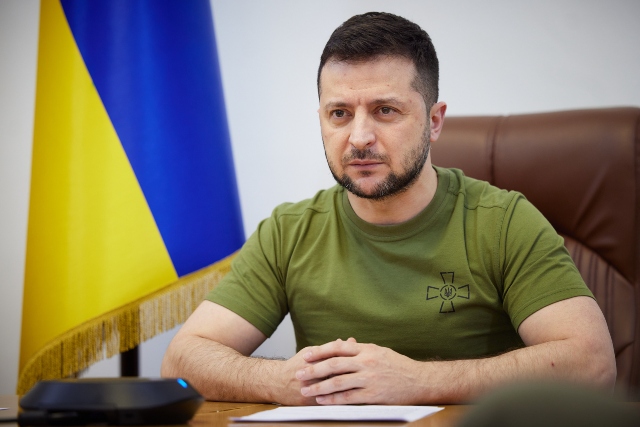
This is not an isolated blemish. It arrives on the heels of the Energoatom kickback scandal that ensnared Zelensky's former business partner and chief of staff, and it dovetails with firefights between rival security services reportedly fighting over scam proceeds rather than over Russia. Even the June bombing that tore through a Monaco apartment, wounding a sanctioned Ukrainian businessman and his family, has been traced by Ukrainian, French, and independent journalists to officers inside Ukraine's own military intelligence agency. Zelensky confirmed Kravchenko's exit personally, saying he had "a fairly long meeting with the prosecutor general" before the resignation letter went to parliament, a tidy formality wrapped around a much uglier reality.
Western governments, eager to keep aid flowing and the narrative simple, have largely looked away as their own citizens became marks. That posture is getting harder to maintain as the rot climbs higher and the bodies, quite literally in the Monaco case, pile up. Ukrainians deserve accountability. So do the pensioners in Warsaw, Berlin, and beyond who picked up the phone and lost everything to a system that was supposedly being reformed all along.
Sources include:






Please contact us for more information.