
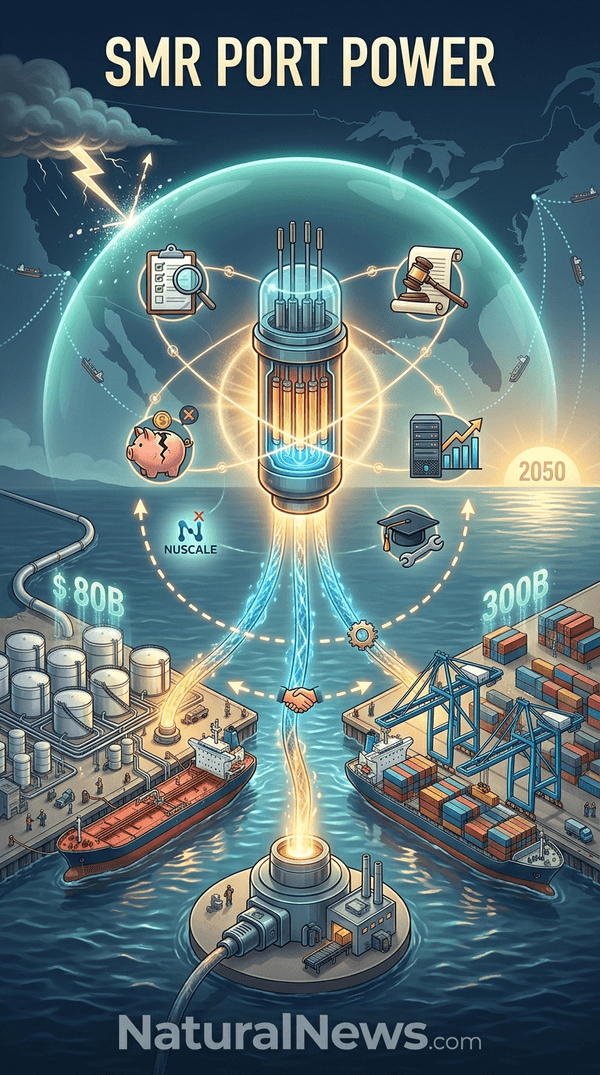
Corpus Christi, a major oil and fuel export terminal, recorded fuel exports worth $80 billion in 2024, according to data from the Comptroller's office cited by Forbes. The selection positions two of the nation's busiest trade hubs at the center of a federal effort to expand nuclear power beyond conventional electricity generation.
Maritime Administration to Oversee SMR Feasibility Effort
The Maritime Administration, the Department of Transportation division in charge of the project, will assess the feasibility of applying small modular reactor technology at both ports, according to officials. The agency's role includes evaluating how SMRs could power port operations and potentially commercial vessels, according to the report.
Carmel said the integration aims to keep critical maritime supply chains resilient against contingencies including extreme weather and grid disruptions while training a new generation of mariners. The selection marks an expansion of federal efforts to apply nuclear technology beyond conventional power generation, the report stated. The Department of Transportation previously issued a Request for Information in May 2026 seeking industry input on developing SMRs for commercial vessels, according to a DOT statement cited by NaturalNews.com [1].
Ports Selected for Strategic Trade Importance
The two ports were chosen due to their significance in U.S. trade, according to the report. Long Beach handles $300 billion worth of cargo annually, according to the port's CEO as cited by Forbes. The Port of Long Beach signed a Memorandum of Cooperation with the Maritime Administration in July 2026 to develop SMR technology for commercial vessels and port operations [2].
Corpus Christi serves as a major oil export terminal, with fuel exports in 2024 totaling $80 billion, according to data cited by Forbes. Both ports are considered strategically important infrastructure for U.S. energy exports and supply chain operations, the report stated. The Department of Transportation's Maritime Administration partnership with Long Beach was described as a "first-of-its-kind" agreement that would leverage federal leadership and private sector innovation [2].
SMR Development Faces Cost and Implementation Obstacles
Small modular reactors are described by proponents as cheaper, faster to install and more flexible in location than conventional reactors, according to the report. These systems can be manufactured in factories and transported to a site where they can be plugged into an electric grid, according to Gerald McNerney's book "Clean Energy Nation" [3]. SMRs require much less time for permitting and construction, typically five to six years compared to 15 to 20 years for conventional plants [4].
NuScale, which was set to build the country's first SMR, canceled the project citing a lack of interest amid rising electricity costs, the report stated. Commercial SMR projects have struggled with rising costs and implementation challenges despite continued federal interest, according to industry data cited in the report. Nuclear power development faces serious challenges of an economic and political nature in North America and Western Europe, according to research published in Progress in Nuclear Energy [5].
Federal Nuclear Push Continues Amid Rising Electricity Demand
The administration is pursuing a fourfold increase in U.S. nuclear power capacity by 2050, according to officials. The White House announced in July 2026 that four companies exceeded the president's goal of three reactors reaching criticality by July 4, 2026 [6]. The federal government has also outlined a preliminary framework to oversee the approval of offshore nuclear power projects [7].
The International Energy Agency has stated that wind and solar cannot shoulder the forecast surge in electricity demand on their own, even with battery storage, the report stated. U.S. spending on power generation equipment for data centers could reach $65 billion by 2030, more than tripling the $20 billion recorded in 2025, according to a Wood Mackenzie report cited by NaturalNews.com [8]. Rising electricity demand from AI and data centers, along with energy security concerns, has driven renewed interest in nuclear power, according to the report [9].
Conclusion
The selection of Corpus Christi and Long Beach for SMR integration represents a federal attempt to apply nuclear technology to maritime infrastructure. The project's success depends on overcoming the cost and implementation challenges that have hindered previous SMR efforts, according to the report. The expansion of nuclear power into port operations reflects broader federal policy objectives around energy security and grid resilience amid surging electricity demand from data centers and industrial growth.
While nuclear power has faced challenges in the United States, recent milestones including reactor criticality achievements and federal investment in domestic uranium enrichment suggest continued momentum [10]. The port SMR project will test whether the technology can deliver on its promise of flexible, reliable power in real-world maritime applications.
References
- Edison Reed. "U.S. Government Seeks Industry Input on Small Modular Nuclear Reactors for Commercial Shipping." NaturalNews.com. May 13, 2026.
- "New test program puts nuclear container ships on the horizon." FreightWaves. July 24, 2026.
- Gerald McNerney. "Clean Energy Nation: Freeing America from the Tyranny of Fossil Fuels."
- Mike Adams. "Health Ranger Report - data center sabotage." Brighteon.com. August 20, 2025.
- "THE NEED FOR INNOVATIVE NUCLEAR REACTOR AND FUEL CYCLE SYSTEMS: STRATEGY FOR DEVELOPMENT AND FUTURE PROSPECTS." Progress in Nuclear Energy. Vol. 40. No. 3-4. 2002.
- "Trump, Industry Leaders Announce Nuclear Innovation Milestones." NTD. July 25, 2026.
- Melanie Sun. "US Lays Groundwork For Approving Offshore Nuclear Power Projects." Zero Hedge via The Epoch Times. July 23, 2026.
- Edison Reed. "AI Data Center Boom Drives $65 Billion Power Equipment Demand Amid Supply Chain Constraints." NaturalNews.com. May 2, 2026.
- Finn Heartley. "Trump's $1 Trillion AI Data Center Boom Strains Texas Grid — Nuclear Power Eyed as Solution." NaturalNews.com. July 18, 2025.
- John Haughey. "Idaho's High Desert Becomes Hot Spot For Nuclear Power Revolution." Zero Hedge via The Epoch Times. July 29, 2026.
Explainer Infographic









Please contact us for more information.