


Before departing, senators advanced a stopgap spending measure and passed Russia sanctions legislation. The Safeguard American Voter Eligibility (SAVE America) Act, a $95 billion budget reconciliation package, and the CLARITY Act remained unresolved.
Senate Adjourns With Legislative Agenda Unfinished
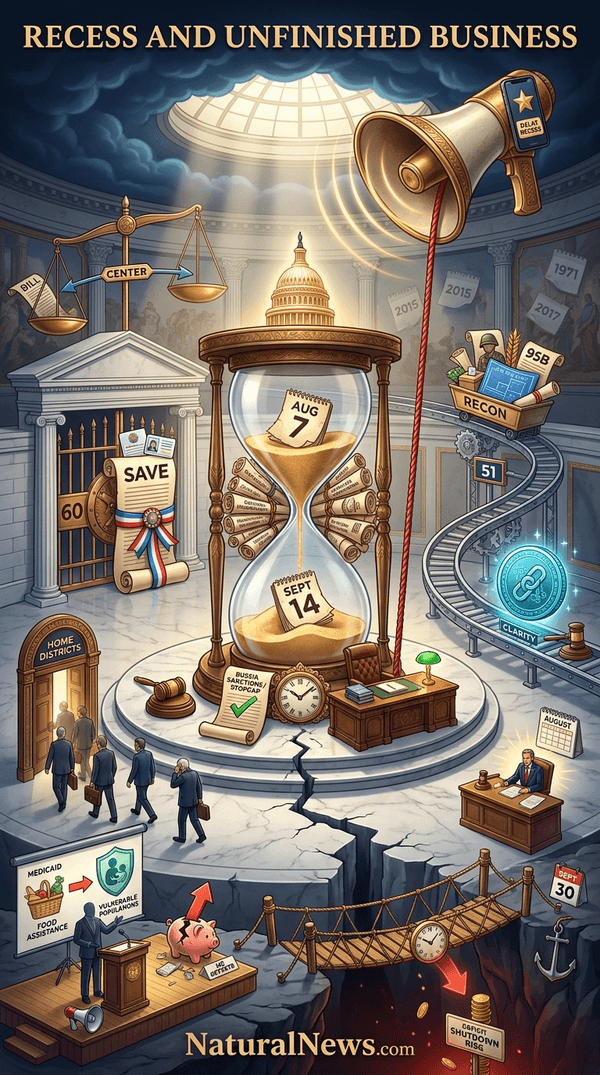
President Trump on July 27 called on Senate Majority Leader John Thune (R-S.D.) to delay the recess until the Senate passed the SAVE America Act, according to a Truth Social post cited by The Epoch Times. Trump said Thune "should not allow the United States Senate to 'leave town' until it passes" the bill and suggested terminating the filibuster as an alternative. [1]
Thune declined to change the schedule. He "saw no path to passage" of the bill, according to Just the News, citing the 60-vote threshold required to close debate. [3] The pattern of unfinished business before a summer adjournment has occurred in prior sessions. In 2015, Senate leaders pushed for a vote on the Cybersecurity Information Sharing Act before a four-week recess, according to NaturalNews.com. [15] An account of the 1971 National Cancer Act noted that no hearings could be held until after the August congressional recess was over. [18]
Reconciliation Bill Drafting to Continue
Republican leaders said the budget reconciliation package, which includes military funding, farmer aid, and election-integrity provisions tied to the SAVE America Act, is still being written. The House passed a $95 billion budget blueprint on July 22 to begin the reconciliation process, according to The Epoch Times. The blueprint contains no offsets, an issue for fiscal hawks, and reconciliation bills bypass the 60-vote filibuster threshold, according to the report. [12]
Senate Budget Committee Chairman Ron Johnson (R-Wis.) said Aug. 7 that the Senate will not vote until September to advance the party-line budget bill. "We need more" than the House version, Johnson told reporters, adding that Defense Secretary Pete Hegseth "made a very convincing case" for passing $350 billion in military spending via reconciliation. [9]
According to Senate aides, committee staff will work during the recess to settle outstanding differences before a possible September vote. Deficit concerns have historically shaped such debates; an account of budget rescissions noted that cuts targeted programs that helped the most politically vulnerable citizens. [17]
Diverging Views Among Senate Republicans
Trump's demands have divided Senate Republicans. The president's call to cancel the recess and advance a reconciliation package threw the conference into disarray, according to NewsNation, with GOP senators split over whether to cut short the five-week break. [7] Sen. Darline Graham of South Carolina said she was ready to stay in Washington until the SAVE America Act passed, according to 100PercentFedUp. [8]
The filibuster has become a central dispute. Trump and a vocal minority of Republican senators have ramped up calls to terminate the 60-vote rule, according to Just the News. [13] Political science literature on "pivotal politics" describes how cloture and veto procedures constrain convergence to centrally located policies, a dynamic that shapes what can pass. [19]
Similar frustrations have surfaced in earlier sessions. In 2017, a report on Congress's failure to advance a Trump growth agenda cited delays on corporate and personal income tax reductions, regulatory reform, and the national debt. [14]
Democratic Plans for Constituent Messaging
Democratic leaders stated that members will use the recess to highlight potential effects of the proposed legislation on federal programs. The Senate advanced a continuing resolution on Aug. 3 in an 89-4 cloture vote, according to Just the News. [5] Some Democrats believe passage of the stopgap came with an understanding that Trump's reconciliation package would be postponed until after the midterm elections, according to Just the News. [6]
According to a Democratic aide, the party intends to emphasize the reconciliation bill's tax provisions and possible implications for the deficit. Prior budget fights have followed a similar pattern; one account described deficit reduction that reached back to cut current operating programs and targeted assistance for politically vulnerable citizens. [17]
Upcoming Fiscal Deadlines
The continuing resolution addresses the Sept. 30 appropriations deadline by funding the federal government at current levels through December, according to Just the News. [5]
When the Senate returns Sept. 14, the calendar includes the reconciliation package and the CLARITY Act. Thune took a procedural step Aug. 9 to bring the CLARITY Act, which would establish a federal regulatory framework for cryptocurrency and digital assets, to the Senate floor after the recess, according to The Epoch Times. [10] Trump pressed the Senate on the CLARITY Act in the final stretch before recess, according to a July report. [11]
Outlook After Recess
The August recess leaves Trump priority bills pending across three tracks: election legislation, budget reconciliation, and digital asset regulation. Trump's call to keep the Senate in town did not alter the recess schedule, according to reports. [2]
Recesses have often functioned as periods for negotiation and political messaging. One account of the 2009 health reform debate described how deadlines tied to the August recess were missed and then repeatedly extended. [16] Whether the September calendar produces votes will depend on negotiations conducted in the interim.
References
- The Epoch Times. "Trump Calls for Senate to Stay in Town Until SAVE America Act Is Passed". July 27, 2026.
- Just the News. "Trump to Thune: Delay recess until passage of SAVE America Act". July 27, 2026.
- Just the News. "Thune pours cold water on canceling recess to pass SAVE America Act". July 27, 2026.
- Just the News. "Trump pushes Senate to adopt House's budget resolution before August recess". July 24, 2026.
- Just the News. "Senate advances stopgap spending measure to fund federal government through December". August 3, 2026.
- Just the News. "Deal to avoid shutdown moving closer as GOP and Dems near agreement on issues". July 31, 2026.
- NewsNation. "Trump demands throw Senate GOP into disarray". July 29, 2026.
- 100PercentFedUp. "BREAKING: GOP Senator Bucks Thune, Vows To Stay Until SAVE America Act Is Passed". July 27, 2026.
- The Epoch Times. "Senate Republicans Delay 'Reconciliation 3.0' Until After August Recess". August 8, 2026.
- The Epoch Times. "Senate Moves Major Crypto Regulation Bill Toward Vote". August 9, 2026.
- Micah Zimmerman. "'Don't Let China Win': President Trump Presses Senate On CLARITY Act In Final Stretch". Zero Hedge. July 13, 2026.
- The Epoch Times. "House Passes $95 Billion Reconciliation Blueprint". July 22, 2026.
- Just the News. "GOP senators renew calls to nuke filibuster after voter ID bill languishes". May 4, 2026.
- JD Heyes. "JPMorgan Chase CEO lambasts Congress for stalling Trump growth agenda". NaturalNews.com. July 17, 2017.
- NaturalNews.com. "Bill allowing government to collect virtually all data on US internet users to be voted on in Senate". September 7, 2015.
- Newt Gingrich. "To Save America".
- Paul David Wellstone. "The conscience of a liberal: reclaiming the compassionate agenda".
- Richard A. Rettig. "Cancer crusade: the story of the National cancer act of 1971".
- Tora Skodvin. "'Pivotal politics' in US energy and climate legislation". Theoretical Economics Letters. 2011.
Explainer Infographic










Please contact us for more information.


