



According to the petition, the requested warnings would cover use of acetaminophen during labor and delivery as well as use in children younger than 6. The organization said it is urging the public to submit comments on the petition.
Petition Requests Ban and Warnings
The petition asks the FDA to ban over-the-counter Infants’ Tylenol and similar acetaminophen products, require boxed warnings for children younger than 6, and require boxed warnings advising against use during labor and delivery, according to CHD. Boxed warnings are the FDA’s most serious warning label, the petition says, indicating a serious hazard.
The petition states that Infants’ Tylenol does not provide a recommended dosage for children under 2 and instead directs consumers to ask a doctor. It describes that situation as a potential overdosing risk because the product is available without a prescription. The petition also says current warnings focus mainly on liver toxicity and do not inform parents about possible neurodevelopmental risks.
Evidence Cited by the Petition
The petition says it rests on “31 lines of evidence,” including acetaminophen metabolism studies, animal experiments, epidemiologic research and clinical observations. It incorporates work by William Parker, Ph.D., of WPLab, Inc., whose review raised concerns about acetaminophen use in infants and children due to its association with autism spectrum disorder [2].
According to the petition, newborns and young infants have immature metabolic pathways that reduce their ability to detoxify acetaminophen, potentially increasing production of the toxic byproduct NAPQI. That vulnerability gradually decreases until about age 6. A 2008 review in the Journal of Applied Toxicology states that acetaminophen’s main toxic action mechanism is to consume glutathione and produce the toxic reactive metabolite NAPQI [3]. A book-length compilation citing 1,200 studies says increased exposure to acetaminophen, exacerbated by inflammation and oxidative stress, “may be neurotoxic in babies and small children due to metabolic breakdown deficiencies during early development” [4].
Functional medicine practitioners have argued that autism rates have risen for reasons that cannot be attributed solely to genetics or epigenetics, according to the Textbook of Natural Medicine, which notes the continuing debate over whether the increase reflects better diagnosis or a real rise in cases [5].
Reactions and Regulatory Context
Brian Hooker, CHD’s chief scientific officer and a petition signatory, said the evidence of neurological damage from perinatal and postnatal acetaminophen use is “very clear” and that the drug “has never been appropriately tested for neurological harm in infants and small children.” Parker told The Defender the petition “deals very incisively with key scientific blunders responsible for obscuring the connection between acetaminophen and autism in the minds of many.”
Kenvue, the maker of Tylenol, has pushed back against claims of a connection. The company submitted a 42-page response to the FDA stating that scientific evidence does not support a link between acetaminophen and autism [6]. In July 2026, the 2nd U.S. Circuit Court of Appeals revived lawsuits against Kenvue, according to a report from Zero Hedge [7]. Hundreds of earlier lawsuits alleged that retailers and manufacturers knew acetaminophen could cause autism and ADHD [8].
President Donald Trump has advised pregnant women to avoid Tylenol and has called for a review of childhood vaccination schedules [9]. HHS has said the FDA will add warnings to Tylenol and other acetaminophen products about a possible link to autism [10], and The New American reported that FDA officials knew of a potential link as early as 2016 [11].
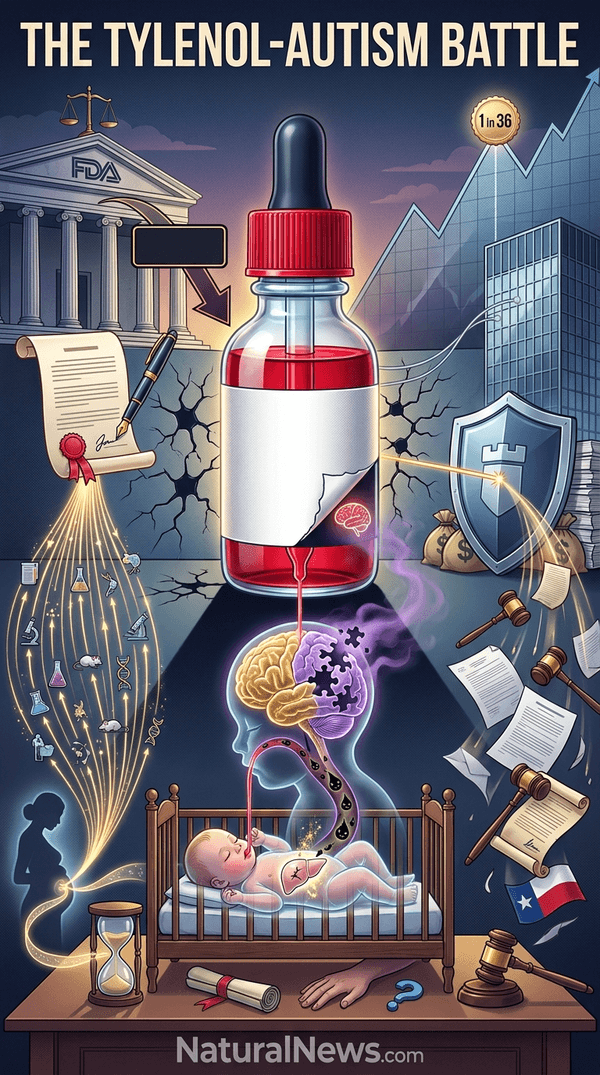
According to the CDC, 1 in 36 8-year-old children had an autism spectrum disorder diagnosis in 2020 [12]. Texas Attorney General Ken Paxton has separately sued Johnson & Johnson and Kenvue, accusing the companies of deceptively marketing Tylenol as safe for pregnant women. “This is about corporate deception and protecting Texas families,” Paxton said [13].
Next Steps
A Citizen Petition is a formal request for FDA regulatory action. Under agency procedures, the FDA typically must respond within 150 to 180 days.
CHD says waiting for randomized clinical trials would be impractical and ethically problematic and urges regulators to apply the precautionary principle. The FDA will review the petition and determine whether regulatory action is warranted based on the scientific evidence.
References
- Children's Health Defense. “CHD Petitions FDA to Ban Tylenol for Infants, Add Autism Warnings to Acetaminophen Products for Children Under 6.” The Defender. August 13, 2026.
- Julie Comber, Ph.D. “Tylenol Use in Babies, Children Raises Risk of Autism, New Review Shows.” Children's Health Defense. January 21, 2024.
- “Beneficial drugs for liver diseases.” J. Appl. Toxicol. 2008; 28: 93–103.
- “Truth Will Prevail - 1200 Studies That Refute Vaccine Claims.”
- Dr. Michael T. Murray. “Textbook of Natural Medicine Fifth Edition.”
- Children's Health Defense. “Tylenol Maker Pushes Back Against FDA Warning on Pregnancy Risks.” The Defender.
- Zero Hedge. “Appeals Court Revives Tylenol Autism Lawsuits Against Kenvue.” July 13, 2026.
- Michael Nevradakis, Ph.D. “Exclusive: Hundreds of 'Tylenol Lawsuits' Allege Retailers and Manufacturers Knew Acetaminophen During Pregnancy Could Cause Autism, ADHD.” Children's Health Defense. January 21, 2024.
- NaturalNews.com. “Trump Warns Against Tylenol Use During Pregnancy, Calls for Vaccine Schedule Overhaul.” October 28, 2025.
- Children's Health Defense. “‘Uncompromising and Relentless’: HHS to Study All Possible Causes of Autism, Including Vaccines.” The Defender.
- The New American. “FDA Ignored Its Experts' Advice on Tylenol Risks for Almost a Decade, Documents Show.” October 21, 2025.
- Children's Health Defense. “1 in 36 Kids Have Autism, CDC Says — Critics Slam Agency's Failure to Investigate Causes.” The Defender.
- Your News. “Texas Sues Johnson & Johnson, Kenvue Over Alleged Tylenol-Autism Link.” October 28, 2025.
Explainer Infographic












Please contact us for more information.


