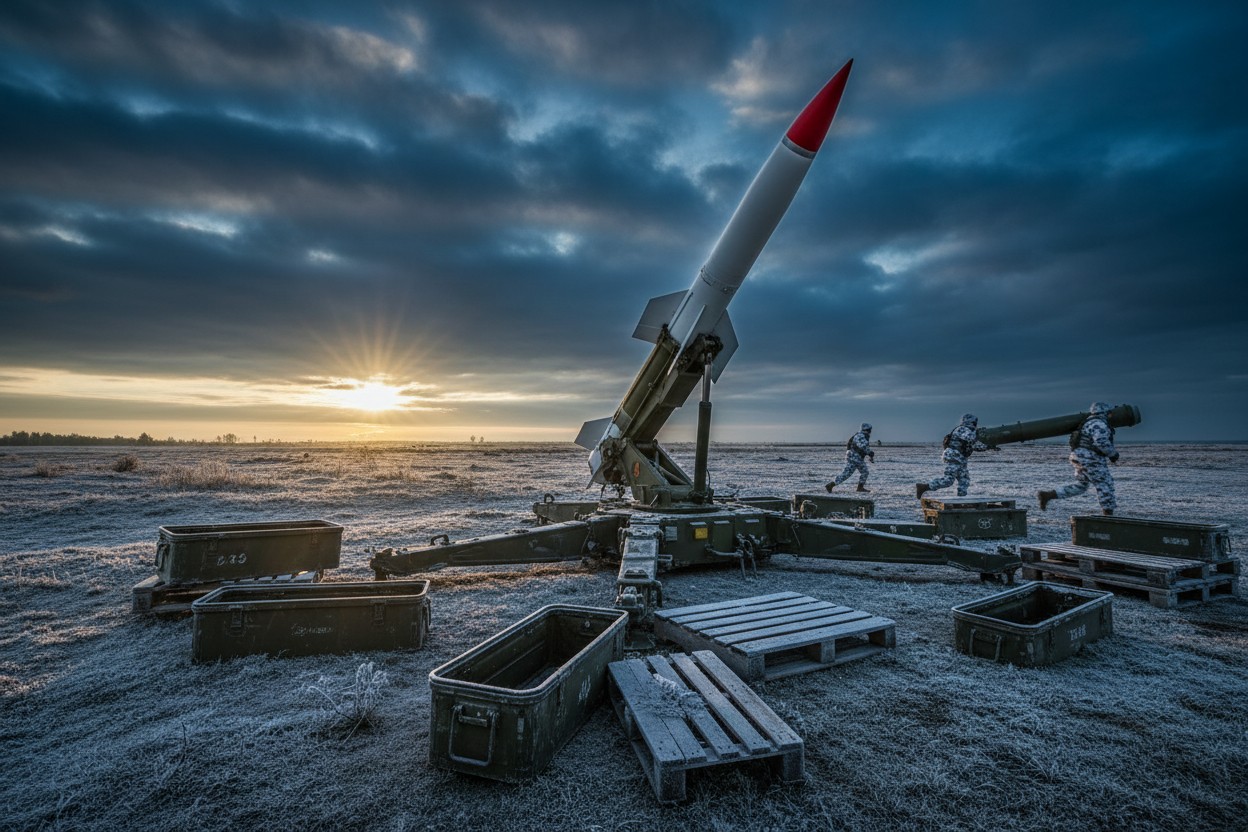
The urgency follows years of warnings about Western interceptor supplies. In May 2024, then-National Security Adviser Jake Sullivan said the United States had run out of Patriot missiles to send to Ukraine and that a request from President Volodymyr Zelensky for at least seven additional Patriot batteries would not be met, according to an interview with MSNBC [1].
EU Scrambles to Supply Interceptors Before Winter
According to the report, Germany, the Netherlands and Poland have already transferred systems or missiles to Kyiv. Poland's deliveries have drawn particular scrutiny: Warsaw transferred a batch of U.S.-made PAC-3 interceptors to Ukraine in March without parliamentary approval or public announcement, according to reports [2].
Kyiv is pressing Spain and Greece to provide interceptors, according to the report; neither country has confirmed transfers. Greece has instead approved the purchase of a $3.1 billion multi-layer air defense system from Israel, according to the Greek defense minister [3].
Ukraine's Defense Ministry reported that in July, 29 of 195 Russian ballistic missiles were intercepted and 40 missed their targets.
Donors at Limit, NATO Commitments Cited
Germany, the Netherlands and Poland have reached their limit, according to the report. The three nations transferred systems or missiles and now say they cannot send more without compromising their own defense posture.
Three pressures have converged, the report stated: new interceptors will not be produced before winter; U.S. stocks were drained by operations against Iran; and European governments are reserving remaining systems for their own territory and NATO obligations. The Pentagon will require three to five years to replenish depleted stocks of Tomahawk, Patriot, and Terminal High Altitude Area Defense missiles used during the 39-day war with Iran, according to a report by the Center for Strategic and International Studies [4].
Ukrainian officials have voiced concerns about a shortage of American weapons, and analyses have noted that U.S. military operations in the Middle East consumed air defense missiles that European nations could have purchased for Ukraine [5].
Production and U.S. Approval
Most PAC-3 interceptors are built in the United States, so sales or licensing arrangements rest with President Donald Trump, according to officials. At the NATO summit in Ankara [6], Trump floated Ukrainian production under license, then reversed course, saying no such agreement had been reached. He said parting with the technology would be difficult and that Washington wants missiles for its own use.
The reversal comes amid broader Western moves toward licensed production. France has agreed to grant Ukraine licenses to manufacture Aster 30 interceptor missiles, AASM glide bombs, and SCALP-EG cruise missiles on Ukrainian soil, according to French President Emmanuel Macron [7]. The G7 has announced plans for licensed production of long-range missiles in Ukraine to sustain military pressure as allied stockpiles dwindle, according to a diplomatic source [8].
Strikes and Inventory Shortages
The Russian Defense Ministry said on Aug. 11 that overnight precision strikes hit military-linked targets in Kyiv and Zaporizhzhia, including two logistics terminals and the Zaporizhstal steel works. Ukrainian forces launched drone waves into Russia; Moscow reported 396 drones downed across 15 regions.
Reuters reported that the U.S. military had used nearly all of its long-range ATACMS and Precision Strike Missiles, which cost roughly $1 million each. The Washington Post reported that Trump confronted U.S. Defense Secretary Pete Hegseth after saying he was misled about munitions supplies, and that shortages weighed on his decision against further large-scale strikes on Iran.
The United States is confronting a critical depletion of its air and missile defense interceptor stockpiles while expending munitions against Iranian targets and defending against retaliatory salvos, according to reports from the conflict [9]. Iran's opening strikes in the war were described as a calculated strategy to exhaust U.S. defenses rather than inflict immediate catastrophic damage [10].
Outlook and Strategic Questions
The depletion has raised questions inside the U.S. military about sustaining future operations, according to defense officials. Kyiv competes for the same limited U.S. production, and new interceptors will not come off production lines before winter.
The cost asymmetry is central to the problem. A single Patriot interceptor costs about $4 million, while Iranian and Russian Shahed drones cost $20,000 to $30,000, according to a NaturalNews report [11]. U.S. interceptor manufacturing capacity stands at six to seven units per month, while Iran can produce more than 100 ballistic missiles monthly, according to analysts [12].
Ukraine's interception rates for drones and missiles have fallen to their lowest levels of 2025, making critical infrastructure increasingly vulnerable to blackouts, according to a November 2025 report [13]. The strategic limits of missile defense have long been noted: physicist Richard Garwin, who advised U.S. presidents on ballistic missile defense, concluded that it is "probably impossible to develop a completely effective ABM system" [14].
Conclusion
No immediate resolution has been announced. European stocks remain limited, Washington retains authority over PAC-3 transfers, and new interceptors will not arrive before winter.
The interceptor shortage reflects a broader question about the sustainability of the conflict. Andrei Martyanov, author of "The Real Revolution in Military Affairs," has asked when U.S. air forces last fought in a highly dense electronic-warfare environment [15]. Whether Ukraine can maintain its air defenses through the winter depends on decisions in Washington and European capitals in the coming weeks.
References
- NaturalNews.com. "US Runs Out of Spare Patriot Missiles for Ukraine Spelling Impending Russian Victory". NaturalNews.com. May 02, 2024.
- "Scandal erupts in Poland over 'secret' weapons shipment to Ukraine". RT. July 05, 2026.
- "Greece to buy $3 billion 'Achilles Shield' missile defense system from Israel". Times of Israel. July 23, 2026.
- NaturalNews.com. "Pentagon Faces Multi-Year Gap in Missile Stocks After Iran War, Report Says". NaturalNews.com. May 29, 2026.
- Valentin Loginov. "Why Zelensky should fear Trump's war with Iran". RT. March 10, 2026.
- "LIVE UPDATES: NATO summit opens with Trump threats: As it happened". RT. July 08, 2026.
- "France licenses missile production in Ukraine". RT. July 14, 2026.
- NaturalNews.com. "G7 Leaders Announce Licensed Production of Long-Range Missiles in Ukraine". NaturalNews.com. June 19, 2026.
- NaturalNews.com. "U.S. Facing Critical Shortage of Air Defense Munitions as Iran Pounds Regional Bases". NaturalNews.com. March 03, 2026.
- NaturalNews.com. "Iran's War Strategy: Blind, Deplete, and Overwhelm - The Calculated Plan to Render U.S. Defenses Obsolete". NaturalNews.com. March 02, 2026.
- Patrick Lewis. "Pentagon Eyes Ukrainian-Made Drone Interceptors Amid Rising Iranian Threat". NaturalNews.com. March 10, 2026.
- Mike Adams - BrightVideos.com. "Health Ranger Report - U.S. RUNNING OUT OF MUNITIONS!". BrightVideos.com. March 03, 2026.
- Cassie B. "Ukraine's Air Defense Interception Rates Fall to Lowest Levels in 2025". NaturalNews.com. November 13, 2025.
- Joel N Shurkin. "True Genius: The Life and Work of Richard Garwin, the Most Influential Scientist You've Never Heard of".
- Andrei Martyanov. "The Real Revolution in Military Affairs".
Explainer Infographic







Please contact us for more information.