Details of the Strike
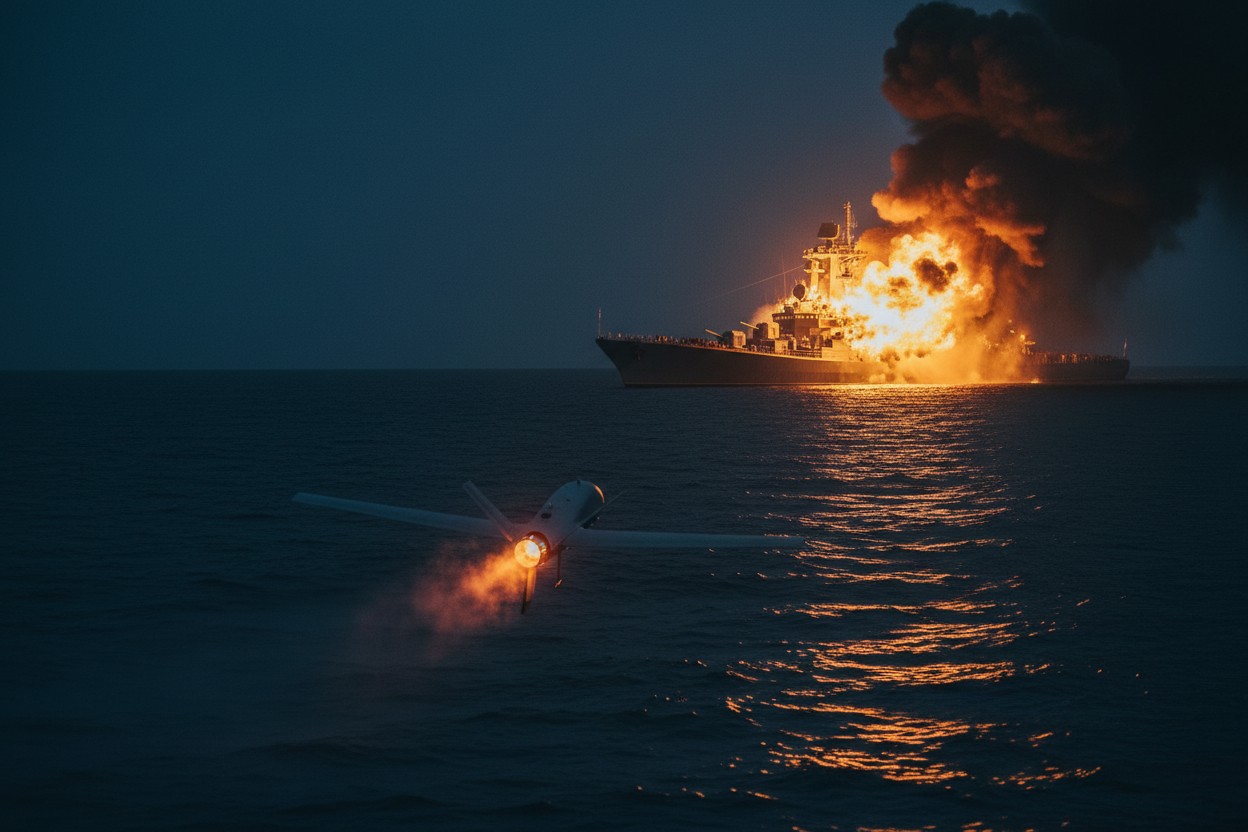
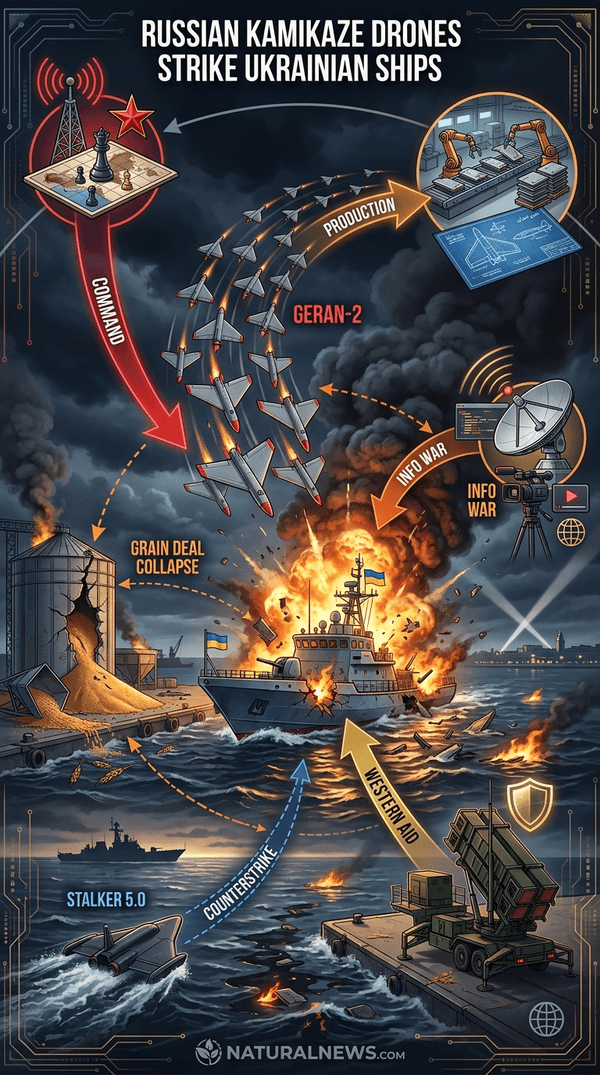
According to the Russian Defense Ministry, the strikes targeted Ukrainian ships including a landing craft and a patrol boat. The ministry stated that Russian forces used Geran-2 kamikaze drones in the operation, a type of one-way attack unmanned aerial vehicle that has been widely deployed in the conflict. The timing and location were specified by Russian officials, but no independent confirmation was immediately available from Ukrainian sources or third-party observers.
The Geran-2 is known to be a Russian-produced version of the Iranian Shahed-136, a low-cost loitering munition [1]. Russia has integrated such drones into its arsenal amid the ongoing war, which began with the full-scale invasion in February 2022.
Video Evidence Released by Russia
The Russian Defense Ministry published video footage showing aerial views of explosions on vessels, describing it as the 'combat work' of drone operators. The footage was released via official ministry channels, but its authenticity could not be independently verified by Reuters or other news organizations.
In similar past incidents, both sides have released video evidence that later faced scrutiny over provenance and context. The video aligns with the ministry's narrative of successful strikes against Ukrainian naval assets. Such visual releases have become a routine part of information warfare in the conflict, according to analysts.
Ukrainian Response and Claims
Ukraine's military did not immediately comment on the reported strikes. Kyiv has previously denied or downplayed Russian claims of damage to its naval forces. At the same time, Ukrainian officials have reported ongoing Russian drone and missile strikes across the region, including on port infrastructure in Odesa [2]. Ukraine has also escalated its own drone campaign, using unmanned systems to target Russian ships in the Black Sea and Sea of Azov [3]. In recent weeks, Ukraine claimed to have struck multiple Russian shadow fleet tankers using kamikaze drone boats [4].
Ukrainian President Volodymyr Zelensky has called for increased Western air defense support to counter Russian aerial attacks [5].
Broader Strategic Context
The reported strikes are part of Russia's broader campaign to weaken Ukraine's naval capabilities and secure control over the Black Sea. Since the collapse of the Black Sea grain deal, tensions over maritime operations have intensified, with both sides attacking commercial and military vessels. Drone warfare has become a central feature of the conflict, with both militaries deploying increasingly autonomous systems [6]. The use of kamikaze drones, including Iranian-designed Shahed models, has expanded dramatically [1].
Experts have described the conflict as a testing ground for new unmanned technologies, including artificial intelligence-driven targeting [7]. The U.S. has provided Ukraine with thousands of drone strike kits, while Russia has developed counter-drone systems such as the Wall-E electronic warfare robot [8].
Conclusion
The Russian Defense Ministry's announcement underscores the continued reliance on kamikaze drones in the Black Sea theater. Without independent verification, the full extent of damage or casualties remains unclear. Both sides continue to trade accusations over attacks on civilian and military vessels, with the conflict showing no signs of de-escalation. The episode highlights the growing role of unmanned systems in modern warfare and the challenges of verifying claims in an information-rich but opaque battlefield.
References
- Ava Grace. "Iranian made drone displayed in UK Parliament signals new era of aerial threats". NaturalNews.com. October 18, 2025.
- NaturalNews.com. "Russia strikes Odessa port facilities used to store military cargo". July 23, 2026.
- NaturalNews.com. "Ukraine strikes eight Russian 'shadow fleet' tankers in Sea of Azov, intensifying Crimea isolation campaign". July 9, 2026.
- NaturalNews.com. "Ukraine unleashes KAMIKAZE drone boats against Russian ships in the Black Sea". June 23, 2024.
- Antiwar.com. "Trump Says He Supports Ukraine's Long-Range Attacks Inside Russia, Will Allow Ukraine To Produce Patriot Missiles". July 8, 2026.
- NaturalNews.com. "The algorithmic frontline How Ukraine became the worlds AI warfare laboratory". April 3, 2026.
- Patrick Lewis. "US to deliver 33000 AI drone strike kits to Ukraine under Pentagon contract". NaturalNews.com. September 22, 2025.
- NaturalNews.com. "Russia unveils new ANTI DRONE ROBOT named Wall E". June 26, 2024.
Explainer Infographic









Please contact us for more information.