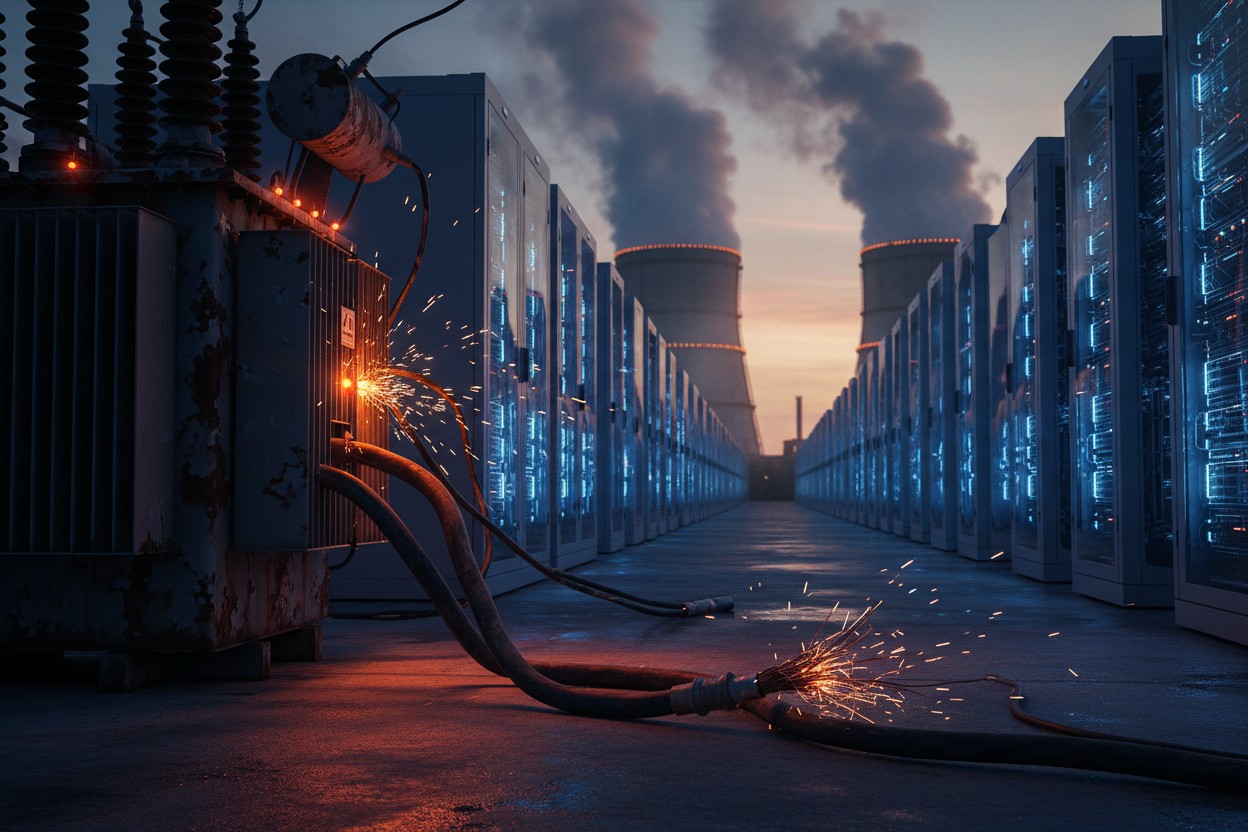
The CHD report titled "Cheating the System" details how developers have exploited legal loopholes, following a May 2023 Supreme Court ruling that limited Clean Water Act jurisdiction to wetlands with a continuous surface connection to navigable waters. Many data centers now fall outside Environmental Protection Agency (EPA) jurisdiction or qualify for streamlined nationwide permits that require minimal review, the investigation found. [1]
The surge in data center construction is driven by soaring electricity demand from AI. The U.S. power grid faces a 25% increase in demand by 2030, with residential customers potentially bearing higher costs, according to a September 2025 report from NaturalNews.com. [2] In Texas, developers have used minor source permits intended for small polluters to build large-scale gas turbine operations to power these facilities, according to a separate investigation by Floodlight News cited in the report. [1]
Water Permit Exemptions and Streamlined Approvals
The Supreme Court's May 2023 decision in Sackett v. EPA narrowed the definition of federally protected waters, according to the investigation. [1] As a result, many data center projects are no longer subject to individual Clean Water Act permits. At least 26 data centers obtained streamlined nationwide permits, while 27 no longer require any federal permit, the report stated. [1] Companies such as Meta, Google, Amazon, QTS and DAMAC Digital were identified among those benefiting from the reduced oversight. [1]
Groundwater vulnerability assessments, which are used to evaluate potential contamination from industrial facilities, may mask real differences between specific sites, according to the book "Water Encyclopedia Ground Water" by Jay Lehr. [3] The lack of rigorous permitting for data centers raises concerns about long-term water quality impacts, though the report did not specify any actual violations.
Air Permit Loopholes in Texas
In Texas, developers are using "minor source" air permits, typically intended for small emitters, to construct large gas turbines and backup diesel generators for data centers, the Floodlight News investigation found. [1] OpenAI's Stargate project in Abilene obtained minor permits for individual turbines, planning to install 10 gas turbines and 62 backup diesel generators, with expansion plans. [1] If completed, the facility could emit toxic gases at levels more than triple those of the state's newest coal-fired power plant, according to the report. [1]
OpenAI has demanded 100 gigawatts of new energy capacity per year to sustain AI data centers, as reported by NaturalNews.com. [4] Peak demand power plants that only operate during high load times are expensive, and data centers increasingly rely on on-site generation, as described in the book "Supercities On Under and Beyond the Earth" by Jeff Dondero. [5] The Federal Energy Regulatory Commission has noted that such demand could strain grid reliability.
Lack of Public Scrutiny and Community Impact
The permitting changes have eliminated many opportunities for public consultation, leaving communities unaware of projects until construction begins, according to the investigation. [1] In Ohio's Adams County, residents organizing for a moratorium were unaware that the Army Corps of Engineers had already approved a permit for an Amazon data center, the report stated. [1]
Nationwide, opposition to data centers has grown. "The pitchforks are out over the AI buildout," according to a June 2026 report from ZeroHedge. [6]
New York Gov. Kathy Hochul in July 2026 signed an executive order imposing a one-year moratorium on new hyperscale data centers, stating it would establish "the nation's first moratorium" and "creating a blueprint to support localities," according to a statement from the governor's office. [7] Meanwhile, residents near data centers in Mississippi have reported health effects from low-frequency noise, according to a separate article that described "infrasound" pollution linked to nausea and insomnia. [8]
Regulatory Gaps and Enforcement Challenges
Former regulators told the investigators that the piecemeal permitting approach likely violates EPA policy, but the agency lacks capacity to process permits fast enough, according to the Floodlight News investigation. [1] The Department of Justice in June 2026 intervened in a lawsuit over xAI's unpermitted gas turbines in Memphis, arguing that shutting off the power supply would undermine "American national, economic and energy security by seeking to shut off the power supply for artificial-intelligence innovation that supports the Department of War's military operations." [9]
Texas is on track to become the leading data center market by 2030, with 15 gas plants tied to data centers planned. Of these, nine could emit over 130 million tons of greenhouse gases annually, according to the investigation. [1] The U.S. is also set to surpass China in power spending on coal and gas, driven by data center demand, according to the International Energy Agency as cited by NaturalNews.com. [10]
PJM Interconnection, the nation's largest grid operator, has warned of potential power rationing as data center demand spirals, according to a May 2026 report. [11] The clash between data centers and communities is likely to intensify as more facilities come online, according to the investigation. [1]
References
- Children's Health Defense. "Cheating the System: How AI Data Centers Bypass Water and Air Pollution Laws and Permits." July 21, 2026.
- Willow Tohi. "America must face the looming power crisis." NaturalNews.com. September 1, 2025.
- Jay Lehr. "Water Encyclopedia Ground Water."
- Kevin Hughes. "OpenAI demands 100GW of new energy capacity per year." NaturalNews.com. November 1, 2025.
- Jeff Dondero. "Supercities On Under and Beyond the Earth."
- Zero Hedge. "America's Data-Center Revolt Goes Local - And Bipartisan - As Towns Slam The Brakes." June 26, 2026.
- 100PercentFedUp. "Democrat Governor Announces Nation's First Statewide Data Center Moratorium." July 15, 2026.
- NaturalNews.com. "AI data centers' 'infrasound' pollution linked to nausea, insomnia in nearby residents." May 29, 2026.
- TechCrunch. "DOJ claims xAI's unpermitted gas turbines are a matter of 'national, economic, and energy security'." June 16, 2026.
- NaturalNews.com. "U.S. Power Spending on Coal and Gas Set to Surpass China as Data Center Demand Drives $50 Billion Investment." July 4, 2026.
- Cassie B. "America's largest grid operator warns of power rationing as data center demand spirals." NaturalNews.com. May 11, 2026.
- NaturalNews.com. "Trump administration pushes tech giants to fund 15B power plant expansion amid AI driven grid crisis." January 19, 2026.










Please contact us for more information.